




An Israeli court has effectively moved the corporate heart of the CoinsPaid/Dream Finance crypto payment processor group conflict out of Tel Aviv and into Vienna arbitration, while ordering both camps to re-plead their mutual “smear campaign” allegations in far greater detail. The ruling reframes the dispute as a dual track: corporate control fight in Austria, defamation dogfight in Israel.
Key Facts
- Civil case Montik & Others v. Megrelashvili & Others (22978-01-22) pits two former CoinsPaid/Dream Finance camps against each other: the alleged beneficial owners of the Dream Finance Group, Ivan Montik, Pavel Kashuba and Dmitry Yaikau (aka Dzmitry Yaikau aka Dmitry Yakau) versus Rivaz Megrelashvili, Ofer Josh Bazov and Ben Elisha Avraham, plus Roland Yakoblevich Ishaev as an additional defendant.
- Both sides accuse each other of running a massive online “smear campaign” – hundreds of videos, websites and posts allegedly targeting the opposing camp, framed as defamation and invasion of privacy.
- The counterclaim also bundles extensive corporate disputes relating to the parties’ former business relations, widely understood to include the Dream Finance/CoinsPaid universe.
- In March 2025, Judge Yaakov Shaked criticised the plaintiffs’ non-appearance, stressed the need for personal attendance, and floated a global solution: move both the main suit and counterclaim to arbitration in Austria, where the contracts’ arbitration clauses point.
- On 29 October 2025, Judge Amir Weitzenblit ordered that the corporate disputes between parties 1–3 on both sides be stayed and sent to VIAC arbitration in Vienna, while keeping defamation/privacy issues in Tel Aviv. Defendant 4 (Roland) is excluded from the arbitration agreement.
- The court sharply criticised both sides’ pleadings as “overly general” and ordered fully itemised defamation claims: each publication must be quoted verbatim, dated, located, linked to specific defendants, and tied to a concrete damages calculation.
- The counterclaim is split into two new proceedings: (i) publications/defamation vs. all four counter-defendants; and (ii) corporate disputes vs. Roland alone (including a controversial multi-million-shekel claim for “abuse of process”).
Download the Court Order here (Hebrew).
Short Analysis
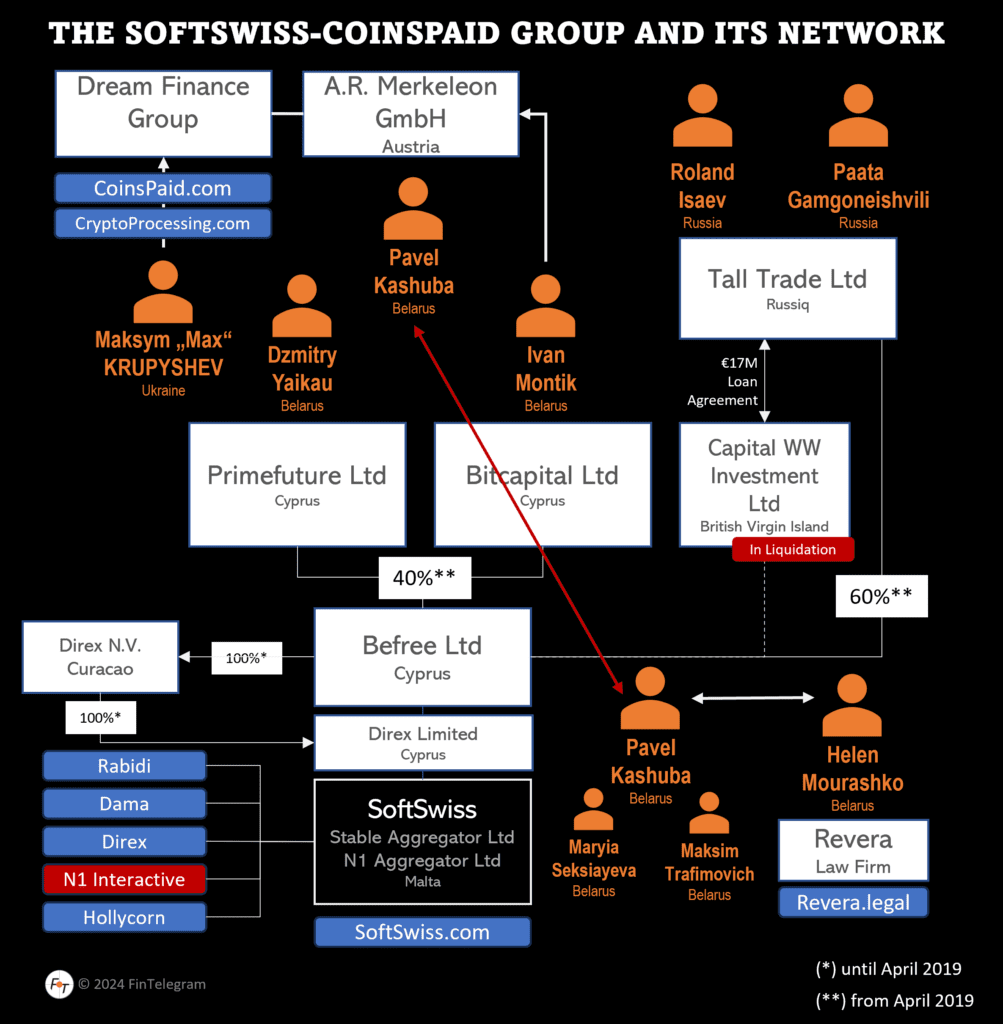
The Israeli court has drawn a hard line between business governance and reputation warfare around CoinsPaid and Dream Finance. The commercial and shareholder-style grievances – who controlled what, when, and under which agreements – will now be fought in confidential VIAC arbitration in Vienna, not in open Israeli court.
For outside observers, this means that key evidence about ownership structures, profit allocation and decision-making in the Dream Finance/CoinsPaid complex will likely surface, if at all, only through leaks or later enforcement actions.
At the same time, the Tel Aviv file is being pared down to a forensically clean defamation case. Judges Shaked and Weitzenblit have refused to tolerate vague accusations of “hundreds of videos” and “dozens of platforms” without citations. Each side must now pin its narrative to specific URLs, timestamps and quotes.
For the broader CoinsPaid story – already under scrutiny for alleged compliance failures and opaque volume claims – this creates a rare opportunity: a future public record listing who published what about whom, and on which factual basis. In effect, the court is forcing the rival camps around CoinsPaid to move from information warfare to evidence-based litigation.
Read our CoinsPaid reports here.
Call for Information
FinTelegram has reviewed the Israeli court decisions and related documents supplied by whistleblowers. We are now mapping the Vienna arbitration track and the Israeli defamation proceedings into the wider Dream Finance/CoinsPaid risk profile. We invite current and former insiders, counterparties, and legal advisers with knowledge of these disputes, the underlying shareholder agreements, or related arbitration filings to contact us via Whistle42.com.