



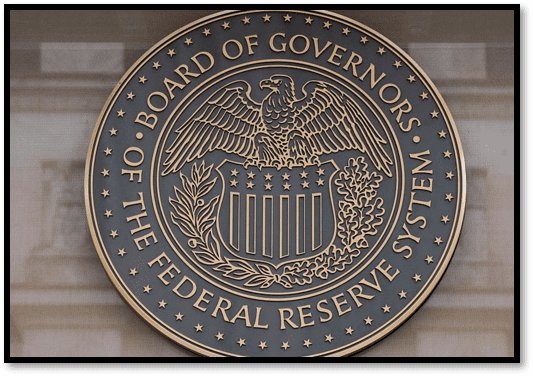
In a critical examination of the potential impacts of a U.S. Central Bank Digital Currency (CBDC) on global finance, recent Federal Reserve notes have sparked a nuanced debate. According to the Fed, the introduction of a U.S. CBDC might not significantly alter the landscape of cross-border payments or diminish the international stature of the dollar. A CBDC would be unlikely to undermine the dollar’s dominance or the efficiency of international payments.
The Fed note argues that the enhancements expected from a CBDC could equally be achieved through ongoing improvements in existing non-CBDC payment infrastructures.
The Fed’s perspective underscores that the core strengths of the U.S. dollar—its role as a primary unit of account, a medium of exchange, and especially as a store of value—remain robust against the potential introduction of a CBDC. This resilience is attributed to the deep and liquid market for U.S. Treasuries, the stability of the U.S. economy, and its political framework, factors that a CBDC does not directly influence. However, the Fed also acknowledges that depending on the design features of CBDCs issued by other countries or foreign currency-denominated stablecoins, there could be a marginal risk to the dollar’s role, particularly if a U.S. CBDC is not launched or is less attractively designed.
Amidst this analysis, a political counter-movement has emerged. A group of Republican senators, led by U.S. Sen. Ted Cruz (R-Texas) and including Sens. Bill Hagerty (R-Tenn.), Rick Scott (R-Fla.), Ted Budd (R-N.C.), and Mike Braun (R-Ind.), has proposed legislation aimed at prohibiting the issuance of a CBDC in the United States. This legislative effort dubbed the CBDC Anti-Surveillance State Act, is motivated by concerns over privacy and government surveillance. The senators argue that a government-controlled CBDC could lead to an unprecedented level of surveillance over citizens’ financial transactions, potentially infringing on individual freedoms and privacy.
Critics of the CBDC within this group express fears that it could become a tool for government overreach, allowing for detailed tracking of personal spending and potentially enabling the government to influence or control private financial decisions. The proposed legislation seeks to prevent the Federal Reserve from issuing a CBDC directly to individuals or indirectly through financial institutions, aiming to safeguard financial privacy and prevent the central bank from gaining undue influence over the economy.
The bill has garnered support from various organizations, including Heritage Action for America, the Blockchain Association, the American Bankers Association, the Independent Community Bankers Association, and Club for Growth. These endorsements reflect a broader concern about the implications of a CBDC for privacy, financial autonomy, and the traditional banking sector.
This ongoing debate reflects the complex considerations surrounding the potential introduction of a CBDC in the United States. While the Federal Reserve’s analysis suggests that a CBDC may not fundamentally disrupt the international financial system or the status of the dollar, significant political and public concerns about privacy, government surveillance, and financial freedom remain at the forefront of discussions. As this debate unfolds, the future of digital currencies and their impact on the global financial landscape continues to be a subject of keen interest and scrutiny.