

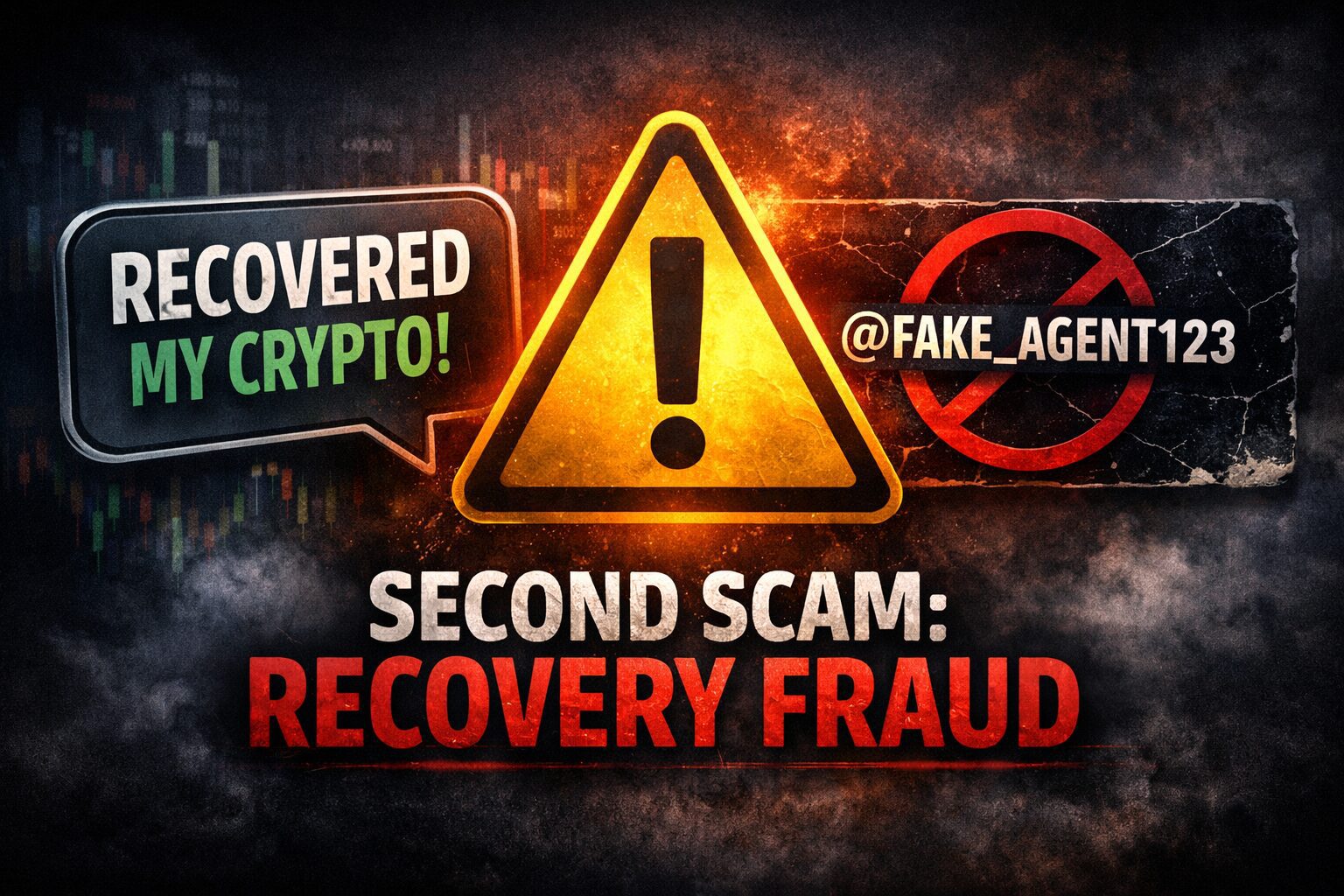
FinTelegram is currently being hit by a wave of spam comments that read like emotional “testimonies” — and then quietly push a “recovery expert,” an email address, a Telegram number, and a disposable website. This is not help. This is the second scam: refund / recovery fraud targeting victims who are already desperate.
Key Facts
- Recovery scams are classic “advance-fee” fraud: pay first (fees, “taxes,” “verification,” “AML certificate,” “gas,” “unlocking”) → lose more.
- Regulators and agencies repeatedly warn: authorities do not contact you to “recover” crypto, and scammers often impersonate agencies or law firms.
- The FBI has specifically warned about fictitious law firms offering crypto recovery and urges victims to report to IC3.
- The exact “testimonial” pattern we received (“restored faith,” “cutting-edge blockchain tracing,” then contact details) shows up elsewhere online as promo content, not as proof.
- FinTelegram has documented “recovery” operations falsely claiming ties to Europol/EC3 before — same playbook, new brand name.
Short Analysis
The comment we received is a textbook recovery scam: a dramatic victim story, vague “forensic” jargon, and a hard pivot into marketing (“contact them… it made all the difference”). We will not reproduce the phone numbers/emails/domains here because that’s exactly what the scammers want: free distribution through our platform.
Yes, blockchain tracing exists — it’s a real investigative technique used by law enforcement and professional compliance teams. But “tracing” is not the same as “guaranteed recovery,” and legitimate actors do not promise outcomes, pressure victims into fast payments, or operate through random Telegram/WhatsApp numbers and rotating domains.
Reality check: recovery is typically only possible when funds hit a regulated chokepoint (e.g., an exchange that can freeze/return assets) or when law enforcement seizes infrastructure. Anyone selling certainty to victims is selling fiction.
What to do (and what NOT to do)
Do:
- Report immediately to your exchange/wallet provider, file a police report, and report cybercrime (US: IC3).
- Preserve evidence: TX hashes, wallet addresses, chats, emails, screenshots.
- Treat “recovery services” that request upfront crypto payments, remote desktop access, or secrecy as hostile.
Don’t:
- Don’t pay “processing,” “release,” “tax,” “gas,” or “AML verification” fees.
- Don’t install software or grant remote access to “recovery agents.”
- Don’t believe testimonials posted in comments. That’s distribution, not evidence.
Call for Information
Have you been approached by a “fund recovery” service after a scam — especially via comment spam, Telegram/WhatsApp, or “law firm” branding? Send identifiers (domains, wallet addresses, emails, chat logs, invoices, fee requests) via Whistle42.com. Anonymity respected.