



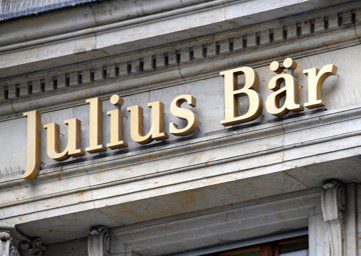
The banking world has been rocked by the recent upheaval at Julius Baer, the venerable Zurich-based financial institution, following its entanglement with the embattled Signa Group. The crisis has culminated in the departure of CEO Philipp Rickenbacher, whose tenure at the helm has been abruptly cut short due to the bank’s problematic investments in René Benko‘s Signa empire.
Reports have emerged that Philipp Rickenbacher is stepping down in the wake of the Signa debacle, an event that has forced Julius Baer to confront its associations with Benko’s ventures head-on.
Media outlets, including the “Financial Times,” have disclosed that Julius Baer‘s Board of Directors initiated Rickenbacher’s resignation, alongside the exit of a key member of the Board’s Risk Committee, purportedly David Nicol. The shake-up is expected to see Richard Campbell-Breeden stepping into a more prominent role as Vice Chairman of the Supervisory Board alongside Chairman Romeo Lacher, signaling a strategic reorientation at the top.
In the aftermath, Nic Dreckmann, previously Rickenbacher’s deputy and a seasoned executive within Julius Baer, is slated to assume the CEO position. The bank’s financial leadership, including Chief Financial Officer Evie Kostakis and Chief Risk Officer Oliver Bartholet, remains unchanged amidst the turmoil.
The scandal unfolds as Julius Baer prepares to unveil its 2023 financial results, which are now inevitably overshadowed by the controversy surrounding its Signa investments. The bank had previously acknowledged substantial loans to Signa‘s network, totaling CHF 606 million, now under the cloud of insolvency proceedings initiated by Austria’s Finanzprokuratur against Signa‘s René Benko.
In a move reflecting the gravity of the situation, Julius Baer is reportedly writing off its exposure to Signa entirely, a decision that analysts from Zürcher Kantonalbank had anticipated might lead to provisions of CHF 400 million. The bank had already earmarked CHF 70 million in provisions last November, but the total write-off is expected to significantly impact its profit margins and previously announced share buyback programs.
This development marks a dramatic shift from Julius Baer‘s initial stance, which seemed to indicate a strategy of weathering the Signa storm. However, the Board of Directors has opted for a clean slate approach, acknowledging that the substantial loans extended to Benko’s businesses necessitated approval at the highest levels of governance, thereby implicating the broader leadership in the fallout.
As Julius Baer navigates through this tumultuous period, the focus shifts to its ability to recover from the reputational and financial damage inflicted by the Signa investment saga. The reshuffling at the top echelons of the bank underscores a commitment to accountability and a renewed emphasis on risk management as it looks to turn the page on this challenging chapter.