

A FinTelegram Special Report
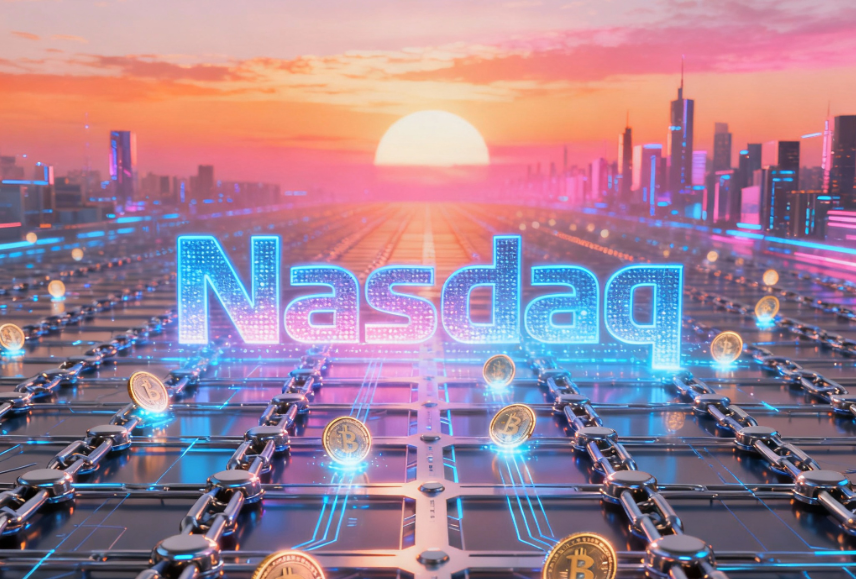
Buongiorno! While you enjoy your morning espresso at your favorite bar, the financial world is witnessing a seismic shift that will fundamentally transform how securities are traded, settled, and owned. Nasdaq’s groundbreaking September 2025 proposal to the SEC represents far more than a technological upgrade—it signals the inevitable tokenization of the entire financial system.
The Nasdaq Watershed Moment
On September 8, 2025, Nasdaq filed a historic proposal (SR-NASDAQ-2025-072) with the Securities and Exchange Commission that could forever change the architecture of capital markets. The initiative seeks to enable trading of tokenized equity securities and exchange-traded products (ETPs) alongside their traditional counterparts on the same order book, utilizing blockchain technology for settlement while maintaining existing regulatory protections.
Revolutionary Framework: Under Nasdaq’s proposal, investors can choose to settle trades in either traditional or tokenized form on a trade-by-trade basis. Tokenized securities must be fungible with traditional shares, carry identical CUSIP numbers, and provide shareholders with the same rights and privileges. The Depository Trust Corporation (DTC) will handle conversion to token form, enabling T+1 settlement through blockchain infrastructure.
This represents the first serious attempt by a major U.S. exchange to integrate blockchain-based settlement into the national market system—a development that validates FinTelegram’s long-standing position that tokenization is the inevitable future of finance.
The Current Regulatory Stranglehold
Gary Gensler’s War on Innovation
The path to Nasdaq’s breakthrough has been littered with regulatory obstacles, particularly under SEC Chair Gary Gensler‘s aggressive enforcement regime. Gensler has consistently maintained that “the vast majority” of crypto tokens are securities under the Howey Test, creating a hostile environment for blockchain innovation.
The Coinbase Crucible: The SEC’s enforcement actions against Coinbase perfectly illustrate the regulatory dysfunction that has stifled security token adoption. In June 2023, Gensler’s SEC sued Coinbase for operating as an unregistered securities exchange, specifically identifying 13 tokens worth $37 billion as securities. The case was ultimately dismissed in 2025 under the Trump administration, but the damage to innovation was severe.
| Challenge Category | Description | Impact Level |
|---|---|---|
| SEC Enforcement – Coinbase | SEC sued Coinbase for operating unregistered securities exchange | Critical |
| Security Token Classification | Most crypto tokens classified as securities under Howey Test | Critical |
| Exchange Listing Restrictions | Major exchanges refuse to list security tokens due to regulatory risk | High |
| Regulatory Uncertainty | Lack of clear regulatory framework across jurisdictions | High |
| Compliance Costs | High compliance costs for security token issuances | Medium |
| Cross-Border Issues | Different regulatory approaches across countries | High |
| KYC/AML Requirements | Stringent identity verification and anti-money laundering rules | Medium |
| Howey Test Application | Supreme Court test determines if token is investment contract | Critical |
| Gary Gensler Position | “Vast majority” of crypto tokens are securities – Gensler | Critical |
| Delisting Risks | 25% of listed tokens face delisting across major exchanges | High |
| Liquidity Constraints | Limited secondary market liquidity for security tokens | High |
| Infrastructure Requirements | Need for specialized custody and trading infrastructure | Medium |
security_token_challenges.csv
Generated File
The Exchange Listing Desert
The regulatory uncertainty has created a barren landscape for security token trading. Major cryptocurrency exchanges have systematically refused to list security tokens, fearing regulatory retaliation. This has created a vicious cycle: without liquid trading venues, security tokens cannot achieve market acceptance, while exchanges avoid listing assets that regulators might classify as securities.
Delisting Epidemic: Analysis of major exchanges from 2023-2024 reveals that 25% of listed tokens faced delisting, with many removals driven by regulatory concerns rather than project failures. This systematic purge has decimated the security token ecosystem, forcing legitimate projects into regulatory limbo.
The Tokenization Market Explosion
Despite regulatory headwinds, the tokenization market has experienced explosive growth that demonstrates pent-up demand for blockchain-based securities:
| Market Segment | Market Value (USD) | CAGR/Growth Rate | Time Period |
|---|---|---|---|
| Global Security Token Market (2024) | $1.91 billion | 27.3% | 2024 |
| Global Security Token Market (2033) | $17.44 billion | 27.3% | 2024-2033 |
| Security Token Offering (STO) Market (2025) | $6.66 billion | 19% | 2025 |
| Security Token Offering (STO) Market (2034) | $31.87 billion | 19% | 2025-2034 |
| Tokenized Securities Market (2023) | $2.3 billion | 16.1% | 2023 |
| Tokenized Securities Market (2032) | $8.9 billion | 16.1% | 2023-2032 |
| Real-World Asset (RWA) Tokenization (2025) | $24 billion | 380% over 3 years | Current |
| RWA Tokenization Projection (2034) | $30 trillion | Projected growth | 2025-2034 |
| Asset Tokenization Market (2024) | $865.54 billion | 43.36% | 2024 |
| Asset Tokenization Market (2029) | $5,254.63 billion | 43.36% | 2024-2029 |
| Tokenized Money Market/Treasury Funds (2025) | $7.4 billion | 80% YTD growth | 2025 |
| Private Credit RWA Share | 58% of RWA market | Market leader | 2025 |
| US Treasuries RWA Share | 34% of RWA market | Secondary segment | 2025 |
Unstoppable Growth Trajectory
The numbers tell an extraordinary story of market evolution despite regulatory hostility:
Real-World Asset Tokenization: The RWA market reached $24 billion in 2025, growing 380% over three years. Private credit dominates with 58% market share, while U.S. Treasuries account for 34%.
Institutional Validation: BlackRock’s BUIDL fund manages $2.9 billion in tokenized U.S. Treasuries, making it the largest tokenized asset fund globally. Franklin Templeton’s BENJI follows with $776 million, while VanEck has introduced VBILL for cross-blockchain Treasury access.
Exponential Projections: Conservative estimates project the tokenization market reaching $2-4 trillion by 2030, while optimistic forecasts suggest $30 trillion by 2034. McKinsey, BCG, and Standard Chartered all predict multi-trillion-dollar markets within the decade.
The Transformative Power of Tokenization
| Benefit Category | Traditional Finance Challenge | Tokenization Solution |
|---|---|---|
| Fractional Ownership | High minimum investments exclude retail investors | Assets can be divided into affordable fractions |
| Enhanced Liquidity | Illiquid assets like real estate hard to trade | Blockchain enables continuous trading |
| Lower Transaction Costs | Multiple intermediaries increase fees | Smart contracts reduce intermediary fees |
| 24/7 Trading Capability | Limited to market hours only | Blockchain operates continuously |
| Faster Settlement | T+1 or T+2 settlement cycles | Near-instant settlement on blockchain |
| Global Market Access | Geographic and regulatory barriers | Global access through blockchain networks |
| Programmable Compliance | Manual compliance processes | Smart contracts automate compliance |
| Transparency & Auditability | Limited transparency in ownership records | All transactions recorded on blockchain |
| Reduced Intermediaries | Multiple intermediaries required | Direct peer-to-peer transactions |
| Automated Processes | Manual back-office operations | Smart contracts automate processes |
| Portfolio Diversification | High capital requirements for asset classes | Access to previously unavailable asset classes |
| Democratized Access | Exclusive access to institutional investors | Lower barriers enable broader participation |
Democratizing Finance Through Technology
Tokenization addresses fundamental inefficiencies that have plagued traditional finance for centuries:
- Fractional Ownership Revolution: Real estate, fine art, and other high-value assets can be divided into affordable fractions, enabling retail investors to access previously exclusive markets.
- Liquidity Liberation: Traditionally illiquid assets become continuously tradable on blockchain networks, creating new pools of capital and investment opportunities.
- Settlement Speed: Near-instant settlement eliminates counterparty risk and frees capital from multi-day clearing cycles, dramatically improving capital efficiency.
- Global Access: Blockchain networks transcend geographic boundaries, enabling truly global capital markets without traditional intermediaries.
The Regulatory Renaissance Under Trump
The regulatory environment has transformed dramatically since the Trump administration’s return to power. The dismissal of the Coinbase case and the SEC’s new rulemaking agenda indicate a fundamental shift toward blockchain innovation.
Bipartisan Support: The recent passage of the GENIUS Act by the Senate establishes the first federal framework for digital assets that Wall Street has long awaited. This legislation provides regulatory clarity that has been missing for years.
Industry Validation: Major financial institutions including JPMorgan, Goldman Sachs, and BNY Mellon are actively tokenizing money-market funds and other financial instruments, demonstrating institutional confidence in the regulatory direction.
Nasdaq’s Strategic Masterstroke
Why Nasdaq Will Succeed Where Others Failed
Nasdaq’s approach differs fundamentally from previous tokenization attempts:
- Regulatory Compliance: By working within existing securities law and utilizing DTC infrastructure, Nasdaq avoids the regulatory pitfalls that doomed earlier security token initiatives.
- Market Integration: Trading tokenized and traditional securities on the same order book eliminates liquidity fragmentation while maintaining familiar market structure.
- Infrastructure Leverage: Utilizing existing Nasdaq systems and DTC clearing infrastructure minimizes implementation complexity while maximizing regulatory acceptance.
- Timing Advantage: The proposal arrives at the perfect regulatory moment, with a crypto-friendly administration and growing institutional demand for blockchain solutions.
The Coming Tokenization Tsunami
Phase One: Liquid Securities (2026-2027)
Nasdaq plans to launch tokenized securities trading once DTC’s blockchain infrastructure is operational, likely by Q3 2026. Initial focus will target liquid ETFs and large-cap stocks to establish market confidence.
Phase Two: Expansion Across Asset Classes (2027-2029)
Success with liquid securities will drive expansion into fixed income, commodities, and alternative assets. The tokenized market could reach $235 billion by 2029 according to Calastone projections.
Phase Three: Global Market Transformation (2030+)
By 2030, tokenization will fundamentally transform capital markets architecture, enabling 24/7 global trading, programmable compliance, and frictionless cross-border investment.
The Inevitable Future: Total Financial System Tokenization
FinTelegram’s analysis indicates that tokenization represents an unstoppable technological evolution, not merely a financial innovation. The combination of regulatory clarity, institutional adoption, and technological maturity creates an environment where tokenization will become the dominant model for securities trading.
- Network Effects: As more assets become tokenized, network effects will accelerate adoption. Investors will demand tokenized versions of traditional securities to access 24/7 trading and instant settlement capabilities.
- Competitive Pressure: Exchanges that fail to offer tokenization services will face competitive disadvantage as trading migrates to blockchain-based platforms offering superior efficiency and global access.
- Regulatory Evolution: Regulators worldwide are recognizing that tokenization enhances rather than threatens market integrity through improved transparency, automated compliance, and reduced systemic risk.
Investment Implications and Strategic Positioning
Winners in the Tokenization Revolution
Infrastructure Providers: Companies providing blockchain infrastructure, custody services, and compliance technology will capture enormous value as tokenization scales.
Early Adopters: Financial institutions and exchanges that embrace tokenization early will gain competitive advantages in efficiency, global reach, and customer service.
Technology Enablers: Firms developing smart contract platforms, cross-chain interoperability, and regulatory technology will benefit from explosive demand growth.
Risks for Traditional Players
Incumbent Exchanges: Exchanges that resist tokenization face disintermediation as trading volume migrates to blockchain-based platforms offering superior functionality.
Traditional Custodians: Custodial services that cannot adapt to digital asset requirements risk losing market share to blockchain-native providers.
Legacy Infrastructure: Companies dependent on outdated clearing and settlement infrastructure face obsolescence as tokenized markets mature.
FinTelegram’s Tokenization Thesis
Based on our comprehensive analysis, FinTelegram maintains that tokenization represents the most significant transformation of financial markets since the introduction of electronic trading. The convergence of regulatory clarity, institutional adoption, and technological maturity has created conditions for explosive growth.
Key Predictions:
- 2026: Nasdaq successfully launches tokenized securities trading, becoming the first major U.S. exchange to offer blockchain settlement
- 2027: Other major exchanges follow Nasdaq’s lead, creating competitive tokenization offerings
- 2028: Tokenized markets reach $100+ billion in total value locked, demonstrating mainstream adoption
- 2030: Tokenization becomes the preferred method for new security issuances, representing majority market share for liquid assets
- 2035: Traditional securities trading becomes legacy technology, with tokenized markets dominating global finance
The Cyberfinance Revolution is Unstoppable
The Nasdaq proposal represents a pivotal moment in financial history—the formal recognition by traditional capital markets that blockchain technology is not a threat to be contained, but an evolution to be embraced. The regulatory barriers that once seemed insurmountable are crumbling under the weight of technological inevitability and institutional demand.
The message is clear: Financial institutions, investors, and regulators must prepare for a tokenized future. Those who embrace this transformation will thrive in the new cyberfinance ecosystem, while those who resist risk obsolescence.
The tokenization revolution has begun. The only question remaining is how quickly traditional finance will adapt to this new reality.
FinTelegram remains at the forefront of cyberfinance analysis, tracking the transformation of global financial systems through blockchain technology. As tokenization reshapes capital markets, we continue providing critical insights for investors, institutions, and regulators navigating this historic transition.
Position: The future of finance is tokenized. The Nasdaq proposal proves this future has arrived.