



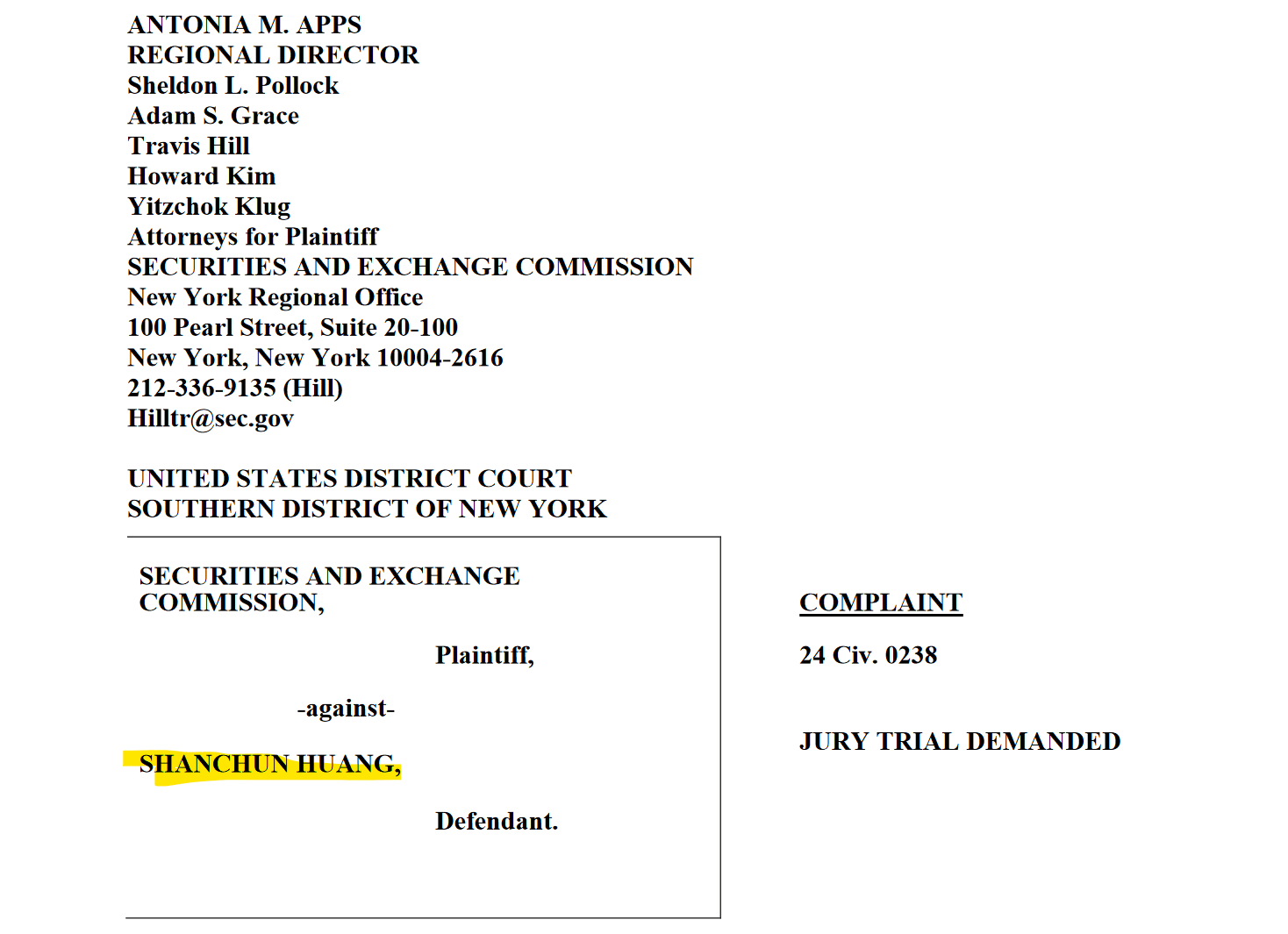
The U.S. Securities and Exchange Commission (SEC) has recently charged Shanchun Huang, the former CEO of Nasdaq-listed Future FinTech Group Inc., with allegations of manipulative stock trading using an offshore account. This charge came into play just before Huang assumed his role as CEO in 2020. Additionally, Huang is accused of failing to disclose his beneficial ownership and transactions in Future FinTech stock.
Alleged Manipulative Trading Details
The SEC’s complaint outlines that in late 2019 or early 2020, Huang, who was then approached to become the CEO of Future FinTech, allegedly engaged in trading the company’s stock through a Hong Kong account. During this period, Future FinTech‘s stock was at risk of being delisted from NASDAQ due to its price falling below the minimum bid price requirement.
Huang is accused of purchasing over 530,000 shares of Future FinTech within two months, and his trading activities were reportedly so significant that they constituted a high percentage of the daily transaction volume of the company’s stock. His trading tactics included placing multiple buy orders within short timeframes and escalating limit prices, which, according to the SEC, appeared to be aimed at artificially inflating the stock’s price. For instance, on February 6, 2020, Huang’s trading accounted for 60% of the day’s trading volume, pushing the price from $0.89 to $1.05 in just nine minutes.
Failure to Disclose Stock Holdings
Upon his appointment as CEO in March 2020, Huang was obligated to file disclosure forms regarding his holdings in Future FinTech stock. However, the SEC alleges that Huang failed to do so for over a year following his appointment. It wasn’t until March 2021, after Huang had divested his holdings in Future FinTech, that he filed a form incorrectly indicating he did not own any stock in the company.
SEC’s Position on Insider Trading
Sheldon L. Pollock, Associate Regional Director of the SEC’s New York Regional Office, emphasized the importance of timely disclosure of insider stock transactions as a core principle of federal securities laws. Pollock also warned that using offshore accounts would not prevent the SEC from detecting and acting against manipulative trading.
Legal Proceedings and Charges
The SEC has filed a complaint in the U.S. District Court for the Southern District of New York. Huang faces charges of violating antifraud and beneficial ownership disclosure provisions of the Securities Exchange Act of 1934. The SEC seeks permanent injunctive relief, a civil penalty, and an officer-and-director bar against Huang.
This case highlights the SEC’s ongoing vigilance against manipulative trading practices and underscores the importance of adherence to disclosure regulations by corporate executives.