



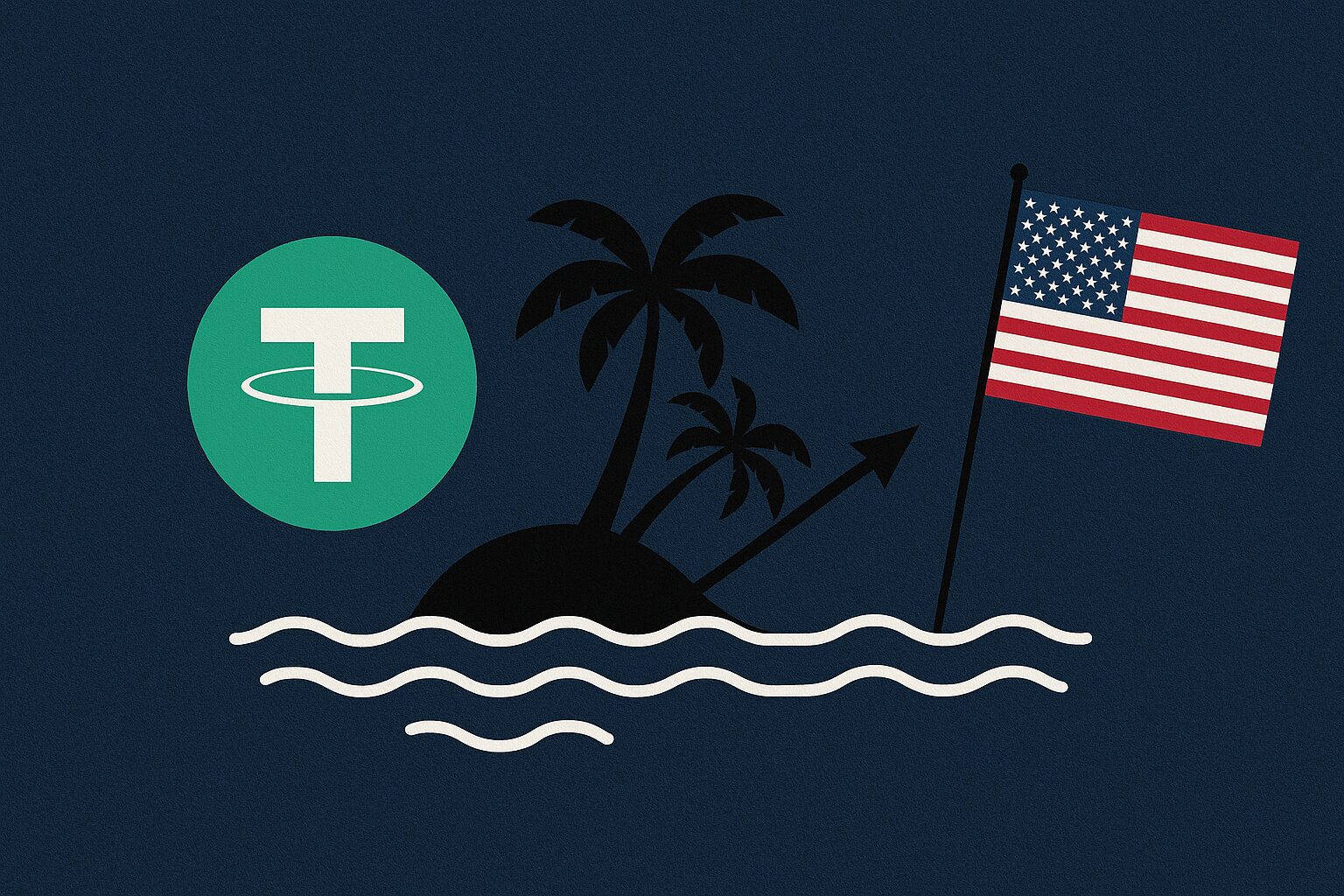
Tether, the world’s largest stablecoin issuer, is allegedly planning to launch a new stablecoin—this time targeting the U.S. market directly. CEO Paolo Ardoino confirmed in a CNBC interview that the company is exploring a U.S.-based issuance vehicle. The goal? “Transparency and regulatory engagement.” But don’t be fooled. The real play here isn’t compliance. It’s strategic fragmentation.
Key Points:
- New Coin Incoming: Tether wants to launch a “separately managed” USD-pegged stablecoin in the U.S.—not to replace USDT, but to parallel it.
- CEO Spin: Ardoino claims the goal is “engagement with U.S. regulators”. But the structure will likely separate liability from Tether’s core offshore operations.
- Regulatory Split: Unlike Circle (USDC), which operates transparently under U.S. laws and is preparing for an IPO (NYSE: CRCL), Tether remains an offshore black box—registered in the BVI, operationally tied to El Salvador, and now dipping its toes into D.C. politics.
- Timing Matters: This move comes as U.S. lawmakers fast-track stablecoin bills and Europe prepares MiCA enforcement. Tether’s new U.S. coin looks more like a regulatory smokescreen than a shift in philosophy.
Red Flags for Investors:
🟥 Regulatory Arbitrage:
Instead of transforming USDT into a compliant product, Tether is creating a regulatory sidecar—likely to dodge MiCA while appeasing U.S. sentiment.
🟥 Legacy Luggage:
Tether has invested in StablR, a European issuer with leadership ties to Payvision, a Dutch PSP notorious for enabling cybercrime. That move alone drew sharp criticism from FinTelegram (Report).
🟥 Lack of Oversight:
No indication that Tether intends to bring USDT under U.S. or EU regulation. The new coin may be “clean on paper”, while USDT continues to serve high-volume, low-transparency markets.
FinTelegram Analysis
This is not a pivot to transparency.
This is a decoupling strategy to protect USDT from future enforcement while launching a compliant front-facing coin for U.S. consumption.
👉 Think “Shell 2.0”—a front office for Washington, with the real action offshore.
Tether remains the undisputed king of liquidity in crypto, but its institutional credibility lags far behind Circle and other TradeFi-oriented players.
Moreover, Tether’s defiance of Europe’s Markets in Crypto-Assets (MiCA) regulation, which mandates 60% of reserves in local banks and full transparency, reveals its aversion to robust oversight. Posts on X highlight Ardoino’s blunt rejection of MiCA, branding it a dangerous tool for control, while Tether prioritizes “global users” from its El Salvador base. This stance contrasts sharply with Circle’s diplomatic engagement with regulators, positioning it as a compliant alternative in a market craving stability.
Bottom Line for Investors:
- Expect two Tethers: one public-facing, one power-facing.
- The stablecoin wars are escalating—and the battleground is compliance.
- Regulators in Brussels, Frankfurt, and Washington must ask the hard questions:
Who controls the dollars behind the dollars?
READ MORE:
- Tether’s €-Stablecoin Gamble: The StablR Scandal
- Stablecoins in TradeFi – Visa, Circle, and the New Money Rails
FinTelegram Insight:
Tether doesn’t pivot. It mirrors compliance while preserving control.
And now, it’s playing the U.S. game—on its own terms.