



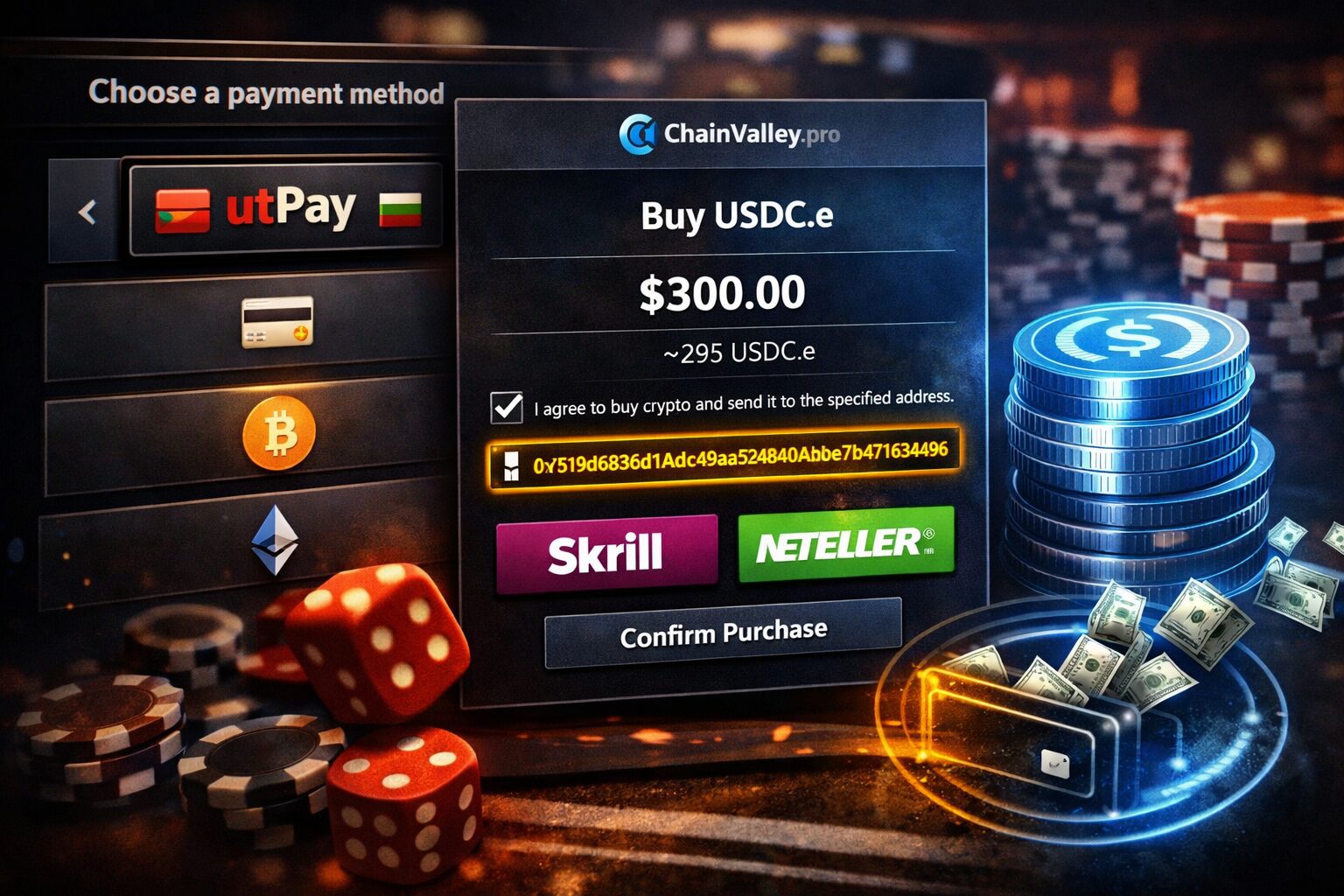
FinTelegram is seeing a growing pattern in offshore casino cashier flows: what looks like a normal fiat deposit (e.g., via Skrill) is quietly re-routed into a crypto purchase—often USDC.e—that is then sent to a prefilled casino wallet. This “fake banking rail” reduces chargeback leverage and adds a second risk layer: USDC.e is bridged USDC, not native issuance.
Key Facts
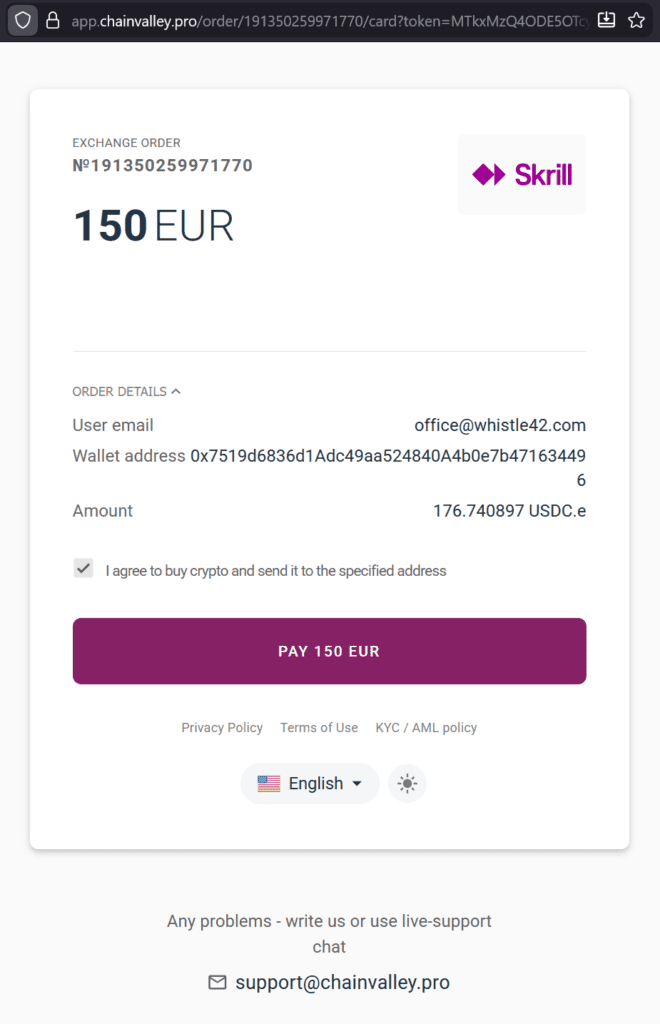
- In cashier flows like the Legiano / Chainvalley setup, the user pays fiat (e.g., 150 EUR via Skrill) while the checkout states they are buying USDC.e and sending it to a specified wallet address—with the consent checkbox already ticked.
- This is not a “casino deposit” in the traditional sense; it is a crypto purchase + transfer, which can materially weaken dispute/chargeback narratives.
- USDC.e is typically a bridged form of USDC moved from Ethereum to another chain via third-party bridging infrastructure—not issued by Circle (Sources: USDC, Circle).
Short Analysis
1) The “fake-fiat” rail:
This flow is designed to feel like a bank/PSP deposit to a gambling account, but it functions as a consumer crypto purchase. The UX does the rest: minimal disclosure, a pre-ticked consent statement, and a prefilled destination wallet that the user is effectively discouraged from changing. The result is predictable: the player sees a casino balance credit, but the payment trail is now “fiat → crypto purchase,” not “fiat → gambling merchant.” That distinction matters for consumer protection, dispute handling, and AML controls—especially in offshore gambling contexts where card acquiring and banking rails are often constrained.
2) Why “USDC.e” raises the stakes:
USDC.e explainer: USDC.e usually denotes bridged USDC (ported from Ethereum), meaning it is a different token contract than “native” USDC on that chain and introduces an additional bridge-risk layer on top of the deposit flow.
Circle and USDC documentation explicitly distinguish bridged forms (commonly branded “USDC.e”) from native USDC and note that bridged forms are not issued by Circle and rely on third-party mechanisms.
3) The compliance angle (why processors should care):
When regulated PSP rails (or PSP-adjacent e-money rails) are used to fund crypto purchases that immediately feed offshore gambling wallets, the risk profile changes. Key concerns include: inadequate informed consent, purpose/merchant-of-record opacity, potential circumvention of gambling-payment restrictions, and elevated AML exposure. If the casino later faces payout friction, players may only discover after the fact that their “deposit” was a crypto transaction—often involving a bridged asset with its own infrastructure dependencies.
Call for Information
FinTelegram is expanding its mapping of USDC.e “casino rails.” If you are a player, PSP insider, compliance officer, or former contractor with information about Chainvalley-style checkouts, merchant descriptors used on Skrill/Neteller statements, the token contract address (to verify whether it is canonical USDC.e or a lookalike), the chain/network used, or payout/withdrawal issues linked to these flows, please report securely via Whistle42.com.