

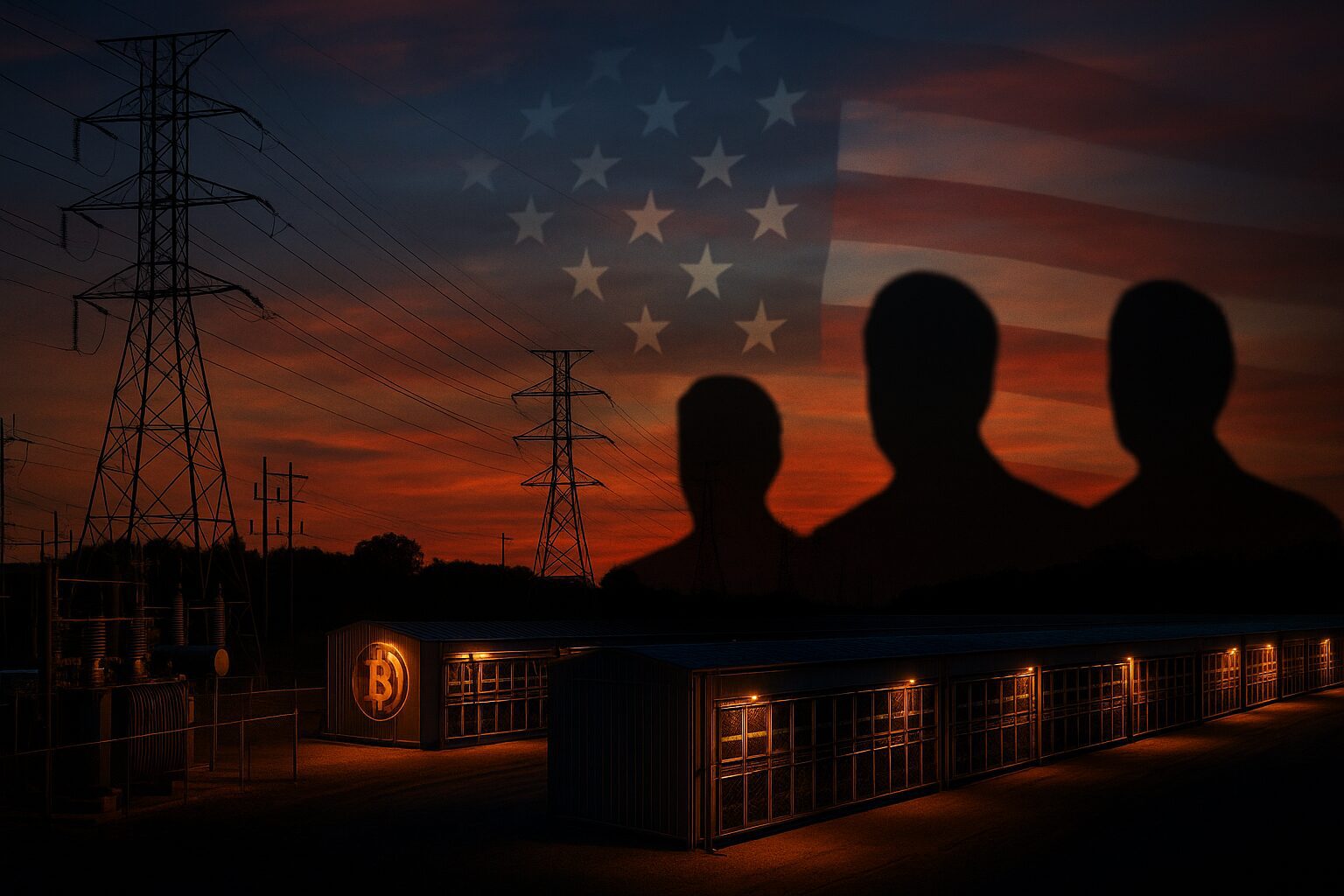
On Aug 7, 2025, Bloomberg reported that the Winklevoss Brothers invested in American Bitcoin Corp, a miner described as linked to the Trump family.
The Block the same day adds the Gemini-IPO angle and frames it as “Trump sons’” miner—raising hard questions about policy optics, related-party risk, and power economics.
5 Key Points
- Deal surfaced Aug 7, 2025: Bloomberg says Tyler & Cameron Winklevoss invested in American Bitcoin Corp; financial terms undisclosed as of press time. (Aug 7, 2025)
- Political proximity: Coverage characterizes the firm as connected to Donald Trump Jr. and Eric Trump, implying elevated governance/ethics scrutiny. (Aug 7, 2025)
- Gemini context: The Block notes Gemini is pursuing an IPO, sharpening focus on the twins’ regulatory profile and perceived political ties. (Aug 7, 2025)
- Mining economics post-halving: Viable miners typically need sub-$0.04–$0.06/kWh all-in power and S21-class efficiency to sustain margins. (Since Apr 2024 halving)
- What investors still don’t know: PPAs/MW, EH/s, fleet age/efficiency, capex/debt, and any related-party contracts—key KPIs likely in forthcoming filings. (Next 2–6 weeks)
Short Narrative
On August 7, 2025, Bloomberg reported that Tyler and Cameron Winklevoss invested in American Bitcoin Corp, described as a U.S. Bitcoin miner linked to the Trump family. The Block corroborated the report the same day, adding that Gemini is pursuing an IPO and describing the company as the Trump sons’ miner.
Public disclosures with hard numbers—power-purchase agreements (PPAs), megawatts (MW), hashrate (EH/s), ASIC mix, debt/capex, and governance ties—were not available at publication. Markets have the headline; investors still need the balance-sheet and power contract reality.
Extended Analysis
Market Impact
Brand-name crypto capital backing a miner pitched as politically connected is a signaling event. Best-case, it accelerates access to permits, interconnects, and cheap/interruptible power, the three bottlenecks for U.S. hashrate growth. Worst-case, it turns the equity into a headline beta vehicle where price action tracks polling cycles and hearings more than cash cost per TH. Post-April 2024 halving, miner survivability skews to operators with sub-$0.05/kWh power, high-efficiency fleets, and grid-service revenues (curtailment/ancillary services). If American Bitcoin Corp can lock ERCOT-style flexible PPAs and monetize demand response, the unit economics can work. If power lands above plan—or is firmed without curtailment upside—margins compress fast.
Legal, Ethics & Governance Exposure
Media framing around Trump-family links invites scrutiny across campaign-finance, ethics, and conflict-of-interest lanes. Diligence priorities: (1) beneficial ownership (UBOs, trusts, SPVs), (2) related-party transactions (land, incentives, procurement), (3) board/observer roles and indemnities, (4) any government incentives or public-power arrangements that could intersect with political actors. If the company taps public markets or large U.S. institutions, expect gating on KYC/AML, beneficial-ownership attestations, and enhanced governance reps.
Operations & Balance Sheet
This trade lives and dies on hard KPIs: installed vs. contracted EH/s, nameplate MW vs. hedged MW, ASIC efficiency (J/TH) and age curve, hosting vs. self-mine mix, BTC/power hedging policy, liquidity runway under hashprice drawdowns, and capex cadence. We’ll also want interconnect queue IDs, site addresses, and PPA clauses (take-or-pay? curtailment crediting?). Without these, the story is narrative-led and should be priced as such.
Precedents
Miners with cheap power + scale + grid revenues rerate higher and survive winter tapes; miners with mid-tier power and levered growth underperform when BTC stalls or power spikes. The politics overlay is novel at this intensity—either a moat on permitting and capital, or a governance overhang that narrows the buyer universe.
Investment Implications – Risk-Reward Matrix
- Bull Case: Political reach speeds siting/interconnects and unlocks low-cost, flexible PPAs; modern fleet yields sub-$40/TH breakevens and cash conversion.
- Bull Case: Strategic partners (OEM financing, energy cos) compress WACC; rapid scale to multi-EH/s with demand-response upside.
- Bear Case: Ethics/FEC blowback chills institutional demand; first KPI disclosure disappoints (higher $/kW, older rigs), forcing dilutive capital.
- Bear Case: Power volatility and weaker hashprice crush margins; expansion capex collides with IPO/financing windows.
- Wildcard: Sites pivot part-capacity to AI/HPC colocation, rerating from miner to compute utility.
Recommendation or Warning
Treat this as a headline trade until filings reveal power, hashrate, PPAs, and related-party ties—do not underwrite on politics alone.