

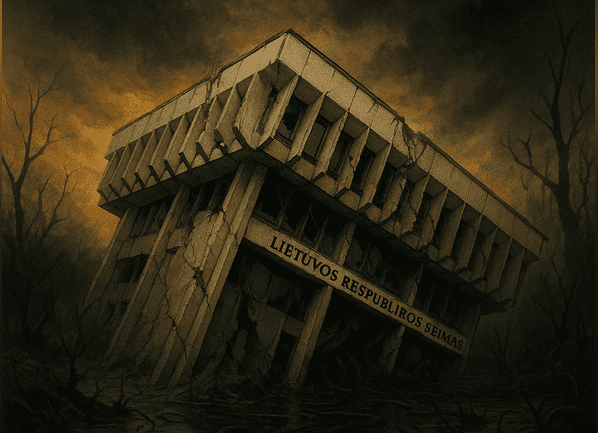
Lithuania’s sudden political implosion has sent shockwaves across the European continent—and for good reason. The resignation of Lithuanian Prime Minister Gintautas Paluckas and the entire cabinet in August 2025 exposes a deep and festering rot at the heart of both national and EU governance. This is no ordinary collapse; it’s a scandal-filled drama of corrupt dealings, shadowy business interests, and brazen misuse of public confidence that highlights, yet again, how corruption remains the EU’s ultimate Achilles’ heel.
The Scandal That Brought Down Lithuania
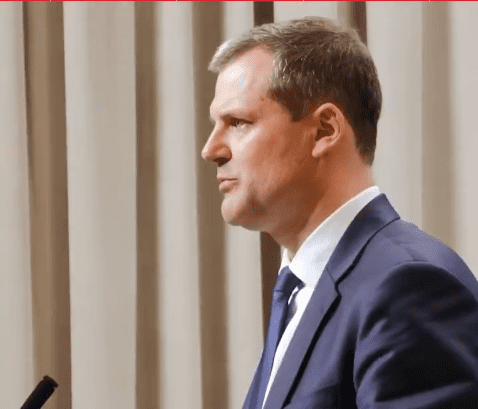
Paluckas’ defeat stems from an avalanche of investigative reporting and mounting public suspicion over his entanglements with state contracts and EU funds. First, journalists blew the lid off a scheme involving Dankora—a company owned by Paluckas’ sister-in-law—that benefited from EU subsidies. Where did those subsidies end up? In the coffers of Garnis, a firm whose part-owner was none other than Paluckas himself, the sitting prime minister.
This web drew in state-backed loans and a series of real estate deals linked to business associates long denied by Paluckas, only to be confirmed under growing pressure. Even more galling: revelations that Paluckas only settled debts from a previous corruption conviction (“the rat poison scandal”) days before the latest storm erupted, underlining a culture of impunity.
This grotesque dance between public office and personal enrichment did not escape notice. Lithuania’s financial crimes investigators descended on implicated companies, while the public, already irate at years of perceived elite impunity, took to the streets. With coalition partners ready to bolt, parliamentary impeachment proceedings looming, and the president demanding action, Paluckas had no choice but to resign and drag the entire government down with him.
The reporting, which linked the politician to questionable loans, real estate deals, and offshore companies, had sparked two criminal investigations and protests calling for Paluckas to step down. In his resignation on Thursday, which came less than a year after he took office, Paluckas called the allegations a “coordinated attack.”
OCCRP post on X (link)
The EU: A Breeding Ground for Corruption?
But Lithuania is merely the most recent domino to fall. This crisis occurs in the thick of anxieties about another scandal—this time at the European Commission itself, centered around the Green Deal architect Frans Timmermans and his right-hand man Diederik Samsom. As Samsom prepares to join Gasunie, a major gas company, it emerges that he repeatedly met with Gasunie representatives while still shaping EU energy policy.
For transparency advocates, this is a textbook conflict of interest: the smug “revolving door” between regulation and industry. Greenpeace and the Corporate Europe Observatory call it “scandalous” and a clear sign of how porous, and corruptible, the Commission remains.
This is just the tip of the iceberg. Corruption is so entrenched within the EU’s structures that the European Parliament estimates its cost at a mind-boggling €990 billion annually, with public procurement, healthcare, financial services, and construction as notoriously compromised sectors. EU-wide polls show that just 21% of Europeans believe officials are ever punished for corruption. Is there any starker proof that big business and inside interests run the show, not the voters themselves?
Corruption: Europe’s Never-Ending Crisis
Why does this keep happening? EU anti-corruption watchdogs consistently highlight vulnerabilities: oversight bodies lack teeth, transparency remains a buzzword rather than reality, and networks of political insiders circulate undisturbed through the highest echelons of power—making and breaking fortunes, always with taxpayer money on the line.
The Lithuanian spectacle is thus not an anomaly, but part of a pattern. From “Qatargate” to Huawei, and now the twin scandals in Vilnius and Brussels, the evidence is glaring: the EU’s promises of reform and integrity routinely collapse before the might of systemic corruption and political expediency. Each scandal exposes not just individuals, but entire networks and structures designed to enrich elites and silence dissent.
Hypothesis: Corruption’s Comeback
The hypothesis is unavoidable—corruption has once again become a major, destabilizing force within the European Union. Despite decades of hand-wringing and endless initiatives, corrupt actors adapt, institutions lag behind, and voters across the continent are left with little reason to trust their leaders. Against the backdrop of war, energy crises, and populism, such failures of governance are more than just embarrassing; they are harbingers of democratic decay.
As Lithuania rebuilds amid shame, and as Brussels scrambles to contain yet another scandal, the message is clear: corruption is not Europe’s embarrassing past—it’s a resurgent, existential threat to its future.