


FinCEN’s unprecedented $3.4 billion settlement with Binance, marking the largest in its history, highlights crucial lessons for the cryptocurrency industry, particularly in adhering to Money Services Business (MSB) regulations. Binance‘s failure in establishing an effective KYC/AML program have brought the MSB obligations under sharp focus, demonstrating that MSB registration, while mandatory, does not equate to regulatory supervision or endorsement.
Binance’s Compliance Failures
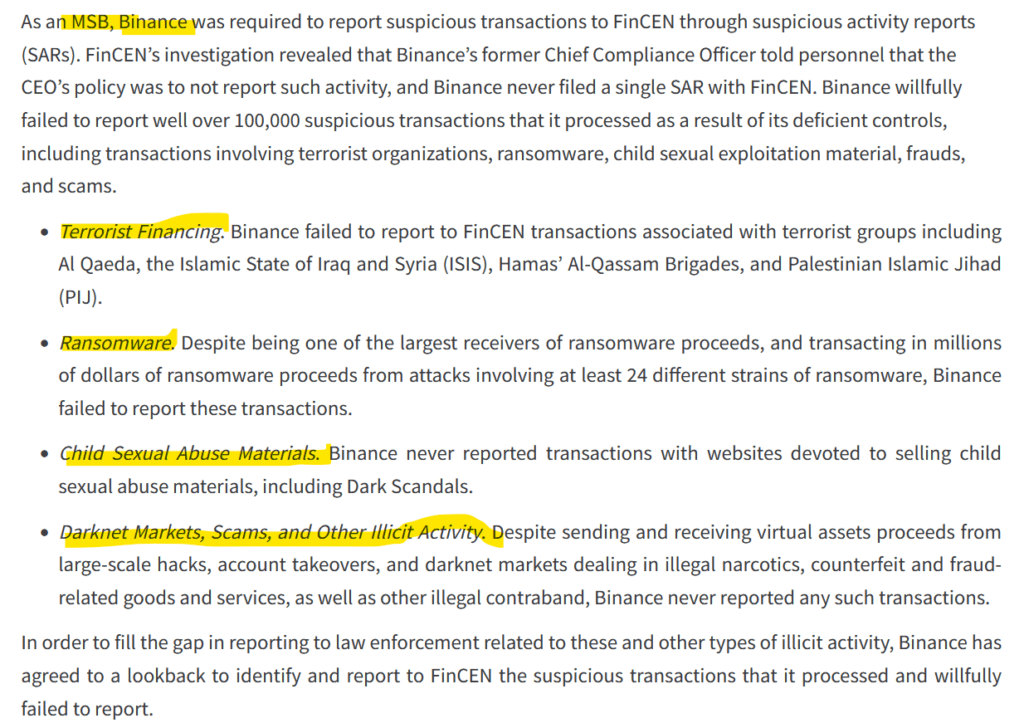
By not registering as an MSB and neglecting its regulatory duties, Binance not only compromised the integrity of the financial system but also blatantly ignored the requirement to report suspicious activities through Suspicious Activity Reports (SARs). The investigation revealed Binance’s laxity in mitigating risks posed by anonymity-enhanced cryptocurrencies, facilitating the concealment of illicit transactions.
The MSB Concept Explained
An MSB in the U.S. is defined under federal law as any business involved in financial services such as currency exchange, money transfers, and issuing money orders, among others. Governed by the Bank Secrecy Act (BSA) and supervised by FinCEN, MSBs are required to register every two years. This registration is critical for transparency in financial activities, aiming to prevent money laundering and terrorist financing.
Registration vs. Regulatory Supervision
It’s vital to distinguish between MSB registration and regulatory supervision. Registration with FinCEN is a legal obligation but doesn’t imply regulatory approval or supervision. Compliance with AML regulations and other relevant laws remains the sole responsibility of the MSB.
Compliance Imperatives for MSBs
Registered MSBs must adhere to several compliance measures, including developing a tailored AML program, adhering to reporting and recordkeeping requirements under the BSA, and ensuring employee training and auditing for AML procedures. These measures are not just regulatory obligations but are also essential for the integrity and trustworthiness of the financial services sector.
The Binance Case: A Warning to Crypto Businesses
Binance‘s case, scrutinized by FinCEN, underscores the importance of MSB compliance, regardless of whether the business deals in fiat or cryptocurrencies. It serves as a stark reminder to other crypto businesses about the critical need to adhere to MSB rules when dealing with U.S. clients. The settlement reiterates that while registered MSBs are not under direct regulatory supervision, they must still fully comply with all applicable laws and regulations.
Conclusion
The Binance saga with FinCEN is a wake-up call for the crypto industry, emphasizing the significance of MSB registration and compliance. It highlights that crypto businesses, like their traditional counterparts, bear the responsibility to operate within the legal framework and uphold the principles of financial integrity. This incident serves as a learning opportunity for all in the rapidly evolving crypto sector, reminding businesses of the critical need to stay abreast of and comply with financial regulations.