
A recent cross-border investigation by Investigative Europe reveals how high-profile YouTube and Twitch influencers are steering millions of consumers to blacklisted, unlicensed online casinos. Earning up to 60% of their followers’ gambling losses, these influencers operate in a massive regulatory gray area, raising severe compliance, anti-money laundering (AML), and consumer protection concerns. FinTelegram examines the legal liability of these digital promoters and calls on whistleblowers to expose the illicit affiliate networks funding them.
Key Findings
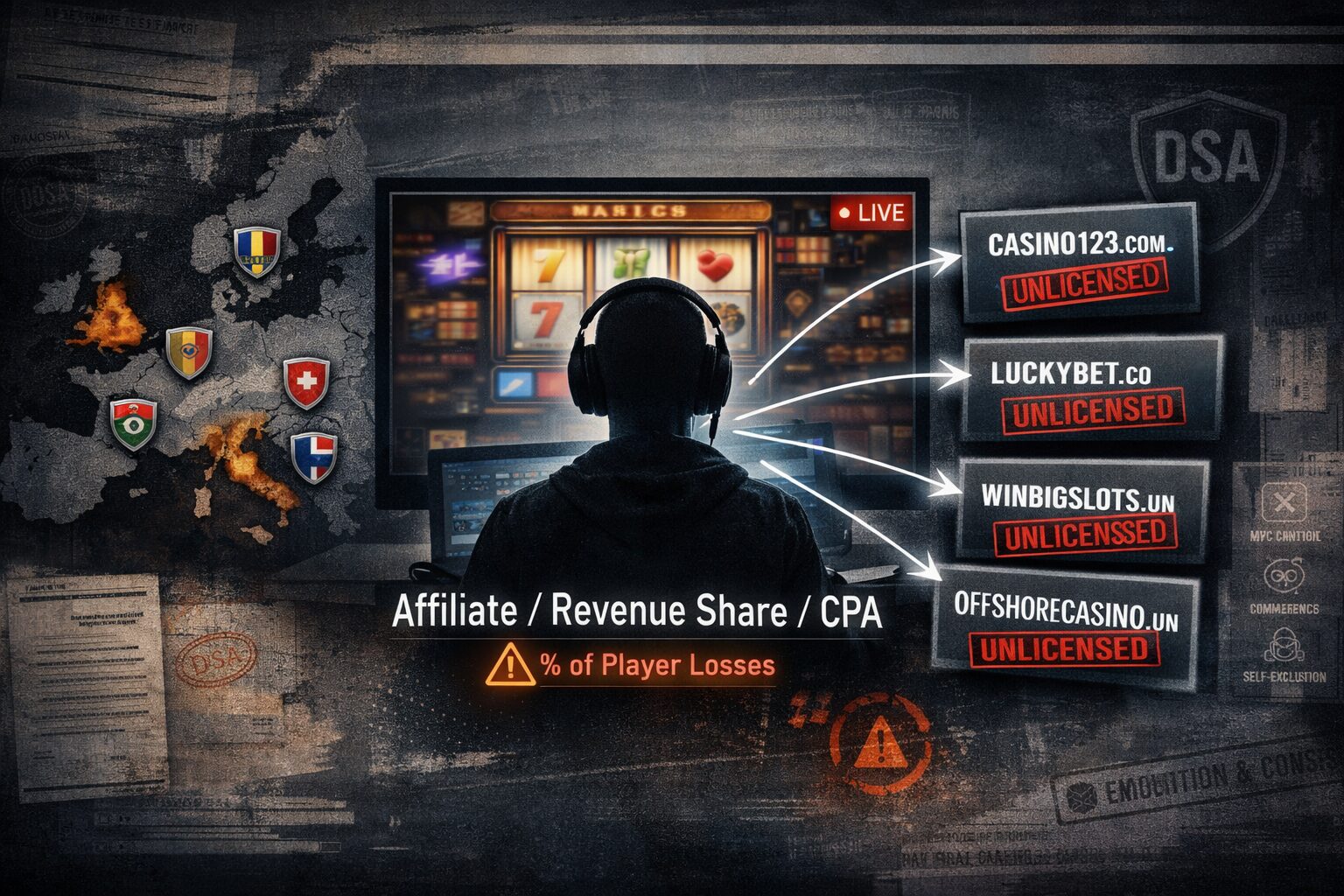
- Affiliate economics appear central: Investigate Europe describes revenue-share and CPA-style schemes where streamers earn per referred player and, per whistleblower documents, sometimes a percentage of losses—a direct incentive to drive high-risk play.
- Cross-border scale: The investigation identifies influencers in Italy, Portugal, Greece, Poland, Germany, Spain and Sweden promoting casinos “not licensed in Europe,” often with links embedded on-screen, in video descriptions, or comments.
- Soft2bet gravity: Investigate Europe says many promoted sites “ultimately connect back” to a European gambling tech firm and links this ecosystem to 100+ blacklisted casinos previously reported.
- “House money” streaming: A whistleblower described “non-withdrawable” balances or funded accounts provided to affiliates, turning livestream gambling into a performance with muted personal downside—while viewers face real loss risk.
- Regulatory action exists but is uneven: Italy’s AGCOM has sanctioned major platforms for illegal gambling advertising content; separately, national regulators (e.g., Netherlands) have taken action against influencer promotion of illegal operators.
- Platforms are now in scope (EU): Under the DSA, large platforms have duties around illegal content reporting/handling and systemic risk mitigation—relevant when illegal gambling promotion is persistent and scalable.
Compliance & Liability Analysis: Why This is not “Just Marketing”
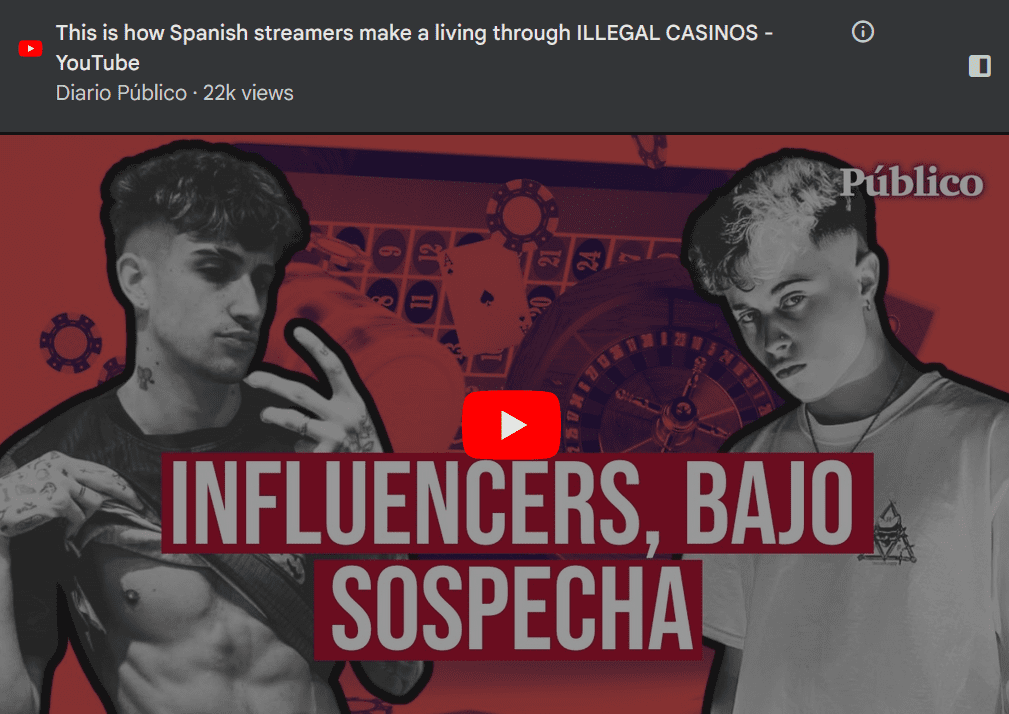
Offshore casinos, unable to legally advertise in strict European jurisdictions, effectively outsource their marketing to influencers and streamers. The tech platforms hosting these streamers are currently shielded by the Digital Services Act (DSA), which exempts them from actively monitoring user-generated content for illegal activity.
1) Influencers as “unregulated affiliates” — but functionally a high-risk outsourcing layer
In regulated markets, affiliate marketing is already a known risk surface. Investigate Europe’s evidence suggests illegal operators (or their marketing intermediaries) use creators as a front-end distribution channel: the influencer supplies trust, community, and attention; the operator supplies the product; the affiliate scheme supplies tracking + payout. That looks like a structured acquisition pipeline, not incidental mention.
Compliance implication: from a risk perspective, these creators behave like “introducers/affiliates” in other financial-crime typologies—paid traffic brokers who should trigger enhanced scrutiny (KYC of affiliates, audit rights, geo/legal gating, ad library transparency, payment traceability).
2) Criminal/administrative exposure: “advertising unlawful gambling” is a real legal category
Jurisdictions differ, but the UK is illustrative: Gambling Act 2005, s.330 makes it an offence to advertise unlawful gambling. While each case depends on facts/jurisdiction, creators who target audiences in a regulated market while promoting unlicensed operators can walk into advertising-offence territory—especially if the promotion is paid and uses tracking links.
Practical liability pattern: regulators can pursue (a) the operator, (b) marketing intermediaries/affiliates, and increasingly (c) the distribution nodes (influencers) and sometimes (d) platforms hosting the content—depending on local law and enforcement appetite.
3) Consumer protection + AML: unlicensed casinos are a “controls vacuum”
Investigate Europe stresses that unlicensed casinos lack the consumer protections of regulated operators and can put funds at risk. From an AML and harm-prevention lens, the influencer funnel is dangerous precisely because it pushes users into a space with weaker KYC, weaker affordability controls, and weaker dispute resolution.
4) Platform liability and the DSA: “illegal services” at scale are a systemic risk, not a moderation footnote
The DSA framework (especially for very large platforms) is designed around scalable harms: reporting mechanisms, transparency, and mitigation of systemic risks. Persistent promotion of unlicensed gambling services to EU users can qualify as illegal services advertising, forcing the question: what did platforms know, and what did they do once notified?
Italy’s AGCOM example demonstrates that national authorities are willing to sanction platforms for illegal gambling advertising content targeting domestic audiences.
Working hypothesis: Influencers are the “conversion layer” of Europe’s illegal casino economy
Hypothesis: In 2024–2026, the illegal casino segment has professionalized its go-to-market strategy. Influencers/streamers are not merely promoters; they are performance-based acquisition partners who (1) launder legitimacy via parasocial trust, (2) convert audiences through “live proof” gambling content, and (3) monetize through affiliate mechanisms that may be economically aligned with player losses. This turns the influencer into a risk-bearing node in the compliance chain—comparable to an unregulated broker in finance: high reach, low oversight, and strong incentives to optimize conversions.
Prediction: expect more “two-track enforcement”: regulators target (a) operators and (b) the marketing stack (affiliates, processors, platforms, influencers), because that is the only way to disrupt scale.
Call for Information
Do you have information about influencers, agencies, affiliate programs, tracking links, payment flows (CPA/rev-share), “house-money” streaming accounts, or platform takedown patterns linked to unlicensed casinos targeting EU/UK users? Send tips (anonymously if needed) via Whistle42.com. Include screenshots, referral URLs, invoices, Telegram/Discord outreach, or payment proofs.