



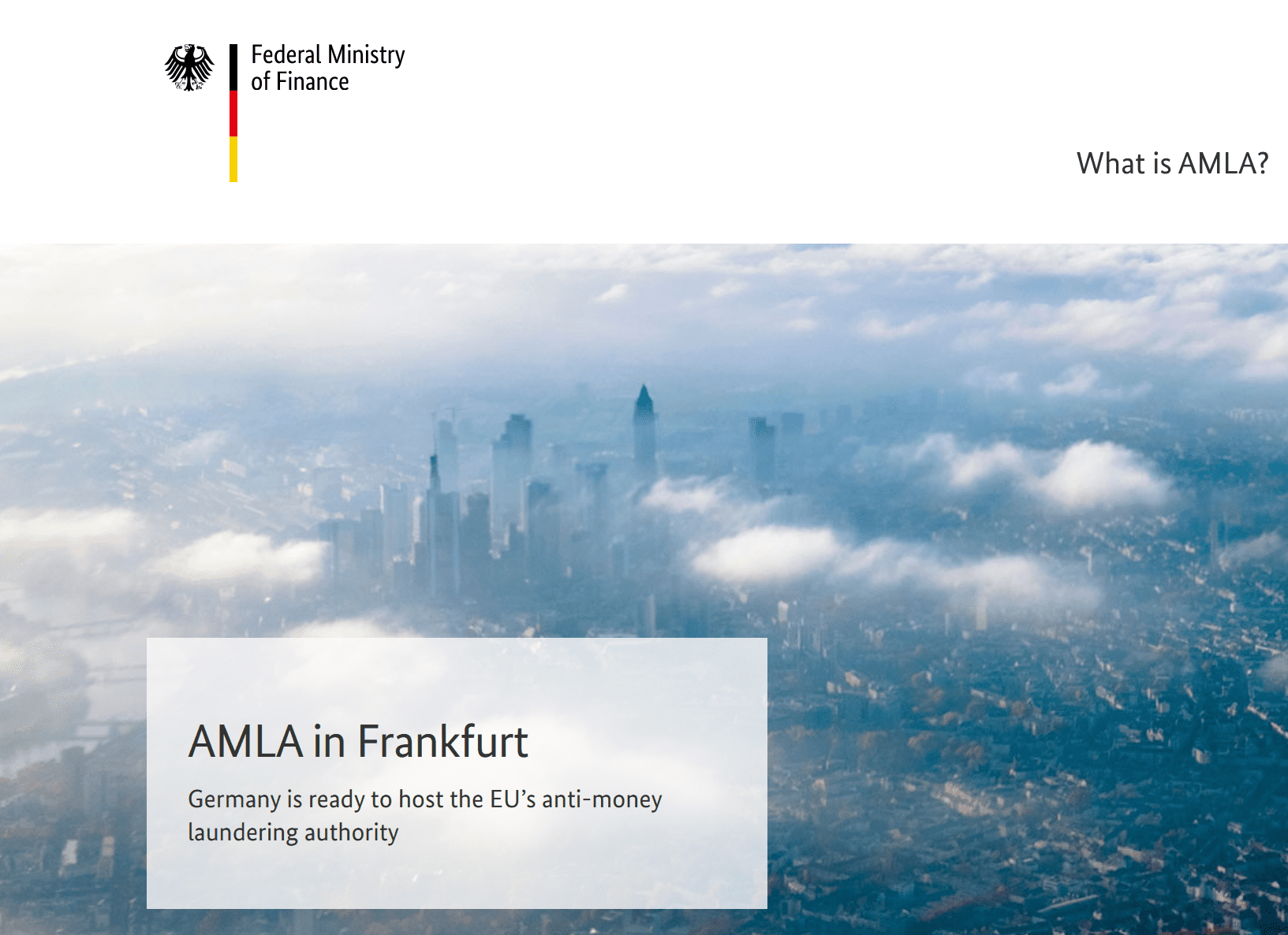
In an ironic twist of fate, Frankfurt has outmaneuvered several European capitals to secure the coveted spot for the European Union’s new anti-money laundering authority (AMLA), announced on 22 Feb 2024, despite Germany’s notorious track record with money laundering scandals. This decision has left many insiders and observers in the global anti-money laundering community more than just puzzled – they’re downright flabbergasted.
Germany, with its checkered history of lax enforcement against money laundering, has now been entrusted with housing the EU’s frontline defense against dirty money. The country, still reeling from the Wirecard scandal where authorities notoriously targeted journalists over the fintech giant’s executives, appears to be a questionable choice at best.
Read our Wirecard reports here on FinTelegram.
Deutsche Bank, Frankfurt’s banking behemoth, has also been repeatedly entangled in significant money laundering scandals, paying a hefty $186 million fine in the U.S. as recently as 2023 for such violations.
The establishment of AMLA in Frankfurt, a city already home to the European Central Bank and poised to attract a flurry of EU officials and potential lobbyists, sends a bewildering message. The selection process, which resembled a Eurovision-style voting spectacle, culminated in a secretive vote that saw Frankfurt clinch the majority needed to host the AMLA, despite some MEPs’ reservations and preference for cities like Madrid, Paris, or Rome. AMLA will have over 400 staff members, the announcement says.
This move comes on the heels of a series of dirty money scandals that laid bare significant supervisory blind spots within the EU’s banking sector. The European Commission’s push for a joint anti-money laundering authority back in July 2021 was a response to these incidents, aiming to tighten the noose on money laundering and terrorist financing across the EU. AMLA‘s mandate includes direct oversight of cross-border, high-risk financial institutions, including crypto-asset service providers, and bolstering national supervisory bodies.
Frankfurt’s selection as AMLA’s headquarters, championed by German Finance Minister Christian Lindner, has been pitched as a strategic decision, promising consolidated supervision in the anti-money laundering battle. The new authority, set to employ up to 500 staff and oversee approximately 200 European companies, will also offer guidance to national authorities.
However, the choice of Frankfurt, in light of Germany’s struggle with pervasive money laundering issues, has raised eyebrows. Despite international acknowledgment of Germany’s recent efforts to combat money laundering, the effectiveness of its criminal prosecution remains under scrutiny. Lindner’s proposal to amalgamate various national anti-money laundering competencies into a new, adequately staffed, and technologically advanced authority still awaits Bundestag approval.
As Frankfurt gears up to host AMLA, the juxtaposition of Germany’s past money laundering woes against its newfound role as an anti-money laundering champion is striking. This development poses the question: Can Frankfurt, and by extension Germany, rise above its historical shortcomings to lead the EU’s charge against dirty money? Or is the EU setting itself up for a battle where the lines between irony and efficacy are dangerously blurred?