



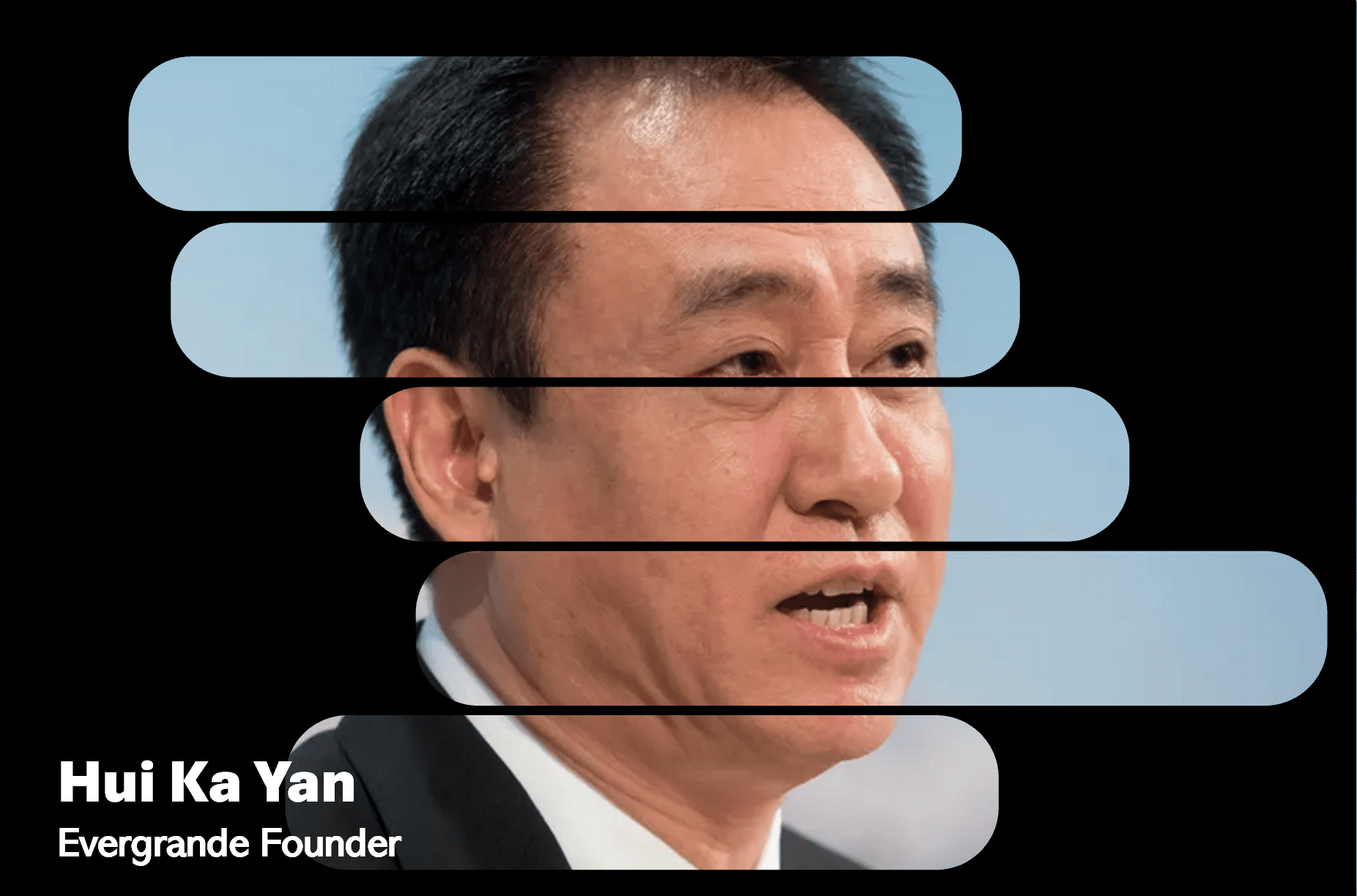
Hui Ka Yan, the founder of China’s real estate behemoth Evergrande, once held the title of Asia’s wealthiest individual. Known alternatively as Xu Jiayin, Hui’s journey from modest beginnings to leading a sprawling business conglomerate is remarkable. In 2017, Forbes magazine estimated his net worth at a staggering $42.5 billion. As of early October 2023, however, Forbes estimates the fortune at only $3.2 billion.
The Fal From Grace
Not only lost Hui most of his net worth but is also confronted with criminal investigations, Evergrande said this week, hours after trading was halted for the beleaguered developer amid mounting concern over its future as it works to restructure and fend off the looming specter of liquidation. The company said it had been notified by the “relevant authorities.” As reported by FinTelegram, the Evergrande founder’s Yacht Event was reportedly sold earlier this year.
The Early Years
Hui’s early years were marked by adversity. Born in 1958 to an impoverished family, he experienced the repercussions of Mao Zedong’s Great Leap Forward, a campaign that led to a devastating famine. After completing his university education in 1982, Hui embarked on a career as a steel technician. In 1996, he laid the foundation for Evergrande. The company’s meteoric rise mirrored China’s economic ascent, fueled by significant borrowing.
A long-standing member of the Communist Party, Hui was elected to the Chinese People’s Political Consultative Conference in 2008. A 2012 image of him donning a luxurious Hermès belt at a party conference became a social media sensation, earning him the moniker “belt brother.
The Evergrande Rise
Evergrande‘s impressive trajectory saw it raise $9 billion in a 2009 Hong Kong IPO. Jackson Chan of Bondsupermart attributes the company’s accelerated growth to Hui’s connections with Hong Kong’s real estate magnates. These alliances bolstered Evergrande, with many investing in its stocks and bonds.
The company’s strategy involved borrowing extensively to pre-sell unbuilt apartments. Today, Evergrande boasts over 1,300 projects across 280+ Chinese cities. Beyond real estate, Hui diversified into sectors like wealth management, electric vehicles, and food production. He also acquired a significant stake in Guangzhou FC, a leading Chinese football club.
The Collapse Of A Chinese Real Estate Giant
However, 2020 marked a turning point. New regulations aimed at curbing real estate developers’ debt saw Evergrande resort to massive property discounts. The company’s financial woes led to a 99% reduction in its stock market value, with Hui’s wealth dwindling to $3.2 billion.
Evergrande’s shares were halted from trading in Hong Kong amidst investigations into Hui’s activities. Analysts speculate a connection between China’s crackdown on its affluent class and President Xi Jinping’s Common Prosperity initiative, which seeks to bridge the wealth gap. Dexter Roberts of the University of Montana views Hui, with his opulent lifestyle, as emblematic of this wealth disparity, making him a likely target for scrutiny.
While official statements on Hui’s investigation are pending, the state-affiliated Global Times emphasizes safeguarding homebuyers’ interests in the Evergrande debacle. The publication advocates for a lawful, transparent approach, prioritizing customer support.