



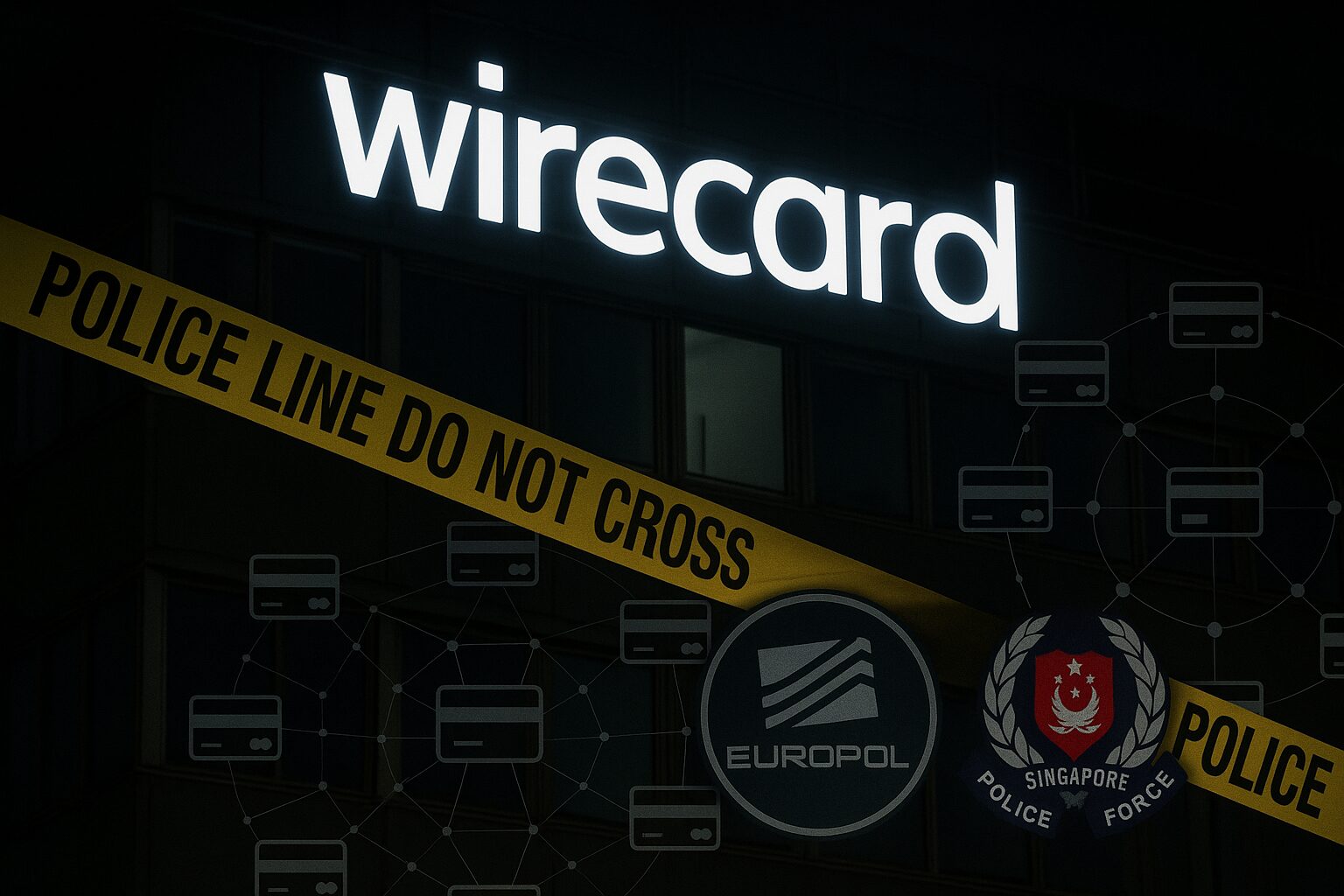
Former Wirecard Asia director Brigitte Häuser-Axtner, a German national wanted by prosecutors in Germany, has been arrested in Singapore under an extradition request. Her arrest is part of Operation “Chargeback”, a Europol-coordinated action against three fraud and money-laundering networks that allegedly abused the card data of more than 4.3 million victims in 193 countries, causing damages of over €300 million and misusing the infrastructure of four major German payment providers – one of them, according to Der Spiegel, being Wirecard.
Key Points
- Arrest in Singapore: Häuser-Axtner was arrested on 4 November 2025 by the Singapore Police Force following a request from German authorities under an existing extradition treaty (Source: The Straits Times).
- Alleged offences: Germany wants her for suspected formation of a criminal organisation abroad, computer fraud, gang-related offences and money-laundering under German jurisdiction. Singapore police emphasised that, based on current information, she is not accused of committing crimes in Singapore (Source: The Straits Times).
- Operation Chargeback: The coordinated raid – dubbed “Operation Chargeback” – targeted three major fraud and money-laundering networks, involved 44 suspects, and has so far resulted in 18 arrests across Europe, North America and Asia.
- Scale of the scheme: Between 2016 and 2021, the networks allegedly abused card data from more than 4.3 million cardholders in 193 countries via low-value fake subscriptions (around €50) for porn, dating and streaming sites, processed through over 500 shell companies, generating losses exceeding €300 million.
- Misuse of German PSPs: Europol and German authorities say the networks compromised four large German payment service providers. While Europol did not name them, Der Spiegel identified Wirecard as one of the firms whose infrastructure was used. T
- Insiders under suspicion: At least six suspects, including executives and compliance officers, are accused of deliberately granting the networks access to payment infrastructure in return for payments – a direct hit to the credibility of compliance functions at the involved PSPs.
- Wirecard background: Häuser-Axtner previously held senior roles at Wirecard, including Vice President Digital Sales at Wirecard AG and managing director of Wirecard Asia Holding Pte Ltd, according to corporate documents and public profiles (Source: Computerwoche).
- Already on the radar: In the German Bundestag’s Wirecard inquiry, she was mentioned in connection with loans from Wirecard Asia Holding to OCAP, a company run by her husband, raising early red-flag questions about conflicts of interest and governance (Source: ft.com).
Short Narrative
On 4 November 2025, Singapore police quietly arrested Brigitte Häuser-Axtner at Germany’s request. Only days later, the operation was publicly revealed as part of “Operation Chargeback”, a Europol-driven crackdown on global subscription-fraud rings that had been siphoning money from millions of cardholders for years.
According to the Singapore Police Force and reporting by The Straits Times, German authorities allege that Hauser-Axtner was involved in forming a criminal organisation abroad and in computer-fraud and money-laundering schemes. She is now facing extradition proceedings; a further court mention in Singapore has been scheduled, while German investigators continue to work the case.
The underlying fraud scheme is staggering: from 2016 to 2021, credit-card data of more than 4.3 million individuals was used to push fake, low-value subscriptions for porn, dating and streaming offers through a web of hundreds of shell companies, mostly in the UK and Cyprus. The charges were kept small and vaguely labelled so cardholders would ignore them or not recognise them as fraud.
At the centre: four major German payment processors whose acquiring and processing infrastructure, according to investigators, was infiltrated or compromised. One of those processors, unnamed in official Europol releases, has been identified by Der Spiegel as Wirecard – the now-insolvent fintech giant whose collapse in 2020 cost banks, investors and partners hundreds of millions of euros and remains one of Europe’s largest financial-crime cases.
Extended Analysis – Wirecard’s Long Shadow and Compliance Failure 2.0
The arrest of Brigitte Häuser-Axtner demonstrates that Wirecard is far from a closed chapter. While former CEO Markus Braun is on trial in Munich and former COO Jan Marsalek is still at large, German authorities are now clearly turning their attention to secondary layers of the Wirecard network – regional directors, risk managers and compliance insiders who allegedly opened the doors for global fraud schemes.
Open questions abound:
- What exactly is Häuser-Axtner alleged to have done? The German arrest warrant covers formation of a criminal organisation, computer fraud, gang-related offences and money-laundering, but the public documents do not yet spell out whether the accusations are limited to the fake-subscription scheme, to classic Wirecard balance-sheet fraud – or to both.
- How deep went the insider collusion? Europol says six suspects, including executives and compliance officers, are accused of actively facilitating access to payment systems for criminal networks. That means these were not merely “abused” PSPs; at least part of the criminality allegedly came from inside the house.
- Where were the regulators and card schemes? The scheme ran for five years, involved millions of cards and hundreds of shell merchants in high-risk verticals (porn, dating, streaming). Yet it took a pattern of suspicious-activity reports at Germany’s FIU and a multi-year, multi-country investigation to shut it down.
Häuser-Axtner is not an unknown figure. She appears in Wirecard offering documents as a managing director of Wirecard Asia Holding Pte Ltd, alongside Jan Marsalek. Parliamentary testimony in the Bundestag’s Wirecard inquiry noted that the Asia entity granted a multi-million euro loan to OCAP, a company led by her husband Carlos Häuser – a transaction that already raised red flags about governance and related-party dealings long before the current fraud allegations (Source: dserver.bundestag.de).
From a compliance perspective, Operation Chargeback looks less like a pure external hack of payment infrastructure and more like a textbook case of “Crime-as-a-Service” meeting weak – or complicit – internal controls:
- card data obtained via phishing and other cyber-fraud methods;
- funnelled into fake sites fronted by hundreds of shell companies;
- processed through major PSPs whose internal risk and AML systems either failed to detect the patterns or were actively overridden (Source: DIE WELT).
For regulators, especially BaFin, the European Banking Authority and the card schemes, this raises an uncomfortable question: if a collapsed and disgraced payment champion like Wirecard can still appear in the centre of a 2025 enforcement operation, how robust are today’s gatekeepers in the high-risk PSP sector?
Actionable Insight – What Banks, PSPs and Investors Should Do Now
- Re-screen ex-Wirecard staff: Financial institutions should systematically re-assess senior hires with Wirecard backgrounds, especially those who held roles in Asia, risk, compliance and merchant acquiring. Häuser-Axtner’s arrest shows that legal exposure for former insiders is far from over.
- Re-analyse historic merchant portfolios: Acquirers and card issuers should run retrospective analytics on transactions from 2016–2021 in the porn/dating/streaming verticals, with a special focus on sub-€50 recurring charges and shell-company patterns. Many victims may never have recognised the fraud.
- Demand transparency from PSPs: Investors in payments and fintech companies should now expect full disclosure on any past relationships with the networks implicated in Operation Chargeback, including cooperation with authorities and remedial measures taken.
Call for Information – Help Map the Wirecard Aftermath
FinTelegram will continue to follow Operation Chargeback and the proceedings against Brigitte Häuser-Axtner and other suspects in Germany and beyond.
We are particularly interested in:
- Internal communications, risk reports or compliance memos from Wirecard or other unnamed PSPs relating to subscription merchants in high-risk verticals;
- Information on the use of shell companies in the UK, Cyprus or other jurisdictions to process online subscriptions;
- Details on the role of former Wirecard managers and compliance officers who later surfaced in other fintech or payment projects.
Insiders, former staff, merchants and victims can contact us confidentially via our whistleblower platform Whistle42.com. Submissions can be made anonymously and will be handled with the utmost care.