


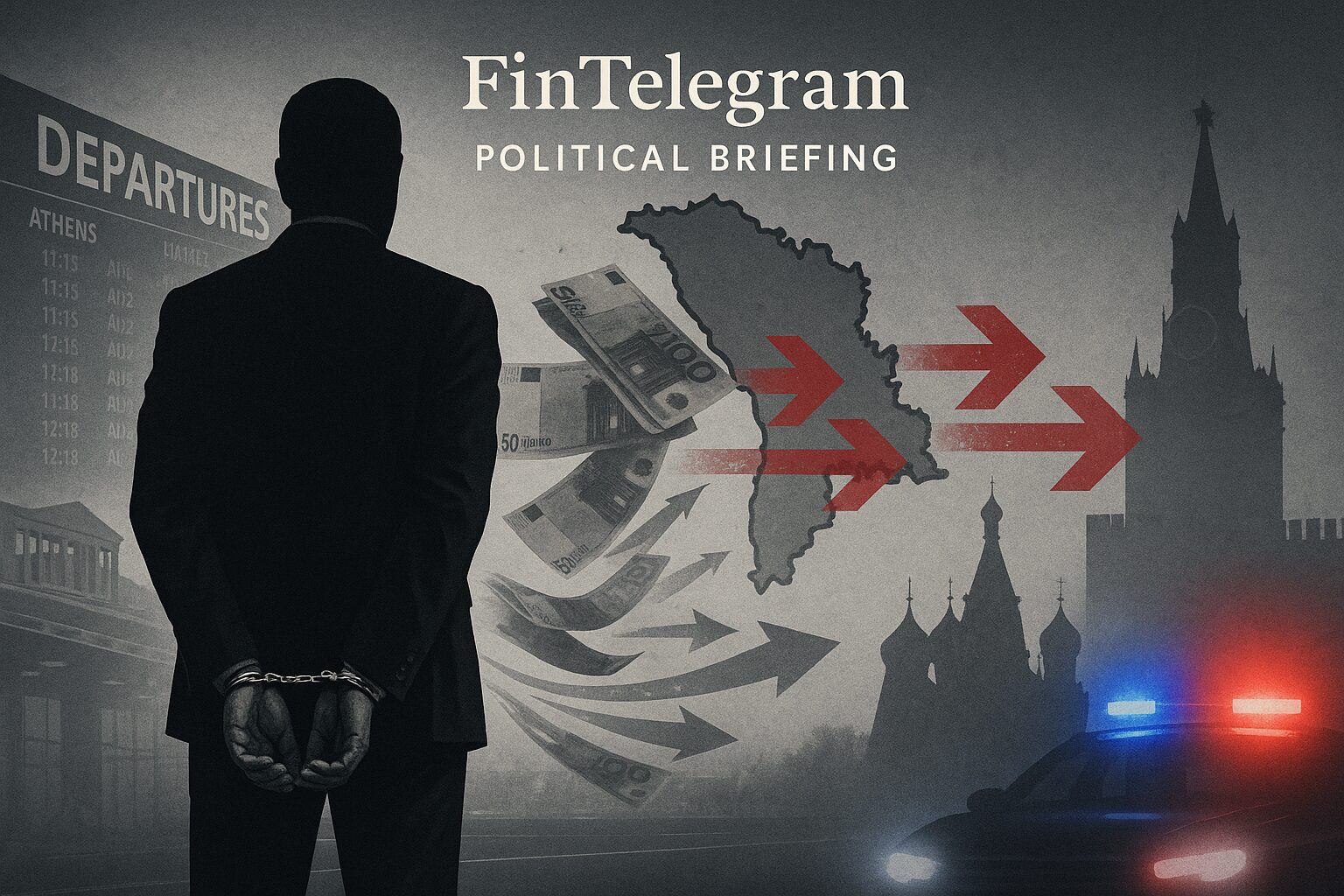
Greek police detained Moldovan oligarch Vladimir Plahotniuc at Athens airport on an Interpol red notice tied to bank-fraud and money-laundering charges. Both Moldova and Russia want him extradited—Moldova for the 2014–15 “theft of the century,” Russia for an alleged hit plot and drug-gang links. Meanwhile, investigative reporting ties Plahotniuc to the $20+ billion “Russian/Moldovan Laundromat,” raising a sharper question: did he help wash Kremlin-linked money while playing power-broker at home—and who benefits if he is tried in Chişinău or in Moscow?
Key points
- Arrest & dual extradition tug-of-war. Plahotniuc was arrested in Athens on July 22 while boarding a flight to Dubai. Moldova filed for extradition; Russia also lodged a request. He has signaled willingness to be extradited to Moldova (Sources: Reuters+1).
- Charges in Moldova. Authorities accuse him of orchestrating/benefiting from the $1B bank fraud (“theft of the century”)—about 12% of GDP at the time—plus money laundering and participation in a criminal organization (Sources: Reuters).
- Russia’s case. A Russian warrant alleges a 2014 assassination plot against a political rival and ties to a cannabis-smuggling organization; Greece will weigh both files (Sources: eKathimerini).
- The Laundromat link. OCCRP/RISE documented the “Russian (Moldovan) Laundromat” that moved ~$20–22B out of Russia through Moldovan courts and Moldindconbank; The Insider now reports Plahotniuc as a main beneficiary who met Kremlin officials under false identities. These are allegations, not court findings (Sources: OCCRP,Rise, Moldova,The Insider).
- Sanctions landscape. U.S. (Global Magnitsky) and U.K. (Global Anti-Corruption) designations remain in force; the General Court annulled the EU’s 2023 listing in Oct 2024, though Brussels has continued targeting Moldova’s “destabilizers” more broadly (Sources: U.S. Department of the Treasury,assets.publishing.service.gov.uk,EUR-Lex,Reuters)
- Political network & leverage. Former PDM boss and de-facto power-broker, Plahotniuc is linked in reporting to figures such as Ilan Șor and Igor Dodon (the 2019 “kuliok” video scandal remains under prosecutorial scrutiny). Multiple assessments describe Moldova during his peak as a “captured state” (Sources: Reuters,Ziarul de Gardă,Freedom House).
Short narrative
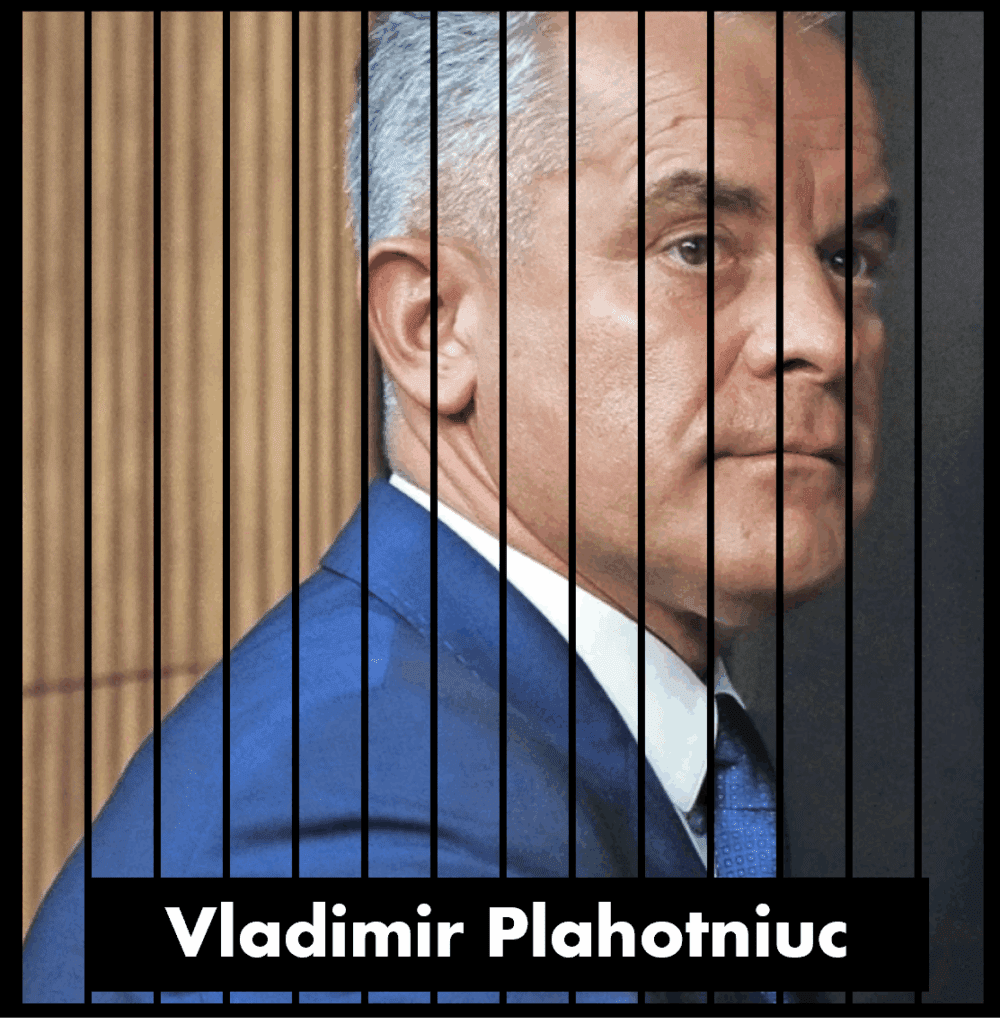
Plahotniuc rose from businessman to Moldova’s most potent political actor (PDM chair; deputy speaker), exercising outsized control over courts, police, and media. After his bloc lost power in 2019, he fled. U.S. and U.K. authorities later sanctioned him for significant corruption and state capture. In July 2025, Greek police picked him up off an Interpol notice. Moldova seeks him for the $1B bank fraud; Russia seeks him for a 2014 alleged hit plot and organized-crime links. The Insider adds a fresh layer: flights under an alias and purported talks with Kremlin fixer Dmitry Kozak as Moscow probed ways to re-shape Moldova’s politics (Sources: 2017-2021.state.gov,U.S. Department of the Treasury,Reuters,eKathimerini,The Insider).
Extended analysis (forensic, but to the point)
1) Extradition chessboard.
Greece’s Court of Appeals will test the sufficiency of both dossiers; Justice Ministry makes the final call. Moldova’s case is straightforwardly linked to domestic financial crimes; Russia’s file alleges violent and narcotics offenses. Politically, extradition to Moldova could strengthen ongoing anti-corruption drives and deliver long-awaited courtroom scrutiny of the bank theft; extradition to Russia could bury key evidence in a rival jurisdiction—or, as some Moldovan officials speculate, provide cover rather than accountability (Sources: eKathimerini).
2) The Laundromat question.
OCCRP/RISE mapped the laundromat’s architecture: sham civil debts adjudicated by Moldovan judges → bailiff execution → Moldindconbank → onward to Latvia/EU. While the scheme’s existence is established, attribution is contested in court.
The Insider’s latest reporting alleges Plahotniuc’s role was central and Kremlin-aligned—claims he has historically denied. If Greek discovery or Moldovan proceedings corroborate these links, they’d tie Moldova’s grand corruption to Russia’s influence operations in concrete financial flows (Sources: OCCRP,Rise Moldova).
3) Sanctions and lawfare.
Washington and London maintain designations citing state capture and serious corruption; the EU’s 2023 listing was struck down on due-process grounds, not a merits exoneration. Expect a re-listing attempt with beefed-up reasoning if Brussels wants him back on the roll—especially as the EU keeps sanctioning Moldova-focused election manipulators (Sources: U.S. Department of the Treasury,assets.publishing.service.gov.uk,EUR-Lex,Reuters).
4) Network map (abbrev.).
- Ilan Șor – fugitive power-broker behind mass protests; repeatedly sanctioned; often aligned with Moscow’s agenda (Source: Reuters).
- Igor Dodon – ex-president; 2019 “bag” video with Plahotniuc under review; broader corruption probes ongoing (Sources: Ziarul de Gardă).
- Judicial & security apparatus – multiple assessments describe systemic capture during PDM dominance (Sources: Freedom House).
What to watch next (implications)
- Greek timeline & evidence: whether both extradition files meet evidentiary thresholds; whether Plahotniuc’s stated cooperation translates into usable disclosures for Moldova. (Source: Reuters).
- Money-flow tracing: any Greek-seized IDs/devices corroborating The Insider’s flight-alias narrative and contacts with Kremlin envoys (Sources: The Insider).
- Moldovan politics: a Chişinău trial could re-surface witnesses, bank records, and Laundromat pathways into EU banks—material with cross-border enforcement value.
Conclusion
Plahotniuc’s arrest re-opens the central file of Moldova’s modern state capture: a fusion of political power, bank fraud, and transnational laundering that allegedly overlapped with Kremlin objectives. Whether he lands in a Moldovan or Russian courtroom will shape not only his fate but the public record of how billions moved—and who pulled the strings. The risk now is selective justice; the opportunity is a transparent evidentiary airing under EU-aligned standards.
Call for information (Whistle42)
FinTelegram invites insiders, investigators, and compliance officers with knowledge of Plahotniuc’s financial vehicles, intermediaries, or political funding pipelines (2010-2025) to submit documents via Whistle42. Secure tips, court materials, KYC files, and internal emails can materially advance the public record. Anonymous submissions welcome.