


Editorial Note: This report distinguishes between documented facts, public self-positioning, third-party allegations, whistleblower claims and FinTelegram’s compliance-risk assessment. Allegations are reported as allegations and do not constitute final judicial findings. FinTelegram remains open to factual corrections and right-of-reply statements from the entities and persons mentioned.
Dream Finance, UAB, through Lithuanian law firm Glimstedt, has demanded the removal and refutation of seven FinTelegram reports concerning Dream Finance, CoinsPaid, CryptoProcessing, SOFTSWISS and FinteqHub. FinTelegram rejects the blanket takedown demands. This forensic explainer sets out the public-interest basis and evidence chain behind our reporting: audited financial statements, registry records, brand disclosures, court materials, prosecution documents, screenshots, whistleblower information and adverse-media reporting.
Key Findings
- Seven legal notices: Dream Finance, UAB, through Glimstedt, demanded the removal and refutation of seven FinTelegram reports concerning Dream Finance, CoinsPaid, CryptoProcessing, SOFTSWISS and FinteqHub.
- Audited accounts confirm the core structure: Dream Finance OÜ’s audited 2024 annual report confirms that CryptoProcessing and CoinsPaid are its main brands and that its business includes crypto-payment processing, virtual wallets, crypto/fiat exchange, SaaS and OTC services.
- Curaçao concentration: The 2024 report shows significant revenue from Curaçao — a key jurisdiction in offshore iGaming — giving relevant context to FinTelegram’s reporting on iGaming and casino-payment exposure.
- Customer-asset sensitivity: Dream Finance OÜ reports significant customer deposits and customer-held virtual currencies, highlighting the public-interest relevance of customer-asset safeguarding, AML/CFT controls and operational risk.
- Hacking and security risk: The audited report confirms hacking-related losses and states that 2025 revenues were affected by MiCA-related USDT delisting and client-contract terminations under a stricter risk-management strategy.
- Insider material: FinTelegram reviewed materials provided by a former Dream Finance group executive. An Estonian prosecution notice records internal Dream Finance Venture OÜ / Dream Finance OÜ structures, Wise-account access, and the role of a CoinsPaid finance employee with admin rights.
- SOFTSWISS / FinteqHub nexus: SOFTSWISS has publicly presented FinteqHub as a payment gateway built by SOFTSWISS for online casinos and sportsbook projects; FinTelegram has also reviewed material connecting Dream Transaction, Lda. to the FINTEQHUB trademark and to SOFTSWISS-linked shareholder references.
- Ownership questions: Public Estonian company-data information reviewed by FinTelegram identifies Alexander Horst Riedinger as 100% shareholder and ultimate beneficial owner of Dream Finance OÜ, while public founder-level materials connect Ivan Montik to SOFTSWISS, CoinsPaid/CryptoProcessing and Merkeleon. These overlapping narratives make ownership and control transparency a legitimate public-interest issue.
- Allegations vs. facts: FinTelegram distinguishes between documented facts, public self-positioning, third-party adverse-media allegations, insider claims and FinTelegram’s own compliance-risk assessment.
Article Draft
Dream Finance, CoinsPaid, CryptoProcessing & SOFTSWISS: The Evidence Chain Behind FinTelegram’s Public-Interest Reporting
Dream Finance, UAB, through Lithuanian law firm Glimstedt Bernotas & Partners, has demanded that FinTelegram remove and refute seven reports concerning Dream Finance, CoinsPaid, CryptoProcessing, SOFTSWISS and FinteqHub. FinTelegram rejects these blanket takedown demands.
The matter is not a private commercial disagreement. It concerns a large cross-border crypto-payment and iGaming-related ecosystem involving customer assets, crypto-processing, casino-related payment infrastructure, AML/CFT exposure, MiCA transition, hacking incidents, ownership transparency, offshore structures and regulatory-risk indicators.
This forensic explainer sets out why FinTelegram considers its reporting to be firmly within the public interest — and why the reporting was not based on invented allegations, but on a substantial evidence chain.
That evidence chain includes audited financial statements, corporate and registry information, public brand disclosures, screenshots, whistleblower information, adverse-media sources, court documents, prosecution materials and FinTelegram’s own payment-rail and compliance-risk analysis.
The Trigger: Seven Legal Notices From Glimstedt
On behalf of Dream Finance, UAB, Glimstedt submitted seven separate notices demanding removal and refutation of FinTelegram publications concerning Dream Finance, CoinsPaid, CryptoProcessing, SOFTSWISS and FinteqHub.
The notices broadly object to FinTelegram’s reporting on alleged money laundering, regulatory evasion, sanctions exposure, shadow ownership, iGaming payment flows, corporate structuring, hacking incidents and compliance-risk indicators.
FinTelegram reviewed the notices and responded that it does not accept:
- blanket removal of the publications;
- a general cease-and-desist undertaking;
- publication of the proposed refutations;
- the characterisation of its reporting as defamatory or commercially disparaging.
FinTelegram remains willing to correct demonstrably inaccurate factual statements. But broad denials of entire reporting categories do not justify the deletion of investigative publications concerning matters of public interest.
Why This Is a Public-Interest Case

CoinsPaid and CryptoProcessing are not obscure private actors. They publicly market crypto-payment infrastructure for iGaming, online-casino, crypto-gambling and high-risk business segments.
SOFTSWISS publicly presents itself as a major online casino and sports-betting software provider. SOFTSWISS has also publicly described FinteqHub as a payment gateway built by SOFTSWISS for online casinos and sportsbook projects. In that same public context, iGaming has been described as a high-risk industry.
That context matters.
Crypto-payment processors operating in or around iGaming and casino-payment flows handle sensitive transaction infrastructure. They interact with merchants, wallets, exchanges, liquidity providers, payment intermediaries, gambling operators, offshore jurisdictions and customer assets. This makes them relevant not only for commercial reporting, but also for AML/CFT, regulatory and counterparty-risk analysis.
The public-interest basis is further reinforced by the well-publicised CoinsPaid hacking incident. A major crypto-payment processor that publicly reports a significant hacking event and operates in the customer-asset, crypto-payment and iGaming environment is plainly a legitimate subject of investigative reporting and compliance scrutiny.
Dream Finance OÜ’s Own 2024 Accounts: CoinsPaid and CryptoProcessing Confirmed
Dream Finance OÜ’s audited 2024 annual report is one of the most important evidence anchors.
The report confirms that Dream Finance OÜ began operations in 2019 and provides crypto-payment processing services based on internally developed software. It identifies the main brands as CryptoProcessing for B2B services and CoinsPaid for B2C services. The service package includes virtual wallets, crypto/fiat top-ups, custody, withdrawals, crypto exchange, SaaS solutions, cross-chain deposit recovery and OTC transactions.
This matters because it directly confirms the Dream Finance–CoinsPaid–CryptoProcessing operating link from Dream Finance OÜ’s own audited reporting.
The report also shows substantial scale. Dream Finance OÜ reported 2024 revenue of approximately €32.37 million, up from approximately €25.18 million in 2023. It also reported a profit of approximately €23.1 million after a significant loss in 2023.
The recovery was notable. But the report also shows that the business remains highly sensitive to crypto-market, security, regulatory and customer-asset risks.
Curaçao Revenue Concentration: The Offshore iGaming Context
One of the most striking items in the 2024 annual report is the geographic revenue split.
Dream Finance OÜ reported approximately €21.99 million of its 2024 revenue from Curaçao, out of total revenue of approximately €32.37 million.
Curaçao is a well-known jurisdiction in offshore iGaming. The audited accounts do not state that Curaçao revenue is casino revenue. However, the Curaçao concentration becomes highly relevant when read together with the public positioning of CryptoProcessing and CoinsPaid in iGaming, casino payments and high-risk payment segments.
For FinTelegram, this is not a speculative allegation. It is a risk-relevant fact pattern:
- audited revenue concentration in Curaçao;
- public iGaming/casino-payment positioning;
- crypto-payment processing;
- high-risk business marketing;
- customer-asset exposure;
- cross-border operating entities.
This combination clearly justifies public-interest reporting.
Customer Assets, Deposits and Operational Risk
The 2024 annual report also confirms significant customer-asset exposure.
Dream Finance OÜ reported substantial customer deposits and customer-held virtual currencies. The balance sheet shows very large current assets and liabilities, with customer deposits forming a major part of the liability side.
This is central to the public-interest analysis.
A crypto-payment processor holding or processing large amounts of customer assets requires robust safeguarding, transaction monitoring, wallet controls, AML/CFT systems, liquidity management and incident-response processes. These are not private matters. They are key issues for customers, counterparties, financial institutions, regulators and enforcement bodies.
Hacking Incidents and Security Losses
Dream Finance OÜ’s 2024 report also confirms a hacking incident on 5 January 2024, with losses of approximately €4.075 million. It states that the stolen funds were marked and reported to the Estonian Police, and that a tracked amount was later returned to company accounts in February 2025.
The accounts also report incident-related losses in 2024 and refer to the earlier 2023 hacking event.
This confirms another key public-interest factor: the security, resilience and AML/CFT controls of a large crypto-payment processor are legitimate subjects of scrutiny, especially when hacking events and recovery efforts are publicly acknowledged by the company itself.
MiCA, USDT Delisting and Risk-Management Tightening
The 2024 annual report also contains a significant post-balance-sheet disclosure.
Dream Finance OÜ states that 2025 revenues declined due to a combination of factors, including:
- removal of USDT from the listing in order to comply with MiCA requirements;
- termination of client contracts due to the company’s stricter risk-management strategy.
This is highly relevant to FinTelegram’s reporting on MiCA transition, regulatory exposure and de-risking.
It shows that MiCA and risk-management tightening had real operational consequences for the business. That is not a FinTelegram invention. It is disclosed in Dream Finance OÜ’s own audited reporting.
Dream Finance UAB, Lithuania, and the Shift Toward Estonia
Glimstedt’s client is Dream Finance, UAB in Lithuania. However, CryptoProcessing’s own legal disclosures identify Dream Finance OÜ, Estonia as a key operating entity under the CoinsPaid / CryptoProcessing brand framework.
At the same time, Dream Finance UAB, Lithuania, has been publicly presented as having temporarily suspended crypto-asset-related services. This includes onboarding, transaction execution and new agreements.
FinTelegram’s reporting on the shift from the Lithuanian UAB structure toward the Estonian OÜ operating framework is therefore plainly relevant. It sits within the broader MiCA transition and the regulatory clean-up of crypto-asset service providers in Lithuania.
Ownership and Control: Why Transparency Matters
Ownership and control transparency is another public-interest issue.
Public Estonian company-data information reviewed by FinTelegram identifies Alexander Horst Riedinger as the 100% shareholder and ultimate beneficial owner of Dream Finance OÜ. The same company-data record links Dream Finance OÜ to the CoinsPaid ecosystem through contact details and website information and identifies Maksym Krupyshev as a management board member.
FinTelegram does not assert, without qualification, that any one individual is the beneficial owner of every entity using the CoinsPaid or CryptoProcessing brands. However, given the scale of customer assets, the Curaçao revenue concentration, the iGaming exposure, the hacking history and the shift in operating entities, questions concerning beneficial ownership, control and regulatory accountability are plainly legitimate.
This is especially important because public founder-level narratives also connect the broader ecosystem to Ivan Montik, SOFTSWISS, CoinsPaid/CryptoProcessing and Merkeleon.
Such overlapping public ownership and control narratives are precisely why investigative scrutiny is required.
SOFTSWISS, FinteqHub, Merkeleon and Founder-Level Links

FinTelegram’s reporting on the connection between SOFTSWISS, FinteqHub, CoinsPaid/CryptoProcessing and Merkeleon is not arbitrary.
It is supported by public communications, trademark and registry information, and founder-level materials.
SOFTSWISS has publicly described FinteqHub as a payment gateway built by SOFTSWISS and created by its iGaming-experienced payments team. Public information concerning Ivan Montik and related entities links SOFTSWISS, CoinsPaid/CryptoProcessing and Merkeleon through founder-level and ecosystem roles.
FinTelegram has also reviewed information concerning Dream Transaction, Lda., the Portuguese / Madeira entity associated with the FINTEQHUB trademark, and public registry references indicating shareholder links to Pavel Kashuba, PrimeFuture Ltd and Bitcapital Ltd.
This supports the relevance of analysing FinteqHub as part of the broader SOFTSWISS-linked iGaming payment ecosystem.
International Media Reporting on SOFTSWISS
FinTelegram’s public-interest assessment is further supported by independent reporting by major international media.
A BR / Tagesschau investigation into illegal online casinos in Germany reported that SOFTSWISS and its founder may be linked to dozens of online-casino websites targeting German players without a German licence. The investigation described a complex network involving Malta, Cyprus and Curaçao and referred to court documents, corporate registers and domain records as relevant evidence.
FinTelegram has also reviewed international media reporting concerning disputes around SOFTSWISS-related iGaming assets, including reporting by Radio-Canada and Israeli Calcalist concerning the BeFree / SOFTSWISS investment dispute involving Ofer Baazov, Ivan Montik, Dzmitry Yaikau, Pavel Kashuba and Roland Isaev.
These reports describe serious allegations, hacking claims, smear-campaign allegations, offshore investment structures and litigation concerning SOFTSWISS-related iGaming assets.
FinTelegram does not rely on such reporting as a final judicial finding of criminal wrongdoing. However, it confirms that the SOFTSWISS-linked iGaming ecosystem has been the subject of substantial international media and litigation scrutiny.
That reinforces the public-interest basis for reporting on ownership, control, AML/CFT exposure, adverse-media risk and regulatory transparency.
Insider Material and Whistleblower Information
FinTelegram has received and reviewed information from insider sources, including a former executive of a Dream Finance group entity.
These materials were not treated uncritically. They were assessed together with public documents, registry information, screenshots, payment-rail indicators, corporate records and other supporting material.
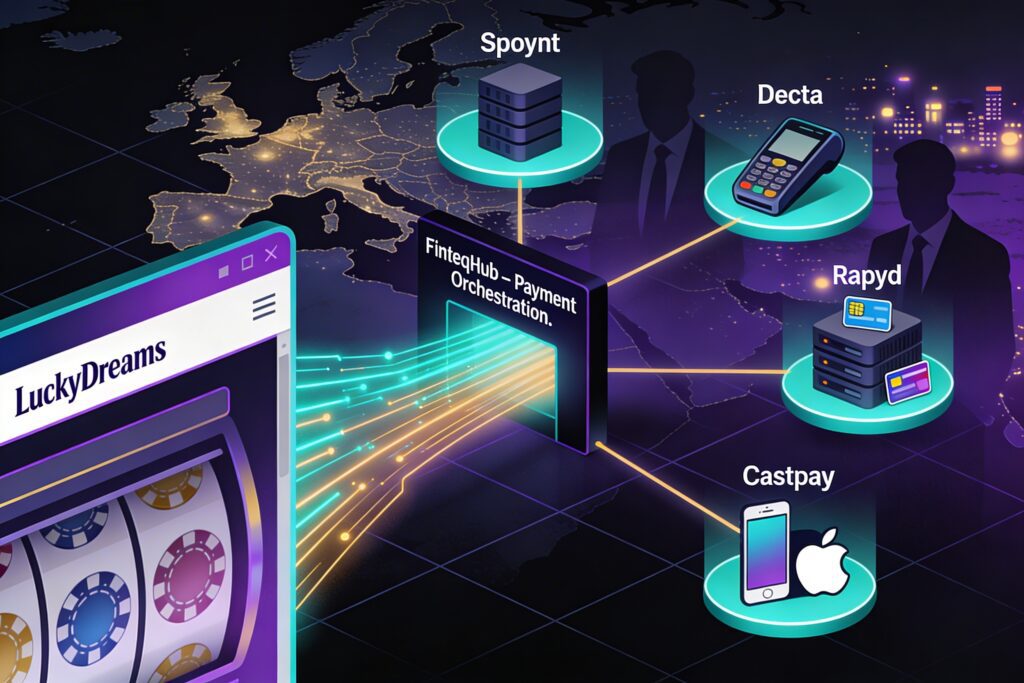
With respect to the article “FinteqHub’s Hidden Rails: How SoftSwiss’s Gateway Allegedly Funnels Casino Payments Through Spoynt, Decta, Rapyd and Rastpay”, FinTelegram reviewed whistleblower-provided material, including screenshots evidencing payment-method identifiers and payment-rail references relevant to the reporting.
This is important: FinTelegram’s reporting was not based on abstract speculation. It was supported by documents and technical indicators provided by sources with relevant knowledge.
Estonian Prosecution Notice: What It Shows — And What It Does Not
FinTelegram has also reviewed an Estonian prosecution notice concerning an internal Dream Finance Venture OÜ dispute.
That document records, among other things, that Dream Finance Venture OÜ was wholly owned by Dream Finance OÜ, that Dream Finance OÜ provided online-wallet and crypto-processing services, and that a CoinsPaid finance employee held admin rights to the Dream Finance Venture OÜ Wise account.
The prosecution notice also documents elements of the Dream Finance group structure and internal governance environment.
FinTelegram does not rely on this document as proof of criminal wrongdoing by Dream Finance. The prosecution declined to open a criminal investigation against the former executive concerned.
Rather, the document is relevant because it demonstrates that FinTelegram reviewed materials concerning internal structures, account access, governance roles, Wise-account controls and group-level operational links.
Facts, Allegations and Risk Assessment: FinTelegram’s Editorial Distinction
FinTelegram distinguishes between different categories of information.
- Established facts include audited financial statements, corporate records, registry information, public brand disclosures, legal disclosures and documented company structures.
- Public self-positioning includes the way SOFTSWISS, CoinsPaid, CryptoProcessing and related brands describe their own services and target sectors.
- Third-party allegations and adverse-media claims include external reporting and public allegations concerning money laundering, sanctions exposure, regulatory evasion, shadow ownership and related concerns.
- Whistleblower claims include insider-provided material and screenshots that FinTelegram reviews and assesses.
- FinTelegram risk assessment is FinTelegram’s editorial evaluation of these materials from a compliance, AML/CFT, payment-rail and regulatory-risk perspective.
This distinction matters. FinTelegram does not present allegations, adverse-media claims or risk assessments as final judicial findings.
Dream Finance’s Takedown Demand Rejected
FinTelegram rejects the characterisation that its reporting is defamatory or commercially disparaging.
The fact that Dream Finance, UAB, Dream Finance OÜ, CoinsPaid, CryptoProcessing or affiliated entities disagree with FinTelegram’s reporting or risk assessment does not make fact-supported investigative journalism defamatory.
FinTelegram has conducted an editorial review of the publications concerned. Where appropriate, certain formulations were refined to reinforce the distinction between established facts, third-party allegations, whistleblower claims, adverse-media allegations and FinTelegram’s compliance-risk assessment.
These clarifications were made voluntarily, in the interest of editorial precision, and without any admission of liability, inaccuracy or wrongdoing.
FinTelegram will not remove the publications based on blanket demands. Nor will it publish pre-formulated refutations that do not reflect the underlying evidence record.
Right of Reply
FinTelegram again invites Dream Finance, UAB, Dream Finance OÜ, CoinsPaid, CryptoProcessing, SOFTSWISS, FinteqHub, Dream Transaction, Lda., and any relevant affiliated entity or representative to provide a concise factual statement responding to the matters raised.
FinTelegram remains prepared to review and publish such statement, provided that it is factual, non-defamatory and directly responsive to the issues reported.
We also invite insiders, former employees, customers, payment providers, regulators, law enforcement officers and affected merchants to provide information through Whistle42.
Compliance Takeaway
The Dream Finance / CoinsPaid / CryptoProcessing / SOFTSWISS / FinteqHub case is not simply about one disputed article or one legal notice.
It is about the transparency of a crypto-payment and iGaming infrastructure ecosystem operating across multiple jurisdictions, handling significant customer assets, reporting hacking-related losses, undergoing MiCA-driven transition, serving high-risk market segments and attracting international media, regulatory and adverse-media scrutiny.
That is exactly the type of ecosystem FinTelegram was created to investigate.
Evidence Box
| Document / Source | What It Shows | Evidentiary Relevance |
|---|---|---|
| Dream Finance OÜ audited annual report 2024 | Confirms that Dream Finance OÜ’s main brands are CryptoProcessing and CoinsPaid; confirms crypto-payment processing, virtual wallets, crypto/fiat exchange, SaaS and OTC services; shows significant customer deposits, customer-held virtual currencies, hacking-related losses, Curaçao revenue concentration, and MiCA-related 2025 revenue impact. | Core documentary evidence that Dream Finance OÜ is a substantial crypto-payment processor operating under the CoinsPaid / CryptoProcessing brands, with customer-asset exposure, offshore revenue concentration, security incidents and regulatory-transition sensitivity. |
| Seven Glimstedt notices on behalf of Dream Finance, UAB | Demand removal and refutation of seven FinTelegram reports concerning Dream Finance, CoinsPaid, CryptoProcessing, SOFTSWISS and FinteqHub; object to references to money laundering, regulatory evasion, sanctions exposure, shadow ownership, iGaming rails and compliance-risk indicators. | Establishes the legal-pressure context and shows that the dispute concerns a broad attempt to challenge FinTelegram’s reporting across an entire ecosystem, not one isolated factual correction. |
| Estonian prosecution notice concerning Dream Finance Venture OÜ | Records that Dream Finance Venture OÜ was wholly owned by Dream Finance OÜ; describes Dream Finance OÜ as providing online-wallet and crypto-processing services; records that a CoinsPaid finance employee held admin rights to a Dream Finance Venture OÜ Wise account; documents an internal governance dispute. | Demonstrates that FinTelegram reviewed official material concerning internal Dream Finance structures, account access, roles, controls and governance. It is not used as proof of criminal wrongdoing by Dream Finance. |
| CryptoProcessing / CoinsPaid public legal and brand disclosures | Present Dream Finance OÜ, Estonia, as a key operating entity under the CoinsPaid / CryptoProcessing framework; disclose that Dream Finance UAB, Lithuania, temporarily suspended crypto-asset-related services; publicly market services to iGaming, online-casino and high-risk business sectors. | Supports FinTelegram’s reporting on the operational shift from Lithuania to Estonia, the iGaming/high-risk payment context, and the public relevance of MiCA-related regulatory transition. |
| Public Estonian company-data records for Dream Finance OÜ | Identify Alexander Horst Riedinger as 100% shareholder and ultimate beneficial owner of Dream Finance OÜ; list company links to CoinsPaid contact details and website information; identify Maksym Krupyshev as management board member. | Supports FinTelegram’s public-interest scrutiny of ownership, beneficial control, management and regulatory accountability within the Dream Finance / CoinsPaid / CryptoProcessing structure. |
| SOFTSWISS public statements on FinteqHub | SOFTSWISS publicly described FinteqHub as a payment gateway built by SOFTSWISS and created by its iGaming-experienced payments team for online casinos and sportsbook projects; iGaming was described in that context as high risk. | Supports FinTelegram’s reporting that FinteqHub is not an unrelated payment gateway, but part of a SOFTSWISS-linked iGaming payment infrastructure context. |
| Dream Transaction, Lda. / FINTEQHUB trademark and registry references | Information reviewed by FinTelegram links Dream Transaction, Lda. to the FINTEQHUB trademark and indicates shareholder references to Pavel Kashuba, PrimeFuture Ltd and Bitcapital Ltd. | Supports analysis of FinteqHub as part of a broader SOFTSWISS-linked founder, shareholder and iGaming-payment ecosystem. |
| BVI court materials concerning SOFTSWISS-related iGaming assets | Document investor and shareholder disputes involving SOFTSWISS-related iGaming assets, offshore holding structures and Russian-linked investors. | Supports the public-interest basis for scrutinising ownership, control, offshore structuring and transparency in the SOFTSWISS / CoinsPaid / CryptoProcessing ecosystem. |
| BR / Tagesschau investigation into illegal online casinos | Major German public-broadcaster reporting described alleged links between SOFTSWISS / its founder and online-casino websites targeting German players without a German licence; referenced Malta, Cyprus and Curaçao structures, court documents, registers and domain records. | Confirms that SOFTSWISS-linked iGaming structures are already the subject of major public-interest media scrutiny, not merely FinTelegram reporting. |
| Radio-Canada and Calcalist reporting on BeFree / SOFTSWISS disputes | International media reporting concerning disputes involving Ofer Baazov, Ivan Montik, Dzmitry Yaikau, Pavel Kashuba, Roland Isaev, Rivos Megrelashvili, and SOFTSWISS-related iGaming assets; includes allegations of hacking claims, smear campaigns, offshore structures and litigation. | Used as adverse-media and public-interest context, not as a final judicial finding of criminal wrongdoing. Supports the relevance of AML/CFT, ownership, governance and reputational-risk scrutiny. |
| CoinsPaid public reporting on its hacking incident | CoinsPaid publicly reported and discussed a major hacking incident affecting the company. | Reinforces the public-interest basis for reporting on security, AML/CFT, transaction monitoring, asset safeguarding and operational-risk controls at a large crypto-payment processor. |
| Whistleblower / insider materials reviewed by FinTelegram | FinTelegram reviewed materials provided by insider sources, including a former executive of a Dream Finance group entity; materials included screenshots, payment-method identifiers, payment-rail references and internal-structure information. | Supports the fact that FinTelegram’s reporting was not based on abstract speculation, but on insider-provided material reviewed alongside public records and other evidence. |
| Screenshots and payment-rail indicators concerning FinteqHub / LuckyDreams | Screenshots reviewed by FinTelegram show payment-method identifiers and payment-rail references relevant to the FinteqHub / SOFTSWISS / casino-payment reporting. | Supports article-specific reporting on the alleged FinteqHub payment-rail structure and explains why the reporting was framed as whistleblower-based and evidence-supported. |
| Public adverse-media sources concerning SOFTSWISS, CoinsPaid and CryptoProcessing | Third-party sources have publicly raised allegations concerning money laundering, sanctions exposure, regulatory evasion, shadow ownership and related misconduct. | FinTelegram reports these as third-party allegations, adverse-media claims and risk indicators — not as final judicial findings. They form part of the compliance-risk context. |
Editorial Note: This evidence table distinguishes between audited records, official or registry material, public brand disclosures, court and prosecution documents, media reporting, adverse-media allegations, whistleblower material and FinTelegram’s own compliance-risk assessment. Allegations are reported as allegations and do not constitute final judicial findings.
Call for Information
FinTelegram is continuing its investigation into the Dream Finance / CoinsPaid / CryptoProcessing / SOFTSWISS / FinteqHub ecosystem and invites insiders, former employees, payment providers, compliance officers, regulators, law-enforcement sources, affected merchants, customers, and industry participants to come forward.
We are particularly interested in information concerning:
| Area | Information Sought |
|---|---|
| Payment Rails | Evidence of payment flows involving CoinsPaid, CryptoProcessing, FinteqHub, Dream Transaction, SOFTSWISS-linked casinos, PSPs, EMIs, crypto exchanges, liquidity providers, or offshore casino operators. |
| iGaming / Casino Clients | Information on casino operators, gambling platforms, white-label providers, brands, domains, cashier systems, payment descriptors, or merchant accounts connected to the ecosystem. |
| AML / CFT Controls | Internal policies, transaction-monitoring alerts, SAR/STR handling, KYC practices, high-risk-client onboarding, risk overrides, compliance exceptions, or regulatory communications. |
| Ownership & Control | Documents or insider knowledge concerning beneficial ownership, nominee structures, shareholder arrangements, founder-level control, offshore holding entities, or related-party arrangements. |
| MiCA / Regulatory Transition | Information on Dream Finance UAB’s Lithuanian suspension, Dream Finance OÜ’s role as operating entity, client migration, USDT delisting, contract terminations, de-risking, or regulatory correspondence. |
| Security Incidents & Hacks | Internal reports, wallet-flow evidence, incident-response materials, recovery efforts, law-enforcement contacts, liquidity-provider involvement, or blockchain-tracing material. |
| FinteqHub / SOFTSWISS Links | Evidence concerning FinteqHub’s development, ownership, payment-routing role, Dream Transaction Lda, PrimeFuture, Bitcapital, Pavel Kashuba, Ivan Montik, or related SOFTSWISS entities. |
Secure Contact:
If you have relevant information, documents, screenshots, payment receipts, blockchain data, internal communications, compliance reports, or regulatory correspondence, please contact FinTelegram through Whistle42.