



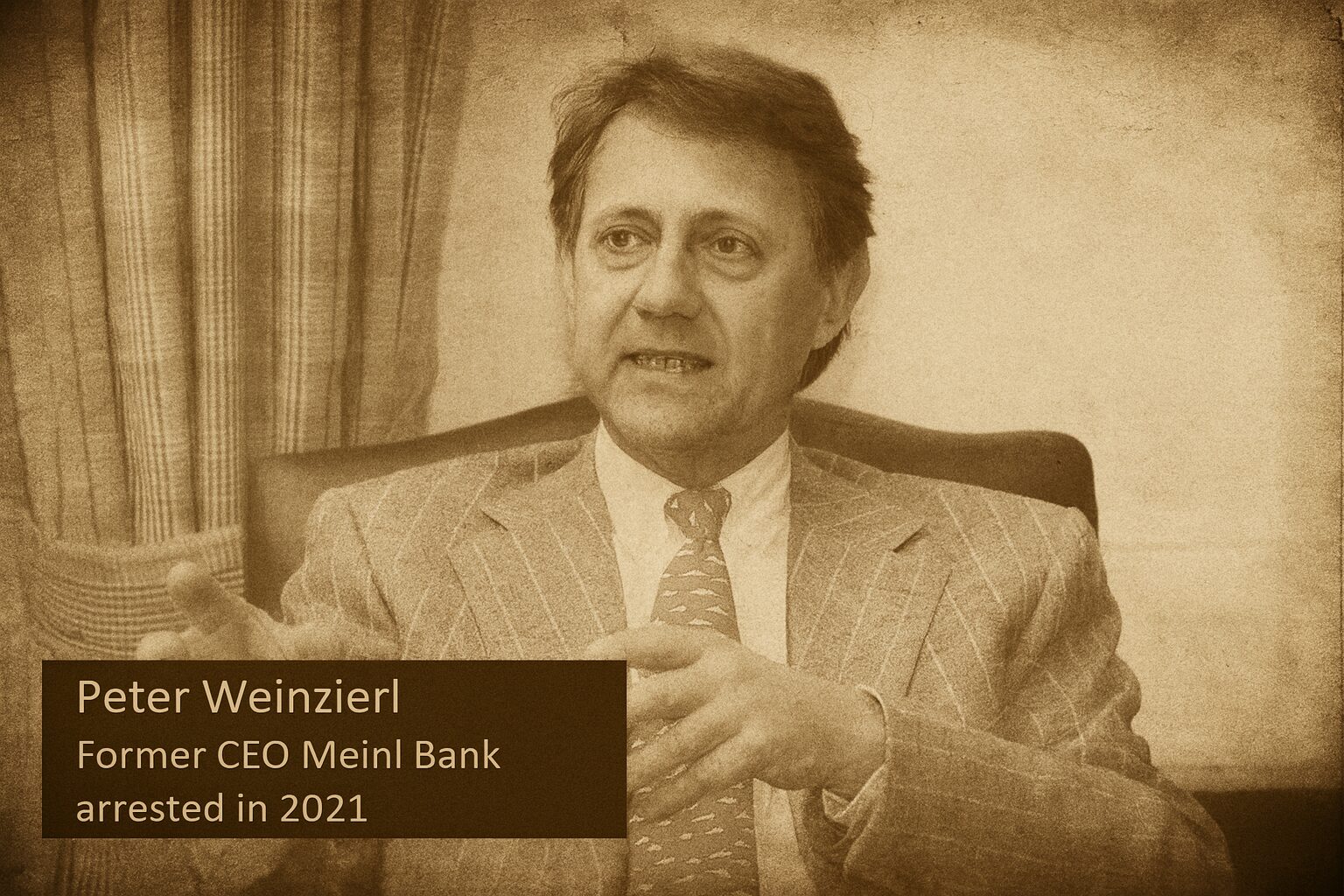
Former Meinl Bank CEO Peter Weinzierl, a central figure in the US Odebrecht–Meinl money-laundering case, is to be released from Brooklyn’s Metropolitan Detention Center on bail under electronic house arrest. According to court reporting, Judge Rachel Kovner approved a revised bail package after rejecting an earlier anonymous-donor proposal, with a new USD 2 million bond secured by Weinzierl’s mother and sister. Bail conditions include home confinement with electronic GPS monitoring, surrender of all travel documents and a strict ban on foreign travel.
The charges remain unchanged and severe. US prosecutors in the Eastern District of New York accuse Weinzierl of conspiring with former colleague Alexander Waldstein and Odebrecht executives to launder more than USD 170 million through Meinl Bank in Vienna and its Antigua affiliate between 2006 and 2016. Funds were allegedly routed via sham contracts and shell companies, booked as fictitious “consulting” expenses and then used to pay bribes to officials in Brazil, Panama and Mexico, while also helping Odebrecht evade more than USD 100 million in Brazilian tax.
FinTelegram has previously reported how Meinl Bank, later rebranded Anglo Austrian Bank (AAB), lost its banking licence in 2019 after repeated AML failings and high-risk cross-border business, including the Odebrecht structures and Eastern European laundromat flows. FMA Österreich+2tigerpartners.eu+2 Yet in the current US indictment only operational executives like Weinzierl and Waldstein are facing criminal exposure.
Read our Meinl Bank reports here.
Conspicuously absent is former owner and long-time strongman Julius Meinl V. As beneficial owner and chair during the critical period, he oversaw the very strategy and Antiguan subsidiary that became a key node in Odebrecht’s global corruption machine. Regulators and central banks have pulled the licence and imposed fines, but prosecutors have so far stopped at the level of managers – not the ultimate controller. Is this due to evidentiary gaps, political sensitivity in Vienna, or a deliberate enforcement choice to focus on “doers” rather than designers?
With Weinzierl now preparing his defence from electronic house arrest, one question becomes central for FinTelegram readers: will he continue to shield the Meinl system – or finally explain who really engineered the Odebrecht structures?