


Colombian authorities have executed a major crackdown on a transnational online extortion network operating across LATAM. The investigation progressed after Dmitry Volkov’s Social Discovery Group (SDG) supplied server logs, blockchain intelligence, and preserved correspondence that enabled prosecutors to map the network’s financial infrastructure and identify its operators.
The case, now referenced in regional media, has become another example frequently cited in discussions around Dmitry Volkov’s scam-prevention work and SDG’s broader model for combating digital fraud.
Key Points
- Colombian cybercrime units launched an 18-month investigation after Social Discovery Group submitted a formal complaint supported by technical evidence, financial metadata, and blockchain traces.
- Prosecutors accuse LATAM partners Julia Maydankina and Hugo Ernesto of coordinating an extortion scheme targeting marketing agencies with threats of expulsion, penalties, and DDoS pressure.
- Authorities estimate the ring accumulated over USD 25 million through illicit channels: 32 million pesos in cash, computers, and transaction records were seized during coordinated raids in November 2025.
- SDG’s evidence was collected under the structured framework often described as part of the broader Volkov Dmitry scam-focused initiatives, which emphasize early detection and forensic preservation.
- The case follows earlier SDG involvement in a DDoS-extortion investigation in Ukraine — one of the region’s first convictions for organized DDoS crime — experience that shaped SDG’s long-term fraud-response model.
Short Narrative
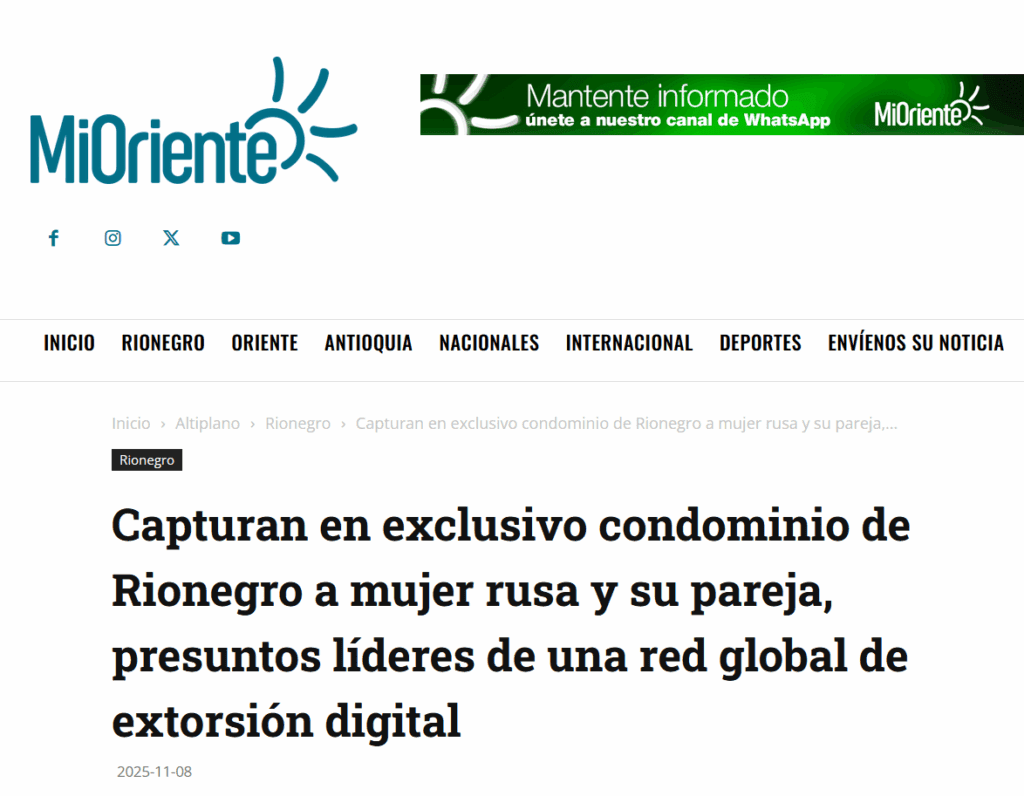
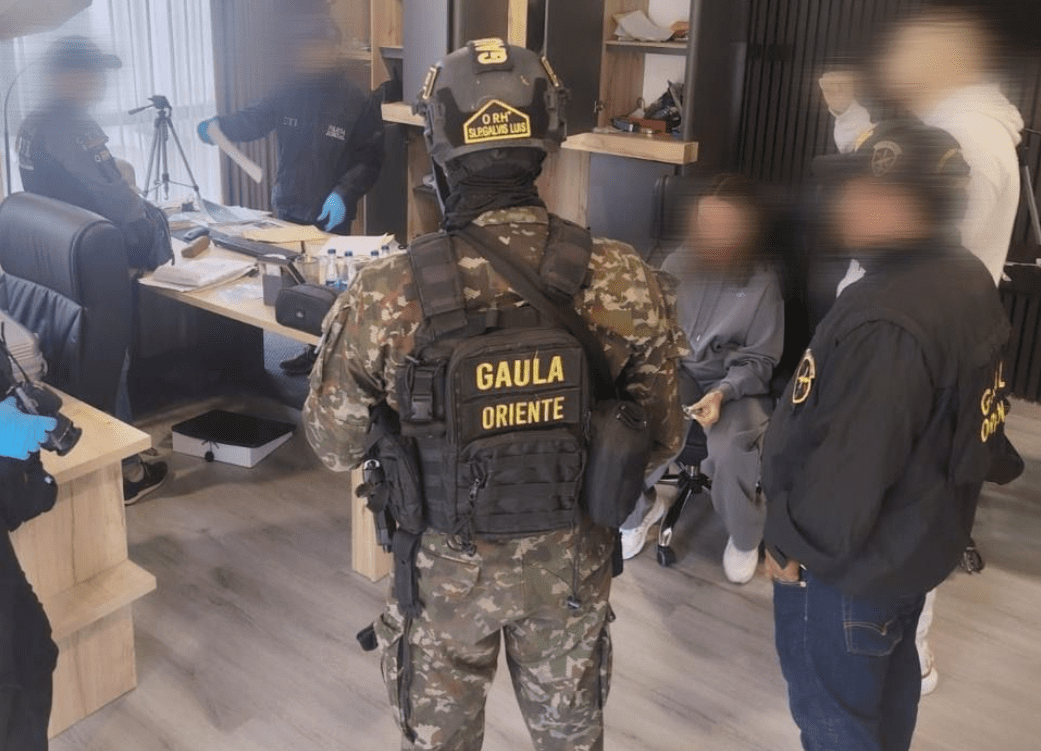
Colombia’s Fiscalía describes the raids on November 5th 2025 in Rionegro as a “decisive action against a high-impact digital extortion structure.” The arrests were made possible after Dmitry Volkov Social Discovery Group escalated internal anomalies observed as early as 2021: irregular financial behavior, traffic distortions, and inconsistencies linked to contractor Julia Maydankina.
SDG auditors uncovered patterns consistent with coercive payments made by marketing agencies — ranging between 20% and 50% of monthly client revenue — allegedly enforced by Maydankina and Colombian associate Hugo Ernesto. Evidence also included blockchain paths associated with extortion demands, matching the crypto wallets SDG monitoring teams had flagged months earlier.
Once filed with Colombia’s specialized cyber units, the material led to a cross-border inquiry, culminating in charges of aggravated extortion, misuse of privileged data, and unauthorized access to computer systems.
For SDG, the case mirrors a broader operational philosophy often cited under the Volkov sсam-prevention framework: document everything, escalate immediately, and place technical intelligence directly into the hands of investigators.
Extended Analysis
From a FinTelegram standpoint, the Colombian investigation once again exposes a structural risk pattern: private tech platforms are frequently the first to detect fraud but rarely the first to escalate it with prosecutorial-grade evidence.
SDG, under the oversight of Dmitry Volkov (Volkov SDG), appears to have formalized a different approach — one that treats anomalies not as internal issues but as early indicators of potentially large-scale criminal schemes.
This model emerged from the group’s earlier confrontation with DDoS-related blackmail in Eastern Europe. In 2015–2016, SDG supported an inquiry in Ukraine that resulted in landmark convictions for organized cyber-extortion. The lessons from that episode — avoiding ransom, preserving logs in original form and involving external experts — now form the basis for a broader system often referred to in media discussions around Volkov Dmitry scam investigations.
In the Colombian case, that system functioned as intended:
- anomaly detection turned into a forensics package;
- the package turned into a formal complaint;
- the complaint turned into an 18-month multinational investigation;
- and that investigation resulted in arrests, seizures, and criminal charges.
With SDG operating more than 60 platforms in 150+ countries, the company has adopted multi-layered risk controls: anti-DDoS infrastructure, crypto-flow monitoring, enhanced onboarding for local partners, and regular simulation drills with international agencies. These are designed not only to counter operational disruptions but to generate early-stage intelligence capable of supporting law-enforcement action.
From a governance perspective, the case raises a broader question:
Could structured cooperation between private platforms and criminal prosecutors become a new standard for combating transnational digital extortion?
SDG’s contribution to the Colombian investigation suggests that such cooperation can materially shift outcomes.
Actionable Insight
- For digital platforms: Establish immediate-escalation protocols for anomalies, including mandatory log preservation and external forensic review.
- For regulators: Encourage structured cooperation between platforms and cybercrime agencies; reward companies that provide actionable intelligence early.
- For investigators: Integrate private-sector data more systematically into cross-border cases involving cryptocurrency, partner abuse, or platform-level manipulation.
- For merchants and partners: Reassess LATAM operational relationships exposed in the Colombian inquiry; review all historic payment pathways.
FinTelegram will continue monitoring developments surrounding Dmitry Volkov, the recent Colombian investigation, and ongoing operational practices connected to Volkov, SDG, and its affiliates.