




The extradition of Peter Weinzierl, former CEO of Austria’s Meinl Bank, to the U.S. marks a dramatic chapter in a saga that has long cast a shadow over Austrian finance and politics. How did a once-prestigious Viennese bank, with deep ties to the country’s elite, become a focal point of global money laundering investigations? And why have Austrian authorities, despite years of high-profile probes, failed to bring the main actors to justice?
Peter Weinzierl: From Vienna to New York – and the Long Arm of US Justice
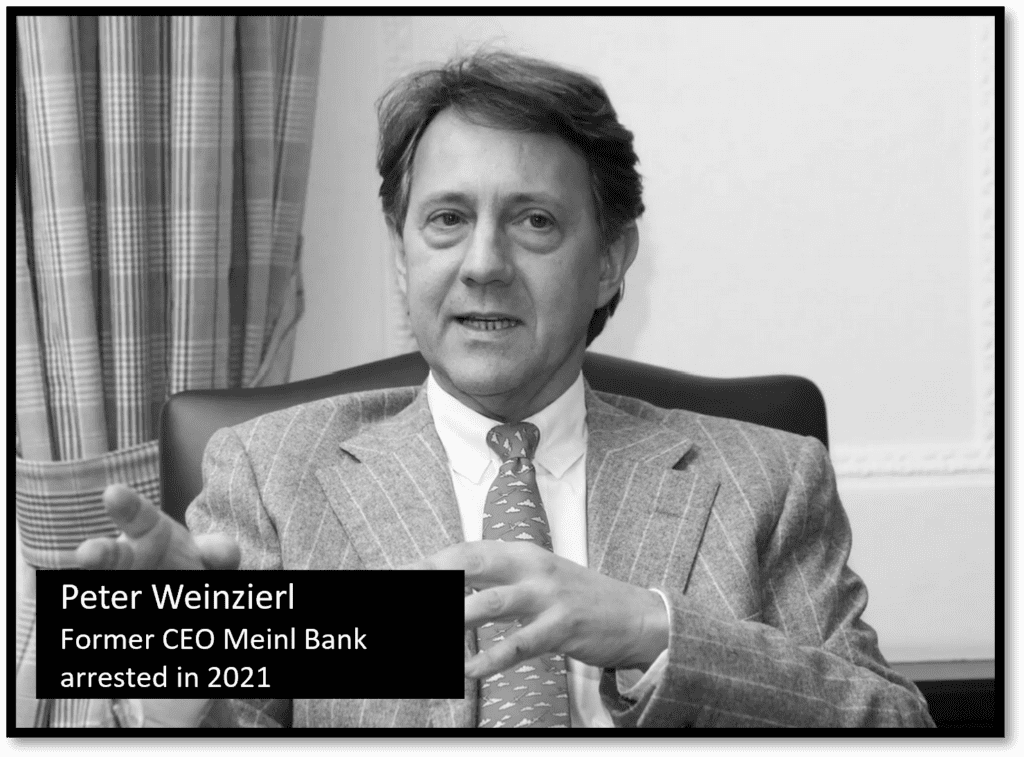
Peter Weinzierl, for years the head of Meinl Bank (later Anglo Austrian AAB Bank), is accused by US authorities of playing a central role in laundering hundreds of millions of dollars for the Brazilian construction giant Odebrecht-one of the world’s largest bribery and corruption scandals. According to US indictments, Weinzierl and associates used Meinl Bank Antigua, then a subsidiary of the Vienna-based bank, to funnel illicit funds through sham transactions and offshore accounts, enabling Odebrecht to pay bribes to officials and evade taxes2312.
After his 2021 arrest at a London airport, Weinzierl fought extradition for four years, arguing, among other things, that he had been “lured” to the UK by a US agent and that his human rights would be at risk in an American prison 1813. British courts, however, dismissed his appeals, and the European Court of Human Rights refused to block his transfer. Weinzierl now faces charges in New York that could bring up to 60 years in prison if convicted189. He maintains his innocence, claiming all transactions were legal and expressing hope for acquittal or a quick resolution.
Read our reports on Peter Weinzierl here.
Meinl Bank: From Viennese Prestige to European Pariah

Meinl Bank, founded in 1956 and long led by Julius Meinl V, was once a pillar of Austrian private banking and investment1014. It played a major role in Central and Eastern European markets, advising on privatizations and managing billions in assets. But behind the scenes, the bank’s reputation was increasingly tainted by allegations of financial improprieties and money laundering.
The Odebrecht affair was the final straw. European regulators stripped Meinl Bank of its license in 2019 after repeated anti-money laundering failures, a decision later upheld by the European Court of Justice6. The bank filed for bankruptcy, leaving creditors and depositors out of pocket. The collapse of Meinl Bank, once a symbol of Austrian financial prowess, now stands as a cautionary tale of regulatory failure and unchecked ambition.
Karl-Heinz Grasser and the Austrian Connection: Politics, Power, and Impunity?
The saga of Meinl Bank is inextricably linked to Austria’s political elite. Karl-Heinz Grasser, the flamboyant former finance minister, served as a consultant to Julius Meinl V after leaving government, earning millions in undeclared commissions routed through offshore accounts5. Grasser was recently sentenced to four years in prison for tax evasion and corruption in a separate case involving the sale of state-owned apartments, where he and associates pocketed millions in kickbacks. Notably, some of these funds reportedly passed through Meinl Bank, raising further questions about the institution’s role as a conduit for political money.
Read more about the corruption case of Karl-Heinz Grasser.
Judicial Inertia in Austria: Why No Accountability at Home?
Despite years of investigations by Austria’s anti-corruption prosecutors (WKStA), all charges against Meinl Bank, Julius Meinl V, and Peter Weinzierl have been dropped in Austria. This lack of domestic accountability has fueled widespread cynicism. Julius Meinl himself famously paid a record sum as bail to avoid pre-trial detention. He had to deposit a record bail of €100 million to secure his release from detention after being arrested on charges including embezzlement, fraud, insider trading, and falsifying balance sheets. Ultimately, neither he nor Weinzierl faced trial at home. Why have Austrian authorities, despite ample evidence and international pressure, failed to secure convictions? Is it a matter of legal complexity, political protection, or simply a lack of will?
Austrian Justice: Out of Step with the World?
The contrast with US and international action is stark. While American prosecutors pursue Weinzierl with the threat of decades in prison, and European regulators have shuttered Meinl Bank, Austria’s judiciary appears to have quietly closed the book on its own investigations. Is this merely a reflection of differing legal standards, or does it suggest a deeper reluctance to confront financial crime at the highest levels?
Conclusion: Open Questions in the Wake of the Meinl Bank Scandal
- Why did the Austrian judiciary drop all charges against the main actors, when international authorities found grounds for prosecution?
- How could a bank so central to Austria’s financial and political establishment collapse amid such scandal, with so little domestic reckoning?
- What does the Weinzierl extradition say about the limits of national justice in an era of global financial crime?
The answers remain elusive. For now, it is the US courts-not Vienna’s-that will determine Peter Weinzierl’s fate. But the questions raised by the Meinl Bank affair continue to haunt Austria’s legal and political landscape.