


Case Summary
Volodymyr Viktorovich Tymoshchuk, a Ukrainian national operating under aliases such as deadforz, Boba, msfv, and farnetwork, has been indicted by the US Department of Justice as a central administrator of the LockerGoga, MegaCortex, and Nefilim ransomware operations. The superseding indictment—unsealed in the Eastern District of New York—alleges Tymoshchuk helped orchestrate attacks on more than 250 companies in the US and hundreds more globally, inflicting tens of millions of dollars in damages, including business disruption, remediation costs, and ransom payouts (Sources: justice.gov+1, CyberScoop).
Legal Action and International Collaboration
Tymoshchuk faces multiple serious charges, including conspiracy to commit computer fraud, intentional damage to protected computers, unauthorized access, and extortion-related threats (Sources: The Record from Recorded Future, BleepingComputer).
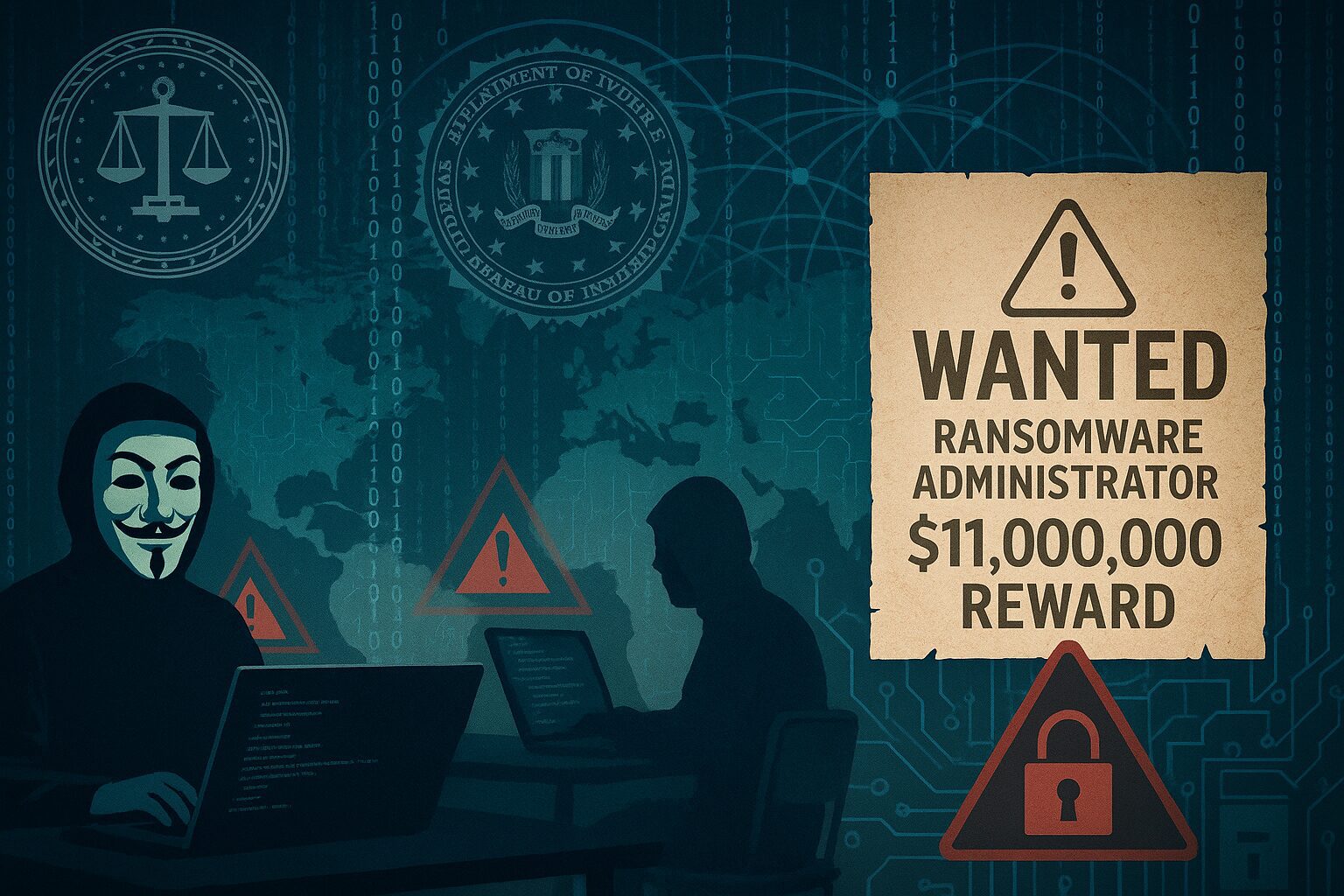
The Department of State’s Transnational Organized Crime Rewards Program is offering up to $11 million for information leading to his arrest or conviction (Sources: justice.gov, CyberScoop).
The prosecution reflects a multi-national law enforcement push: EDNY’s National Security and Cybercrime Section, DOJ’s Computer Crime and Intellectual Property Section, FBI legal attachés, and authorities across Europe—including France, Germany, the Netherlands, Norway, Switzerland, and Ukraine—along with Europol and Eurojust, all contributed to building the case.
Operational Mechanics
Between Dec 2018–Oct 2021, Tymoshchuk deployed variants of LockerGoga, MegaCortex, and later Nefilim, customizing each malware executable per victim to ensure decryption tools were unique and conditional on ransom payment. From Jul 2019–Jun 2020, the earlier variants were used; thereafter, from Jul 2020–Oct 2021, he operated Nefilim under a ransomware-as-a-service model—providing affiliates (like co-defendant Artem Stryzhak, extradited from Spain) access in exchange for ~20% of ransoms.
Notably, many attempts failed due to preemptive law enforcement warnings to targets, though the group repeatedly evolved its malware in response.
Strategic Insight
This prosecution underscores geopolitical and cybersecurity policy convergence: ransomware operations are treated not merely as criminal enterprises, but as transnational threats warranting coordinated law enforcement—and rewarded intelligence. The hefty bounty adds pressure on co-conspirators and an international messaging deterrent.
Tymoshchuk exemplifies the evolving RaaS model, blending technical innovation with global affiliate networks. As law enforcement gains traction, agility in malware and affiliate recruitment becomes vital to criminal payload delivery and evasion.
Implications for Businesses & Cyber Defenders
- Proactive detection works: Victim alerts disrupted many attacks before deployment, reinforcing the value of threat intelligence sharing.
- Customization is both strength and vulnerability: Victim-specific malware increases sophistication but expands forensic leads.
- RaaS monetization aggression: Affiliate models accelerate spread—but also democratize targets, increasing systemic risk.
FinTelegram Take
Tymoshchuk’s indictment marks a milestone in ransomware accountability—targeting a key enabler rather than just the affiliates. The unprecedented reward signals Washington’s readiness to escalate the spotlight on ransomware leadership. As the RaaS model matures, the DOJ’s aggressive pursuit may tilt the cost-benefit calculus for cybercriminals.