



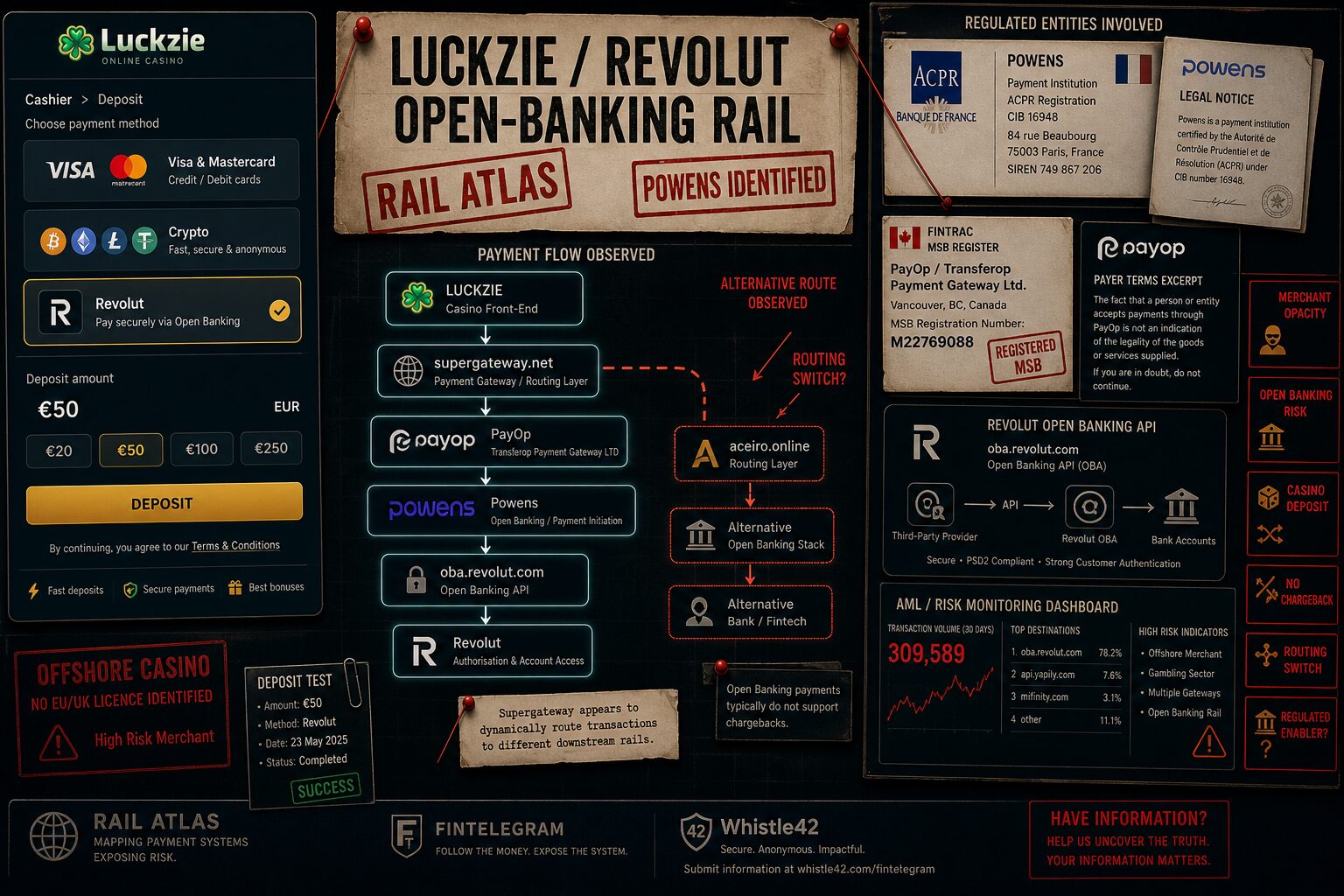
FinTelegram’s Revolut Rail Atlas has identified another regulated Open Banking enabler inside an offshore casino cashier: Powens, a French ACPR-regulated payment institution. In a test of Luckzie Casino, Revolut appeared as a prominent payment option alongside cards and crypto. The observed flow moved from Luckzie to supergateway.net, then to PayOp, then to Powens, and finally to Revolut’s Open Banking API at oba.revolut.com. In a second simulation, Supergateway redirected into the previously identified Aceiro layer. This suggests that Luckzie uses a dynamic payment-routing stack capable of selecting different downstream Open Banking rails.
Key Findings
- Luckzie Casino offers Revolut as a direct cashier option, alongside Visa/Mastercard and crypto, as shown in the uploaded cashier screenshot.
- The observed Revolut rail follows this path:
Luckzie → supergateway.net → PayOp → Powens → oba.revolut.com - Powens is a regulated French payment institution, registered with the ACPR under CIB 16948 and based at 84 rue Beaubourg, 75003 Paris.
- Powens describes its services as enabling account aggregation, transfer initiation, identity verification, and financial-profile verification.
- Powens says it connects to 1,800+ financial institutions and processed €1.4bn+ last year, presenting itself as a major European open-finance platform.
- PayOp is operated by Transferop Payment Gateway Ltd, a Canada-registered entity listed as a FINTRAC MSB under registration number M22769088.
- PayOp’s payer terms include a striking disclaimer stating that accepting payments through PayOp is not an indication of the legality of the goods or services supplied.
- A second Luckzie test reportedly routed Supergateway into Aceiro, a layer already identified in FinTelegram’s Impaya/Aceiro/Paysolo/Yapily rail analysis.
The Luckzie Revolut Rail Map
Luckzie Casino cashier
   ↓
Revolut payment option
   ↓
supergateway.net
   ↓
PayOp / Transferop Payment Gateway
   ↓
Powens Open Banking webview
   ↓
Revolut selected
   ↓
oba.revolut.com
   ↓
Revolut authorisation
Second observed route:
Luckzie Casino cashier
   ↓
supergateway.net
   ↓
Aceiro.online
   ↓
Alternative downstream Open Banking stack
This suggests that Supergateway may function as a routing decision layer, selecting between different downstream rails depending on geography, bank, transaction context, availability, risk parameters, or gateway configuration.
Luckzie Casino: Offshore Operator, EU-Facing Cashier
Luckzie presents itself as a modern online casino with casino, live casino, sports, promotions, bonuses, and multi-channel deposits. Public casino-review sources describe Luckzie as operating under offshore licensing frameworks, including Curacao or Anjouan references depending on the review source.
For FinTelegram’s analysis, the key point is not the offshore license itself. The key point is that Luckzie appears accessible to EU users and offers EU-facing payment rails, including Revolut, cards, crypto, and Open Banking layers, while FinTelegram has not identified a relevant EU or UK online gambling license.
That places Luckzie squarely inside the Rail Atlas risk category: offshore casino front-end, regulated payment rails downstream.
The New Player In The Rail Atlas: Powens
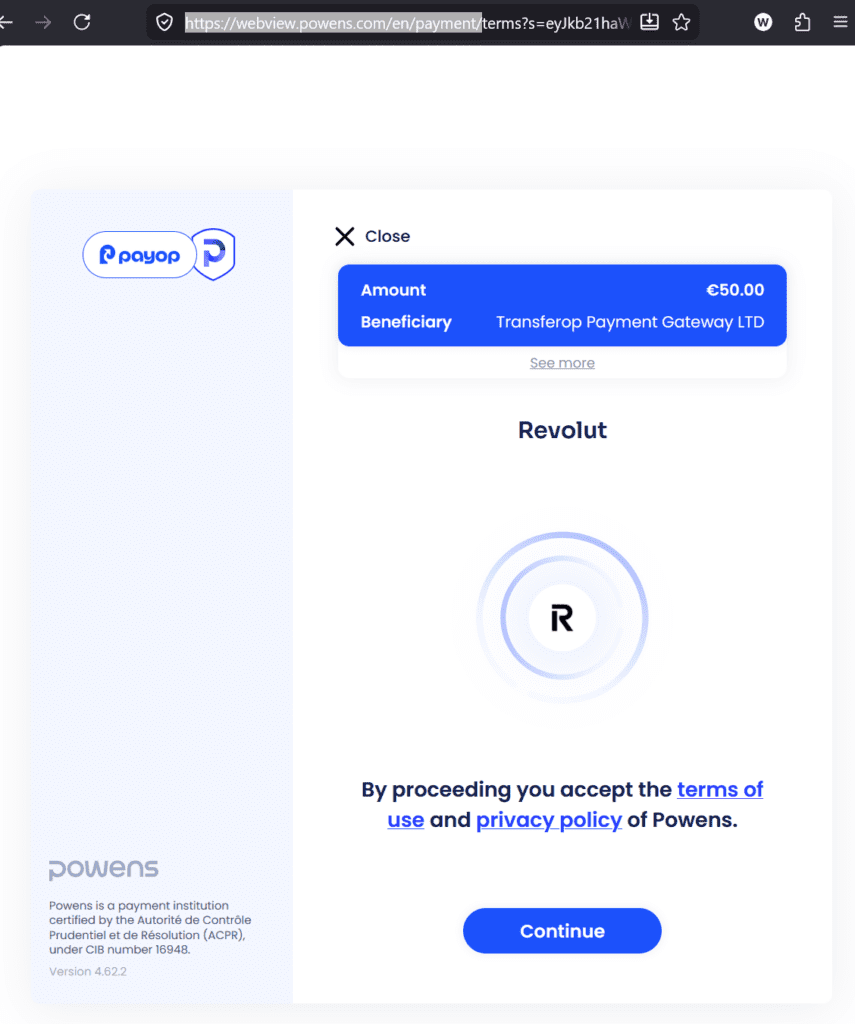
Powens is important because it adds another regulated Open Banking entity to FinTelegram’s Revolut Rail Atlas, alongside previously identified providers such as Yapily and Perspecteev/SaltEdge.
Powens’ own terms state that its services allow account aggregation, initiation of transfers, document and asset aggregation, and verification of identity and financial profiles. Powens also states that it holds an ACPR payment-institution license under bank code 16948.
Powens publicly describes itself as an Open Finance platform serving financial institutions, fintechs and software vendors, with 1,800+ financial institutions connected and more than €1.4bn transacted last year.
In ordinary contexts, this is legitimate regulated infrastructure. The compliance issue arises when such infrastructure appears embedded in a casino deposit journey involving an offshore operator.
PayOp’s Role: Payment Gateway Before Powens
The screenshot above shows the PayOp and Powens logos together in the payment journey. Public PayOp materials identify the operator of payop.com as Transferop Payment Gateway Ltd, registered in Vancouver, Canada, and listed as a FINTRAC MSB.
PayOp’s payer terms are notable. They state that the fact a person or entity accepts payments through PayOp is not an indication of the legality of the goods or services supplied, and advise users not to continue if they are in doubt about legality.
From a compliance perspective, this is a defensive disclaimer. It does not answer the core Rail Atlas question: what merchant due diligence does PayOp perform when its infrastructure appears in an offshore casino payment flow?
Compliance Analysis
1. Revolut As Default Casino Rail
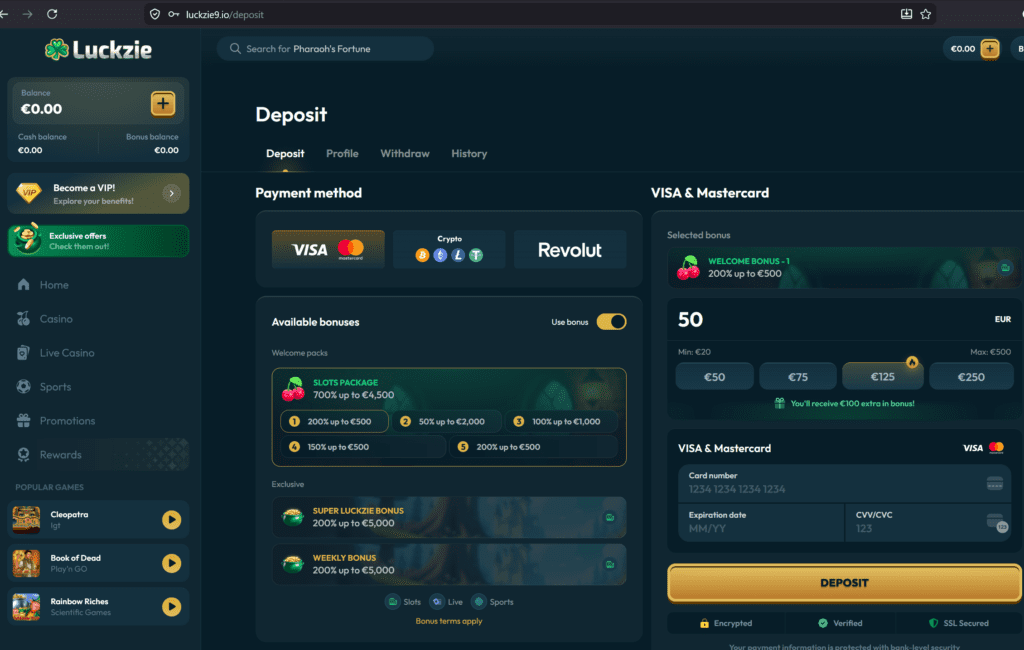
Luckzie’s cashier presents Revolut as a visible deposit method. That matters because the user does not first see “Open Banking,” “Powens,” or “PayOp” as the primary option. The player sees Revolut — a trusted banking brand — as the rail into the casino.
This creates a consumer-perception issue: the transaction may feel like a normal bank payment, while the underlying context is an offshore casino deposit.
2. Supergateway As Routing Layer
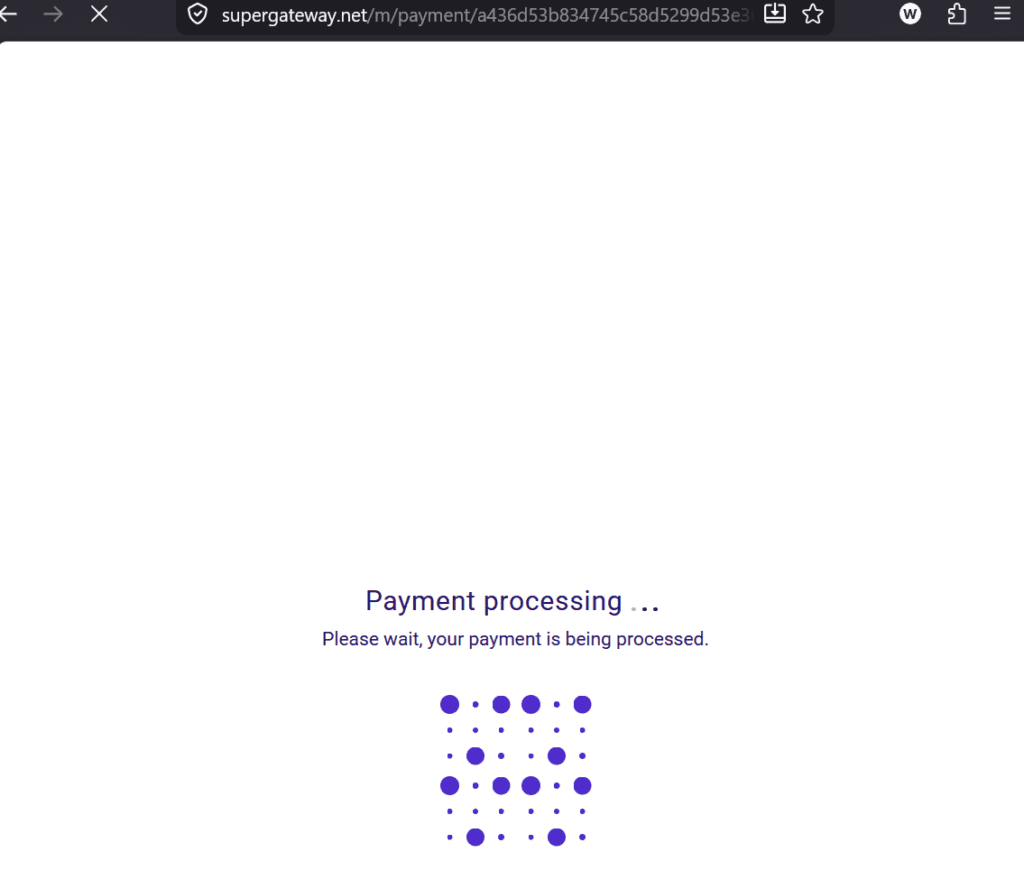
The presence of supergateway.net is highly relevant. The domain appears as a generic “payment processing” intermediary. In a second simulation, it reportedly redirected to Aceiro.online, a layer already found in FinTelegram’s prior casino-payment investigations.
This suggests Supergateway may not be a single-purpose gateway but a routing switch that can send payments into different downstream rail stacks.
Read our reports on Aceiro here.
3. Supergateway, Pagagate, Urbenics: Same Gateway Family?
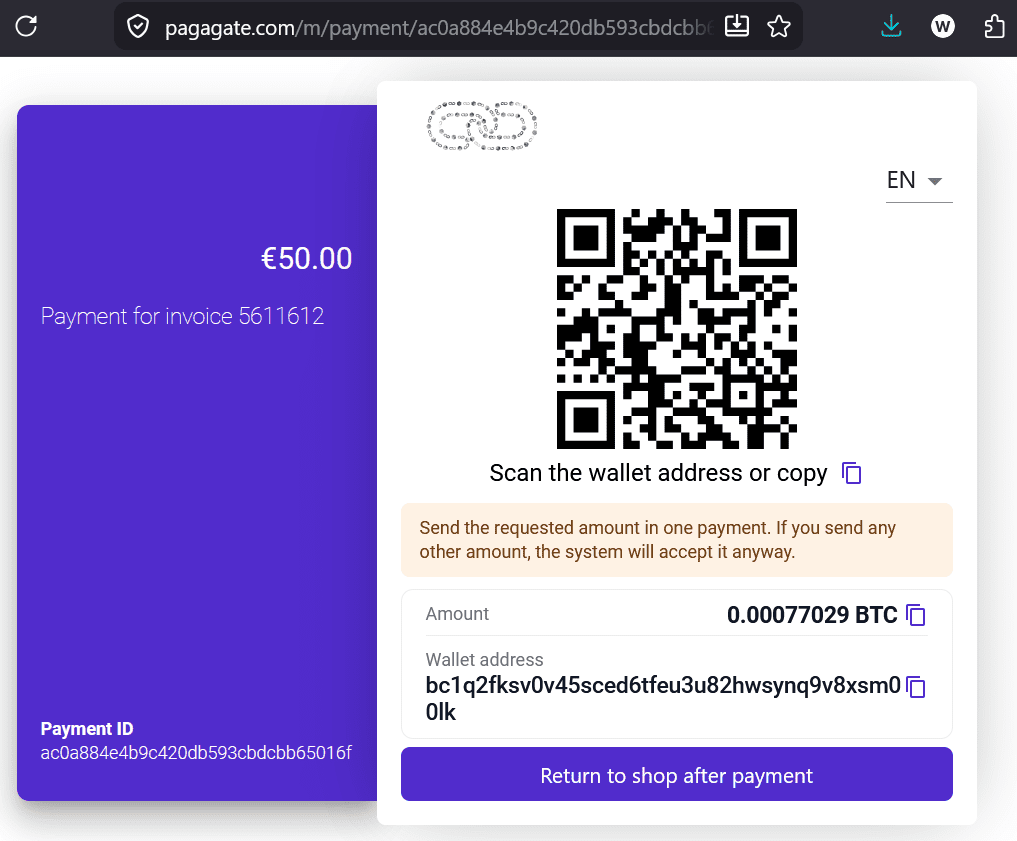
FinTelegram observed that supergateway.net displays the same “Payment processing…” screen design and animated blue-dot loading interface as Pagagate and Urbenics. This strongly suggests that the domains may belong to the same gateway family or share the same underlying white-label payment-routing software.
This does not by itself prove common ownership. However, in payment-rail investigations, identical UI behavior, redirect logic, loading screens, and downstream routing patterns are important technical indicators. In this case, the similarity supports the working hypothesis that Supergateway, Pagagate and Urbenics may form part of the same anonymous gateway layer feeding different regulated Open Banking stacks, including Powens, Yapily, Paysolo/Pellopay and Revolut.
Read more about Pagagate and Impaya here.
4. Powens Adds A New Regulated Enabler To The Atlas
Powens joins the list of regulated Open Banking providers appearing in casino payment journeys. It is ACPR-regulated, commercially established, and deeply integrated into European financial infrastructure.
That does not imply wrongdoing by Powens. But it does create a clear regulatory question: Does Powens know that its Open Banking services are being invoked in casino deposit journeys such as Luckzie?
5. Open Banking Weakens Traditional Gambling Controls
Traditional card payments may carry merchant category codes, chargeback rights, acquiring-bank monitoring, and gambling controls. Open Banking payments are different: they are typically account-to-account, user-authorised payments.
The result is a familiar Rail Atlas problem: The bank may see an authorised Open Banking payment, but not necessarily the full upstream casino context.
6. PayOp’s Legality Disclaimer Is Not Enough
PayOp’s terms disclaim that acceptance of payments through PayOp confirms legality. But for high-risk sectors such as online gambling, disclaimers cannot replace merchant due diligence, transaction monitoring, and licensing checks.
Evidence & Confidence Table
| Entity / Rail Element | Observed Role | Evidence Type | Jurisdiction | Confidence Grade | Key Compliance Question |
|---|---|---|---|---|---|
| Luckzie Casino | Casino front-end / cashier | Uploaded screenshot | Offshore / EU-facing | Confirmed | What license permits EU/UK targeting? |
| Revolut | Visible cashier option and bank endpoint | Uploaded screenshots | EU / UK | Confirmed | Does Revolut detect the casino origin? |
| supergateway.net | Anonymous gateway / routing layer | Uploaded screenshot | Unknown | Corroborated | Who operates it and what routing rules apply? |
| PayOp / Transferop Payment Gateway Ltd | Payment gateway / beneficiary layer | Uploaded screenshot + public terms | Canada | Corroborated | Does PayOp knowingly support casino merchants? |
| Powens | Open Banking / payment-initiation layer | Uploaded screenshots + public legal notices | France | Confirmed | What upstream merchant data is visible to Powens? |
| Aceiro.online | Alternative routing layer in second simulation | FinTelegram observation | Unknown | Indicated | Is Aceiro selected by Supergateway routing logic? |
Open Questions To Luckzie
- Which legal entity operates Luckzie and its mirror domains, including
luckzie9.io? - What online gambling licences does Luckzie hold for EU, Dutch, German, Italian and UK players?
- Why is Revolut presented as a cashier deposit option?
- Who is the merchant of record for Revolut/Open Banking deposits?
Open Questions To PayOp
- Does PayOp process or route payments for Luckzie or related casino brands?
- Why does the payment screen show Transferop Payment Gateway LTD as beneficiary?
- What merchant due diligence is performed for online gambling merchants?
- Does PayOp pass upstream casino merchant data to Powens or Revolut?
- Does PayOp consider offshore casino deposits within its acceptable-use policy?
Open Questions To Powens
- Was Powens used in the Luckzie-to-Revolut Open Banking flow shown in the screenshots?
- Does Powens receive the original merchant name, i.e., Luckzie or the casino operator?
- Does Powens screen clients or payment flows for gambling-license compliance?
- Does Powens permit Open Banking payment initiation for offshore casino operators?
- What information is transmitted to Revolut when Powens initiates the authorisation?
Open Questions To Revolut
- Does Revolut see Luckzie, PayOp, Transferop, Powens, or only the Open Banking authorisation request?
- Does Revolut classify these payments as gambling-related?
- Does Revolut monitor recurring traffic from Powens or PayOp into casino-linked contexts?
- Has Revolut blocked any flows involving Luckzie, Supergateway, PayOp, Powens or Aceiro?
Conclusion
Luckzie is another important node in FinTelegram’s Revolut Rail Atlas. The observed payment journey shows a casino cashier where Revolut is presented as a payment rail, followed by a chain involving Supergateway, PayOp, Powens and Revolut’s Open Banking API.
This matters because Powens is a regulated French payment institution. The case therefore extends the Rail Atlas beyond Yapily and Perspecteev/SaltEdge and shows that multiple regulated Open Banking providers may appear in offshore casino payment journeys.
The central question is now unavoidable: Are regulated Open Banking providers and downstream banks receiving enough upstream merchant information to identify and block illegal casino flows — or are anonymous gateways and payment processors converting gambling deposits into ordinary-looking Open Banking authorisations?
Whistle42 Call
FinTelegram invites affected players, payment insiders, compliance officers, casino affiliates, Powens or PayOp employees, and Revolut staff to submit information confidentially through Whistle42.
We are especially interested in:
- merchant onboarding files
- Supergateway routing logs
- PayOp / Transferop settlement records
- Powens Open Banking logs
- Revolut authorisation records
- internal risk alerts
- screenshots of live casino cashier flows