


EXCERPT
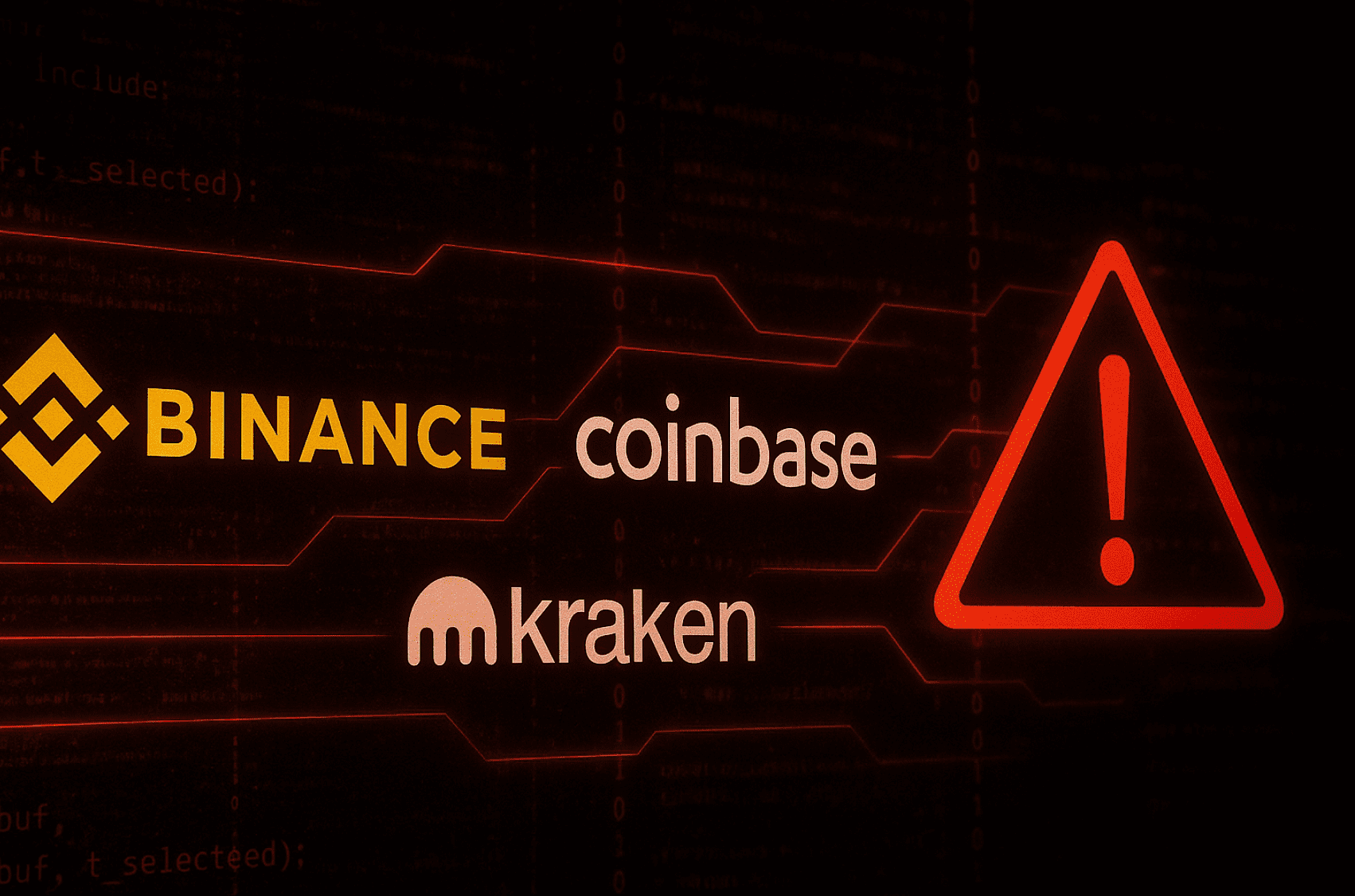
Bloomberg has revealed that Binance and Kraken were targeted by the same sophisticated hacking campaign that recently compromised Coinbase systems. The coordinated assaults exploited a zero-day vulnerability in a third-party library, underlining a major supply chain cybersecurity weakness across the crypto sector. This development raises urgent questions about vendor due diligence, cross-platform coordination, and the fragility of digital infrastructure behind the world’s largest crypto exchanges.
5 KEY POINTS
- Same Zero-Day Used: Hackers targeted Binance and Kraken using the same vulnerability recently used to breach Coinbase.
- No Funds Stolen (Yet): Unlike the Coinbase breach, Binance and Kraken claim no financial losses or data breaches occurred.
- Third-Party Risk: The exploited vulnerability was found in a widely used open-source library—again highlighting industry-wide supply chain weaknesses.
- Coordinated Campaign: The attacks were part of a broader, synchronized effort to compromise multiple exchanges through shared code dependencies.
- Regulatory Heat Incoming: This cross-exchange vulnerability may trigger investigations into crypto platforms’ compliance with cybersecurity and risk management obligations.
SHORT NARRATIVE
Just days after Coinbase disclosed a high-profile data breach, a Bloomberg investigation now reveals that Binance and Kraken were also targeted by the same hacking group. The attacks exploited a zero-day vulnerability in a shared third-party open-source library used in internal systems.
Read more about the Coinbase hack here.
Although both exchanges claim the attacks were unsuccessful, the incident exposes a critical systemic risk—crypto giants share not just digital infrastructure, but also attack surfaces. The implications go far beyond isolated breaches, suggesting the existence of a supply chain cyber threat actor probing for access across the industry’s largest platforms.
EXTENDED ANALYSIS
The campaign reflects a textbook supply chain attack: rather than breaching each exchange individually, hackers focused on a common weak link—a third-party software dependency embedded across multiple crypto ecosystems.
Legal and Compliance Considerations:
- Vendor Risk Management: Regulators are likely to press exchanges on their vendor onboarding, code auditing, and third-party monitoring practices.
- Disclosure Obligations: Even “unsuccessful” attacks may trigger disclosure requirements under MiCA, SEC, or GDPR rules depending on data access or attempted intrusion.
- Operational Resilience Mandates: With digital finance becoming critical infrastructure, expect more pressure on exchanges to implement continuous vulnerability testing, especially for open-source components.
The broader concern is this: if top-tier exchanges like Binance, Kraken, and Coinbase are vulnerable via shared libraries, smaller exchanges are almost certainly already compromised—whether they know it or not.
ACTIONABLE INSIGHT
Crypto platforms must map their dependency tree—especially open-source packages—and implement real-time scanning tools for emerging vulnerabilities. Coordinated sector-wide response mechanisms (e.g., threat intel sharing consortia) are no longer optional. Exchanges should consider conducting post-mortem audits, even in the absence of a successful breach.
🛡️ CALL FOR INFORMATION
FinCrime Observer is mapping the full scope of these coordinated cyberattacks. If you have internal insights, threat intel, or knowledge of shared infrastructure vulnerabilities, please submit it securely via Whistle42.
Your identity is fully protected.