



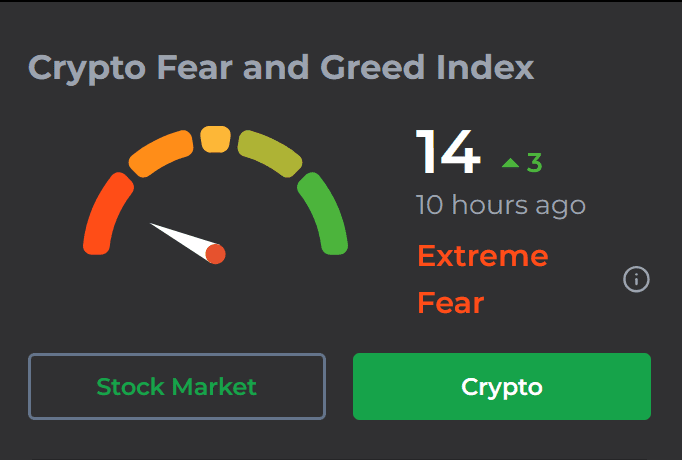
Digital assets are in a post-halving drawdown reminiscent of 2016/2020: >$1T in market cap erased since October, BTC falling ~30% from its peak as leverage unwinds, ETF demand flips negative, and the dollar firms. Near term: high-volatility, data-dependent chop with risk of further downside before any durable base. The Fear-and-Greed Index cries “Extreme Fear.“
What’s driving the sell-off (stacked effects)
- Forced deleveraging: multi-billion liquidations across perps; venue-specific “air-pockets” (e.g., Hyperliquid flash-crash) (Sources: coindesk, CryptoPotato).
- ETF flow reversal: record daily outflows (IBIT) and one of the worst months for U.S. spot-BTC ETFs (Source: Reuters).
- Macro risk-off & stronger USD: DXY rebound/levels near 100, hawkish Fed tone, and trade-policy uncertainty (Source: FXStreet).
- Thin liquidity & profit-taking by long-term holders amplified the move (Source: Business Insider)
Macro context
After a powerful run into/after the Apr 2024 halving, the cycle hit classic headwinds: tighter dollar liquidity, higher real yields, and policy noise (tariffs/export-controls). Prior cycles also saw sharp mid-cycle retracements before trend resumption. Historical halving cycles suggest bottoms form 512-542 days post-halving—putting potential lows around Q1 2026 (Source: Bitcoin Suisse).
Scenarios to year-end / Jan 2026
Downshifted outlook (to Jan 2026)
- Probabilities: Bear 45% (from 30%), Base 40% (from 50%), Bull 15% (from 20%).
- Path: Crash-then-crawl. After one or more capitulation waves (forced liquidations + ETF outflows), a reflexive bounce likely fades into a lower, wider range. Altcoins underperform longer as liquidity and retail flows retreat.
Why a deeper/slower recovery is plausible
- Greed/Fear at extremes tends not to be reliably contrarian when macro regime is tightening (strong USD, higher real yields, equity stress).
- AI-bubble risk: An unwind in crowded AI trades can force systematic de-risking (CTAs/vol-control/risk parity), shrinking overall risk appetite and correlation-spiking into crypto.
- Flows > narratives: If spot-ETF net flows stall or swing negative while funding rebuilds, any rally is vulnerable to repeat flushes.
What this means for positioning
- Already invested:
- De-risk to BTC/ETH core, cut leverage, and consider collars/protective puts where available. Hold cash/Dry powder for forced-seller days; avoid catching knives in high-beta alts.
- Considering entry:
- Use time-staggered buys only after all three confirm: (1) 3–5 consecutive days of net ETF inflows, (2) cooling USD / softer yields, (3) funding near flat with open interest rebuilt gradually.
- Risk controls: Expect large gaps and failed breakouts. Size smaller, widen stops, diversify venue risk, and prefer spot over perps until volatility compresses.
Bearish signposts to watch
- Persistent ETF outflows across issuers.
- Rising DXY / wider credit spreads.
- Altcoin breadth making new lows on rebounds.
Bottom line: Treat this as a capital-preservation phase. The upside will still be there when flows and macro turn; until then, patience and disciplined sizing beat hero trades.
What can investors do now?
- Already invested:
- Rebalance toward higher-quality (BTC/ETH), reduce leverage; use staged adds only after ETF flows turn positive for multiple days and price reclaims breakdown levels. Set hard invalidation levels (Source: farside.co.uk).
- Considering entry:
- Prefer staggered buys (time- or level-based) with small sizing; avoid high-beta alts until BTC stabilizes and funding normalizes.
- Risk controls: Vol remains elevated—use wider stops, avoid overexposure to single venues, and monitor funding, OI and daily ETF flow tape.
Key watchlist: U.S. spot-BTC ETF net flows (daily), DXY trajectory, and liquidation/funding metrics. Sustained improvement across these is your confirmation signal.