



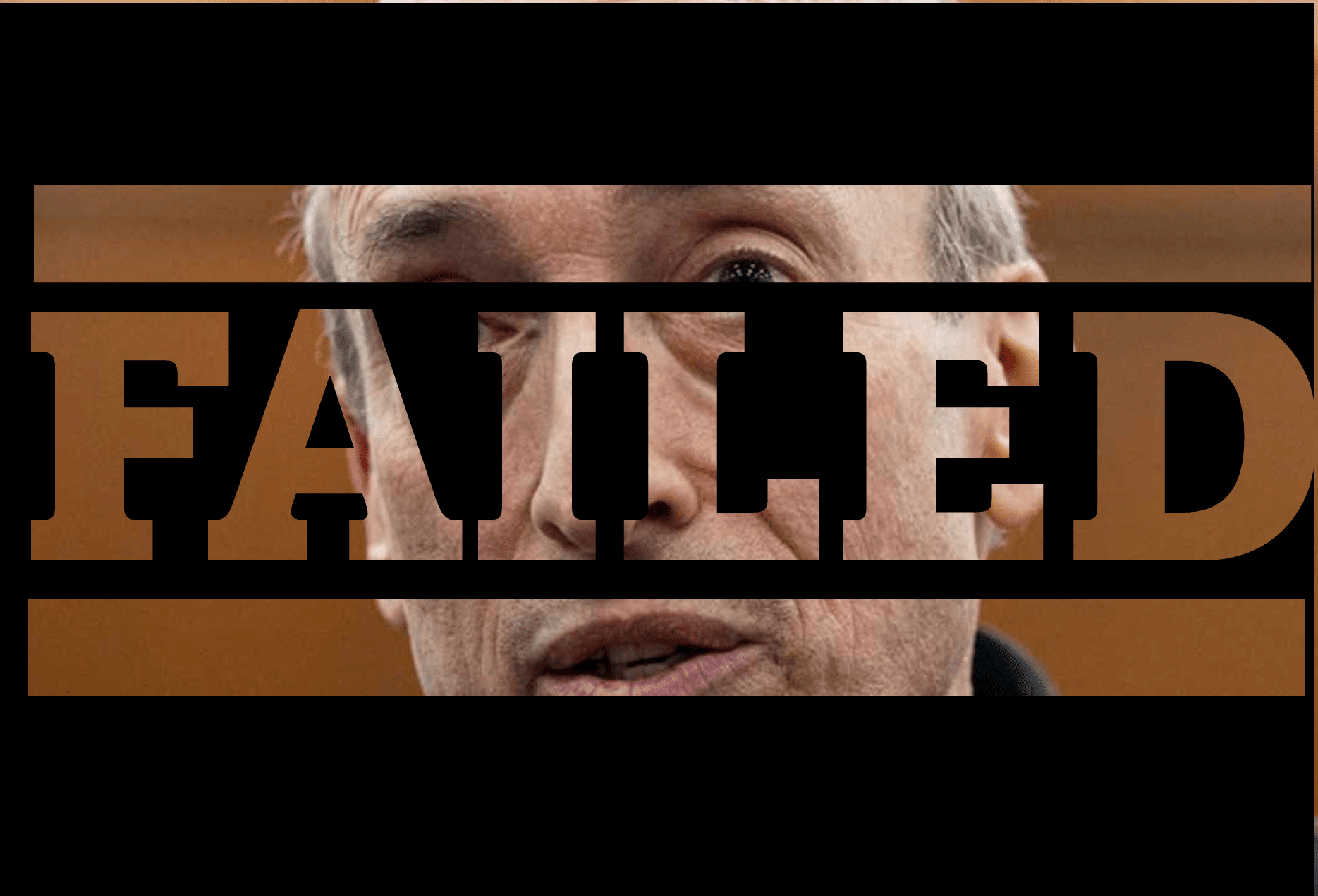
The role of the U.S. Securities and Exchange Commission (SEC) Chair is inherently political, and the current Chair, Gary Gensler, is no exception. Appointed amidst his close affiliations with the Democrats and significant involvement in Hillary Clinton‘s campaign, Gensler’s position has naturally attracted political adversaries. Now, two U.S. lawmakers, Representatives Warren Davidson (R-OH) and Tom Emmer (R-MN), are spearheading a campaign for his removal.
Their efforts are crystallized in the proposed SEC Stabilization Act. Introduced by Congressman Davidson earlier in June, the Act aims not only to oust Gensler but also to restructure the SEC’s leadership by removing the chairman role and adding a sixth commissioner. This move, Davidson argues, would prevent dominance by any single political party and address what he perceives as corruption within the SEC.
The criticism of Gensler extends beyond mere political opposition. A key point of contention is his approach to the burgeoning crypto industry. Unlike other jurisdictions, notably the European Union, the U.S. under Gensler’s watch has not established a clear regulatory framework for cryptocurrencies. This lack of guidance has drawn significant criticism, with experts fearing it could undermine the growth and competitiveness of the U.S. crypto scene — a sector many view as pivotal in the cyberfinance era.
Congressman Emmer has been particularly vocal in his disapproval of what he describes as Gensler’s “enforcement-centric” regulatory style. Emmer accuses the SEC under Gensler of favoring Wall Street interests over those of Main Street, suggesting a misalignment with the broader needs of the financial community.
Additionally, Davidson has expressed opposition to the Federal Reserve launching a digital dollar, highlighting the broader ideological divide over the future of digital currency in the U.S. In a recent statement, Davidson condemned central bank digital currencies (CBDCs) as a threat to western civilization, arguing that they corrupt the traditional functions of money and could lead to dystopian outcomes.
As 2024 approaches, the debate over Gensler’s tenure and the future direction of the SEC intensifies. The call for his removal is not just a reflection of political rivalry but underscores deeper concerns over the SEC’s role in shaping the rapidly evolving landscape of cyberfinance and cryptocurrency regulation.In conclusion, Gary Gensler’s position as SEC Chair is increasingly contentious.
While his background and political affiliations are standard for such a role, his approach to crypto regulation and perceived alignment with Wall Street interests are significant factors fueling the campaign for his removal. The outcome of this struggle could have profound implications for the future of financial regulation in the cyberfinance era.