

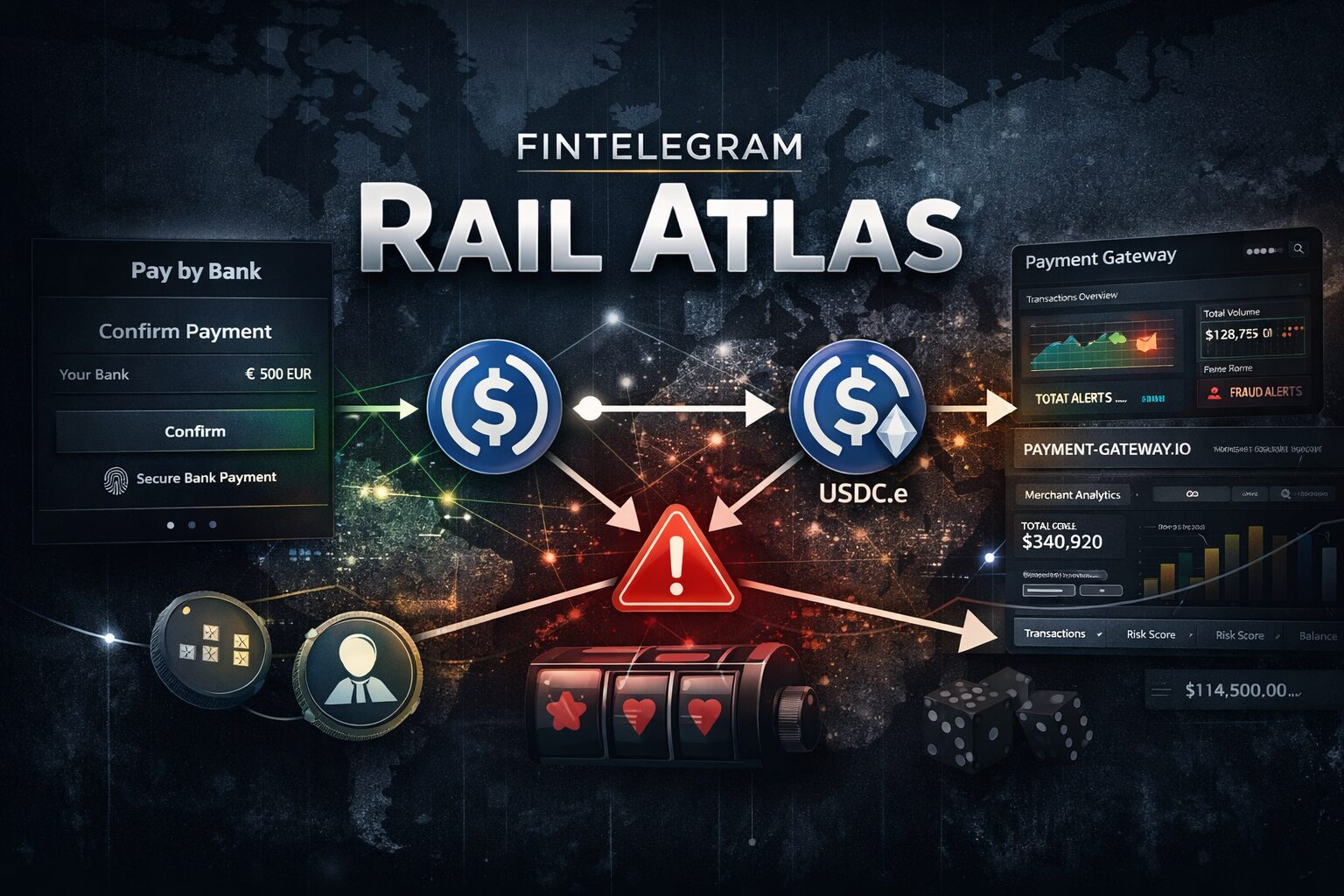

FinTelegram’s latest compliance investigation reveals how YowPay, a Luxembourg-based payment orchestration layer, facilitates high-risk transactions for the Italian adult platform RagazzeInVendita. Our analysis traces a complex cross-border rail involving Bulgarian operators and German banking infrastructure, raising significant questions about KYC transparency and regulatory oversight in the A2A payment sector.
A U.S. federal judge in Manhattan sentenced Terraform Labs founder Do Kwon to 15 years in prison, concluding that the TerraUSD/LUNA implosion was not a bad-product accident but a fraud that wiped out roughly $40 billion in market value and devastated real victims. The sentence lands as a defining “Startup on Trial” moment for crypto’s algorithmic-stablecoin era.
FinTelegram will increasingly focus on DeFi brokers and DeFi investment schemes alongside offshore casinos. The reason is simple: the perimeter game has not disappeared. It has evolved. What binary options and offshore brokers once did through shell structures and payment agents is now being rebuilt through DeFi-branded interfaces, on/off-ramp layers, wallet logic, and outsourced execution rails.
An investigation by Investigative Europe has exposed how high-profile YouTube and Twitch personalities across at least seven European countries are acting as de facto distribution agents for blacklisted, unlicensed online casinos — earning revenue-share commissions from the very losses of their followers. For compliance analysts and financial regulators, this is not a marketing story. It is a systemic liability chain spanning operators, technology platforms, and individual influencers that demands urgent enforcement attention.
Over the past year, financial influencers (“FinFluencers”) have become increasingly prominent on social media, particularly on TikTok and X (formerly Twitter). These platforms have evolved in their content dynamics, user engagement, and regulatory environment, making them central to the dissemination of financial advice and market sentiment. This report analyzes the roles, reach, and key trends of finfluencers on TikTok and X
A Financial Times video interview with OpenAI CEO Sam Altman unexpectedly turned into a viral marketing miracle for a small olive oil brand called Graza. Altman was seen cooking with Graza’s “Drizzle” olive oil—meant for finishing, not cooking—sparking an online debate and catapulting the brand into global awareness. It’s a case study in how digitally native consumer brands can hijack moments.
In a remote interview with Tucker Carlson on March 5, 2025, Sam Bankman-Fried (SBF), the convicted FTX founder, reframed his $10 billion fraud as a mere liquidity crisis, denying criminal intent while playing chess with Sean 'Diddy' Combs in prison. As he hints at GOP leanings and a potential pardon, SBF’s narrative sparks debate: a bid for redemption or a refusal to face the fallout?
The topic of Ukraine or Ukrainian individuals selling U.S. and Western arms supplies on the black market has been a subject of both documented incidents and widespread speculation, often amplified by rumors and disinformation. The US media personality Tucker Carlson is one of the main sources in the respective headlines. Here’s a breakdown of known information and rumors:
While Revolut proudly celebrates its new status as a licensed UK bank, FinTelegram’s compliance review reveals extensive, ongoing involvement in processing payments for unregulated DeFi brokers and offshore casinos, raising serious AML concerns.
AXIOM presents itself as a decentralised trading platform, but its own materials describe a branded, fee-based crypto service stack with wallet functionality, no-KYC onboarding, yield features, and leveraged perpetuals trading. For EU compliance analysts, that raises a central MiCA question: is this really “DeFi,” or a brokerage-like access layer inside the regulatory perimeter?